



2026, Year of the Horse?: What Your Zodiac Sign Really Means in Korea
By Luis Andrés ||
These days in Korea, asking someone about their MBTI feels natural. It serves as a casual icebreaker, a quick way to understand personality, and sometimes even a soft filter for compatibility. But before MBTI took over cafés, classrooms, and dating apps, people often asked another common question: What’s your blood type? And even prior to that, and still quietly present today, there was another layer of identity at play: your zodiac sign.
Depending on where you come from, the question “What’s your sign?” can have very different meanings. In many Western countries, it usually refers to the Western zodiac, based on the positions of constellations: Aries, Libra, Aquarius, and so on. Ask a foreigner in Korea, and you might get one of those responses. However, in Korea, that same question carries more cultural significance than it at first seems to.
Although both systems are simply translated as “zodiac” in English, they are clearly distinguished in Korean. The Western zodiac is called byeol-jari (별자리), which means “star constellation.” The Oriental zodiac, based on a twelve-year cycle of animals, is known as tti (띠) or sibi-jisin (십이지신). When someone asks “What is your tti?” they are rarely just making small talk.
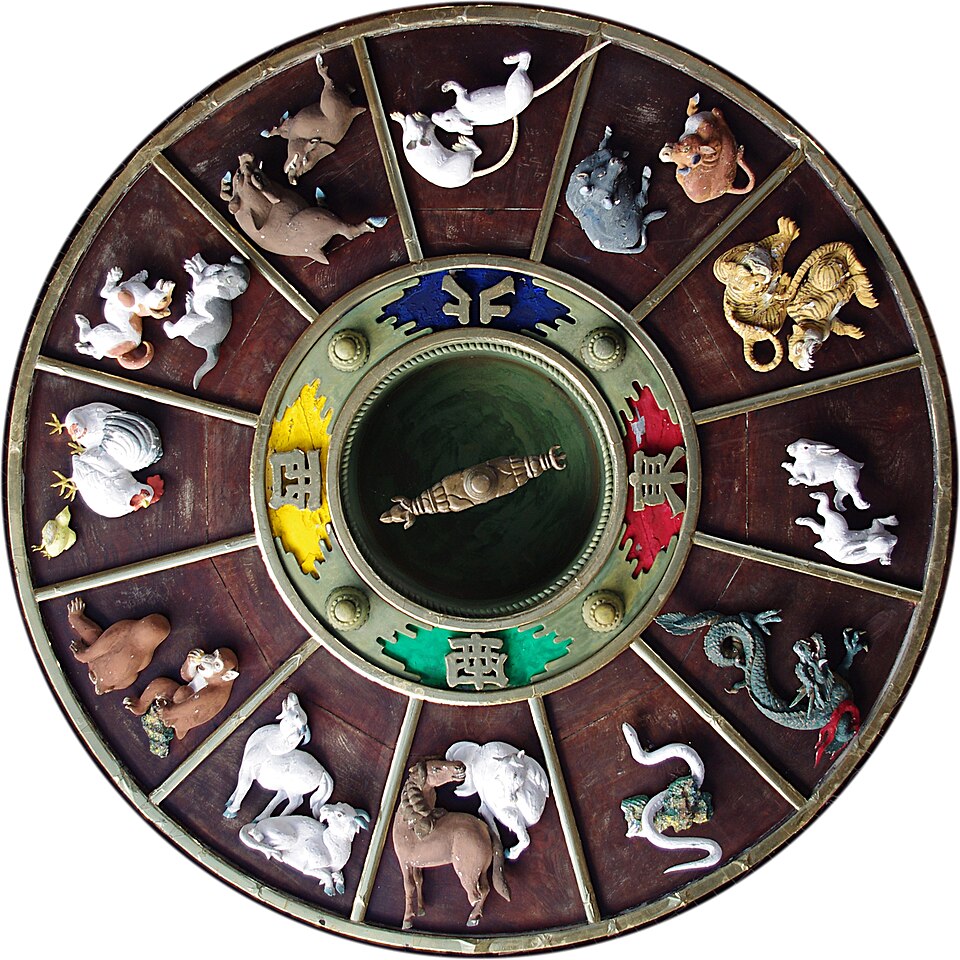
In Korea and across East Asia, the zodiac is closely linked to how time has traditionally been understood and measured. The twelve-animal cycle – rat, ox, tiger, rabbit, dragon, snake, horse, goat, monkey, rooster, dog, pig – repeats every twelve years. Because of this, zodiac signs have long served as a way to mark time.
Asking about someone’s zodiac sign can be a polite way to estimate their age without directly asking – especially helpful in a society where age influences language and social hierarchy. Knowing someone’s tti quickly pinpoints their birth year if you can gauge the correct twelve-year range. It might be challenging to be sure whether someone is in their early twenties or thirties, but generally you can tell once you know their sign.
Historically, this system was also practical. Saying that an event happened “in the year of the Earth Dragon,” for example, was often enough to place it roughly in time because such combinations repeat themselves only once every 60 years. The zodiac was not mystical decoration; it provided a shared cultural framework for understanding history and daily life.
There is a deeper cultural meaning in the zodiac when we think about calendars. The modern Gregorian calendar, used worldwide today, is based in Christian tradition and was standardized under Pope Gregory VIII in 1582, framing time around the supposed birth of Jesus. We now call this period the 21st century. In contrast, lunar calendars, like the one that spread from China throughout East Asia, operate under a different logic of time. By that count, we are living in a much later century – 76th in some traditions.
In Korea, this is not just historical trivia. The lunar calendar still shapes daily life, especially through Seollal, the Lunar New Year, and other very important holidays like Chuseok (Korean Harvest Moon Festival). The ongoing relevance of the zodiac and lunar calendar in Korea shows not nostalgia but the persistence of living traditions that coexist with modern systems rather than vanishing under them.
Of course, there is also a symbolic – or even mystical – aspect to the zodiac, though it is often more structured and precise than people tend to assume. For starters, the Oriental zodiac does not align neatly with the solar calendar, which can create some confusion for people born early in the year. For example, someone born in early 2026, before Seollal, would technically still belong to the previous year’s sign. However, for practical purposes, people usually refer to the sign corresponding to the year in which most of the calendar falls.
Additionally, each year combines an animal sign with one of the Five Elements (wood, fire, earth, metal, water) and a yin or yang orientation. These distinctions shape interpretations of personality and group energy. A “fire” year under yin influence is associated with calm, introspection, and depth, while a yang fire year emphasizes movement, action, and visibility.
On February 17, 2026, the lunar calendar will mark the beginning of the Year of the Yang Fire Horse. Traditionally, the horse symbolizes energy, independence, popularity, and freedom. Combined with the intensity of fire and the outward orientation of yang, the year is often described as dynamic and transformative.
However, this energy is not always chaotic. Yang fire is seen as focused rather than explosive – a flame that illuminates instead of consumes. Under a broad, non-deterministic view, 2026 is imagined as a year of momentum balanced with direction, intensity guided by purpose.
Whether one believes in zodiac interpretations or not, dismissing them as unimportant misses the point. In Korea, Seollal, the lunar calendar, and the zodiac are not just about belief. They represent cultural memory, social communication, and alternative ways of understanding time.
So, the next time someone casually asks, “What’s your zodiac sign?” it may be worth pausing before you answer. Behind that seemingly simple question lies a dense network of history, tradition, and meaning, quietly reminding us that not all ways of measuring the world fit neatly into a calendar app.
The Author
Luis Andrés González is a Mexican GKS scholar and master’s student in cultural anthropology at Chonnam National University. He advocates for LGBTQ+ rights and gender equality, and explores global affairs through pop culture. He is the founder of Erreizando, a digital magazine. Instagram: @luisin97 / @erreizando
Cover Photo: The Oriental zodiac with its 12-animal cycle. (Jakub Hałun, CC BY-SA 4.0)