





Book Review: Light in August
Reviewed by Michael Attard
- Light in August
- By William Faulkner
- Vintage International, 1990 (Original 1932)
- ISBN-10: 0-679-73226-8
William Faulkner, the author of Light in August, was born in Mississippi in 1897. This fictional story takes place in the 1930’s. Historically, it was a time of Prohibition (of alcohol) and Jim Crow laws, that is, statutes that legalized racial segregation.
The first character to be introduced is Lena, a young white woman who is pregnant with the child of a man named Lucas Burch, who has run off to escape any responsibility. But Lena is not upset, as she believes what the man has told her about sending for her when he had things all set up in another place. Six months later, Lena is a little tired of waiting, and she sets off to find him. The reader is induced to believe that the story is about Lena, but that is only minimally true. However, through her callow manner, she plays a key role in exemplifying one of the book’s themes: the human capacity for resilience.
Lena meets Byron Bunch, a main protagonist, at the sawmill where she is correct in believing that her beau Lucas had worked. Byron is a God-fearing man and not someone that most pay much attention to. Through his character, the author expresses views on human nature and a fascination of human spirit, especially with regards to man’s capacity for good and evil. Of the two, we see much more of the latter.
The author delves into the exploration of the human psyche within the realm of the South’s constant obsession with race and blood. An obsession made incarnate in the character with the name “Christmas.” The reader is introduced to Christmas as a man in his thirties, working at the above-mentioned sawmill. But the author takes us back to his abandonment at birth and then brings us forward through years of mistreated upbringing. The greatest factor, ostensibly dooming Christmas, is his being one-eighth Negro. And yet, it is Christmas, who can easily pass as white, who tells people about his mixed blood. His entire existential essence is tied up in blood and race. The fact that Christmas burdens himself with his very being and that the whites are compelled to want to kill him is at the crux of the book.
Christmas is on the run after a white woman, Joanna Burden, his sometimes lover, and upon whose property he lived, is found murdered. Christmas’ hostility toward Joanna and women in general is clear evidence of misogyny. Christmas seems to resent and becomes indignant at the mere idea that a woman would care about him in any way. Not being able to sleep one night, he says, “It’s because she started praying over me.”
Misogyny is evidenced elsewhere. A defrocked minister and friend of Byron knows that Byron has fallen in love with Lena. He admonishes his friend, “But what woman, good or bad, has ever suffered from any brute as men have suffered from good women?”
I was bothered by this, and curious of the author’s personal views. According to some scholars, Faulkner was a feminist as evidenced by his non-typical representations of women. But it is racism that lies at the core of the story. And in speaking of it, the language used is often offensive. And why wouldn’t it be? Racism is offensive. So, while ultimately Faulkner is attempting to inspire our better nature, he feels obliged to correctly record history.
Christmas is the central character in the story, and he is a complicated figure. He is protagonist and antagonist simultaneously. But superseding all that he is and he isn’t, he is a tragic figure. And truly tragic in that he never understands himself: “…he believed with calm paradox that he was the volitionless servant….”
The book is a masterful read. Every page is brighter than life through the author’s keenest sense of perception. With respect to a minor character, he says, “Her voice is not tentative so much as rusty.” In another scene, the character is captured wholly and succinctly: “…with something in his glance coldly and violently fanatical and a little crazed, precluding questioning.”
At the same time, the book is often not that easy to read. There occasionally seems to be a disconnect between what is happening and what is being said, as what appears to be being said is sometimes merely being thought. Faulkner has been credited for his pioneering use of stream of consciousness.
The tragic story ends, somewhat as it began. Lena is on the road, traveling nowhere in particular. This time though, she is with her baby and Byron. She is content, even happy. She found and quickly lost her beau, the father of her child, but her resilience and perseverance have only strengthened her spirit.
William Faulkner never graduated from university, yet he won the Nobel Prize for Literature in 1949.
The Author
Michael Attard is a Canadian citizen but has lived in Gwangju for over twenty years. He has taught English as a second language in academies and within the public school system. He is officially retired and spends time reading, writing, hiking, and spending time with friends.
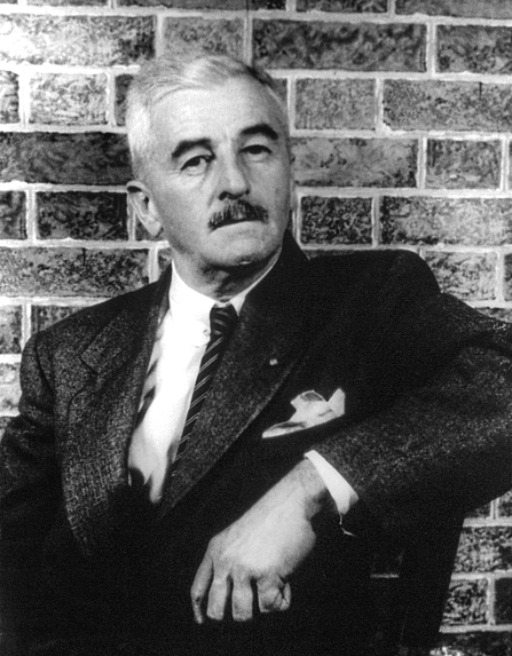
Cover Photo: William Faulkner in 1954. (Carl Van Vechten)