




Book Review: When Rain Clouds Gather
Reviewed by Michael Attard
When Rain Clouds Gather By Bessie Head
186 Pages, Waveland Press, 2013 (Original 1968)
ISBN-13: 978-1478607595
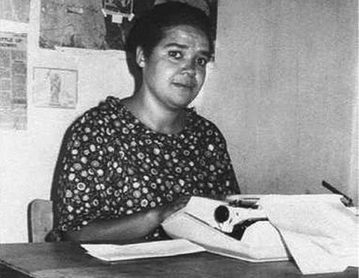
When Rain Clouds Gather was first published in 1968 when apartheid was the ruling political and social system in the country of South Africa. It was not until the early 1990s that this oppressive system was at least legally ended. The author, Bessie Head, was born in South Africa in 1937. Her mother was white and her father black. She took up permanent exile in neighboring Botswana, where she eventually gained citizenship.
This short novel succinctly addresses the historical, social, cultural, political, and economic tribulations facing the continent of Africa in general, both in the past and today. The author is objective in her assessments and offers hope for a better tomorrow.
The protagonist’s name is Makhaya, and he is a South African political refugee. By page 5, he has reached, somewhat, “safer” ground in Botswana. While Makhaya is a man replete with conflict, he has an “outer air of calm, lonely self-containment.” The author tells us that we only perceive a “sense of this inner discord through the manner in which he averts his glance.” But ultimately, he is a focused man, wanting simply to live free.
“This short novel succinctly addresses the historical, social, cultural, political, and economic tribulations facing the continent of Africa.”
The role and power of tribalism is a major theme. Makhaya is not a tribalist, but his parents are. This underscores the generational divide. Chief Matenge, the antagonist, uses tribalism for his personal gain. The author does not couch her opinions. Through the character, Gilbert, an Englishman working to improve the agriculture in Botswana, we are told more about Chief Matenge: “An extremely cunning and evil mind, a mind so profoundly clever as to make the innocent believe they are responsible for the evil.
Makhaya and Gilbert share similarities. Gilbert hires Makhaya, as “he needed, more than anything, someone with the necessary mental and emotional alienation from tribalism to help him accomplish what he had in mind.” To be clear, for the author, most white men were not like Gilbert. Referring to tribalism, the author says, “And all this had been highly praised by the colonialists as the only system that would keep the fearful, unwieldly, incomprehensible population of natives in its place.”
There are several strong women characters, one of whom is Paulina. Only with her influence would it be possible to convince the women to accept Gilbert’s plans. Amongst themselves, there were many intrigues. But it wasn’t these that Paulina feared. Rather it was “the untrustworthiness of men with no strength or moral values.” It was a society of “degenerate men,” whose “superiority in law” negatively “affected them as individuals.” The social and cultural inequalities between the sexes is an ongoing theme.
There are philosophical discussions. Another of the strong female characters is the older Mma-Millipede. She is a Christian woman and invites Makhaya to her home. Makhaya asks her, “What is faith, Mama?” She replies that “it is an understanding of life.” For Makhaya, her response brings neither comprehension nor peace. For him, “life is only torture and torment … and not something I care to understand.” But where they do agree is on the need for “generosity of mind and soul.” Although for Makhaya, this has nothing to do with Christianity. For him, there are too many apparent contradictions, and “all the lies Western civilization had told in the name of Jesus” were a crime.
“The social and cultural inequalities between the sexes is an ongoing theme.”
Regardless of seemingly endless up and down struggles, the small village within which this story takes place is destined for positive change. “There were too many independent-minded people there, and tragedies of life had liberated them from the environmental control of the tribe.” There would always be droughts, but people could learn to survive those bad years.
Within the story there is death and sadness, and the author’s writing ability casts the reader into the heart of the palpable emptiness. She states, “Death was like trying to clutch the air, and you had to let it be and slowly let it pass aside.”
However, this is a story of hope. So, one must not focus on the death. “Instead, you had to concentrate the mind on all that was still alive and treat it as the most precious treasure you had ever been given.” There will always be struggle, but in a final analogy, the author depicts this fight as the pushing against a heavy door that will not open, only to find that after determined effort, the door is no longer there.
The Author
Michael Attard is a Canadian citizen but has lived in Gwangju for over twenty years. He has taught English as a second language in academies and within the public school system. He is officially retired and spends time reading, writing, hiking, and spending time with friends.
Cover Photo: Bessie Head (1937-1986), writer of novels, short fiction, and autobiographical novels. (Khama III Memorial Museum Archives)