



Dano Day: The Sun’s Energy Peaks – May 2025
By Park Yeonju
These chewy rice cakes are so delicious! But the rice cakes are shaped like a wheel. When do you eat rice cakes like this?” “Today is the 5th day of the 5th month, it’s Dano!” That’s right. The 5th day of the 5th month of the lunar calendar is considered the day when “sun energy” is at its peak and humans are closest to the sun god, Dano. This day is celebrated not only in Korea but also in China and Japan. Nowadays, many people don’t pay much attention to Dano, but it used to be one of the three major holidays in Korea, alongside Chuseok and Seollal. Unlike Chuseok and Seollal, however, it is no longer a public holiday, and its significance as a major holiday has faded quite a bit.
The 5th day of the 5th lunar month holds much significance in Eastern philosophy, particularly in the theory of the Five Elements (Fire, Water, Wood, Metal, Earth), which states that these five basic elements transform and interact within the universe to create all things. According to this theory, the number “5” is strongly associated with Fire, which is considered to be dominant in sun energy. Therefore, when the number “5” appears twice in a calendar date (5/5), it marks a time when the sun’s energy is at its peak. As a result, this day, thought to be filled with sun energy, came to be celebrated as a time to boost people’s health and vitality.
Dano marks the end of seed sowing in May, a festival in which people wish for a bountiful harvest after the rice planting while enjoying dancing and drinking. It is a gipungje, one of several rituals throughout the year for praying to the heavens for a good harvest. Celebrated in early summer, before the hot summer sets in, it is a holiday that ushers in the season. Therefore, it is also considered a folk holiday with a shamanistic aspect, meant to ward off diseases and various misfortunes during the transitional period leading into summer. Dano is said to have originated from Qu Yuan, a loyal minister of the ancient Chinese state of Chu.
Qu Yuan, who was highly talented and loved by the king, became the target of jealousy among treacherous officials. Eventually, after a new king ascended to the throne, Qu Yuan was exiled due to their slander. After the fall of the Chu Kingdom, Qu embraced a large rock and threw himself into the Miluo River, ending his life. This happened on the fifth day of the fifth lunar month. To honor his spirit, people began holding memorial ceremonies every year. This tradition was passed down to Korea and became known here as “Dano.”
It is said that every year on this day, rice was placed in a bamboo tube and thrown into the water in a practice called surae to console the soul of Qu Yuan. This day is also called Surit-nal. On this day, a wild herb called surichwi (Synurus deltoides), which grows in the mountains, was picked and used to make rice cakes. The round shape of the rice cakes resembled that of a wheel, which is why they were named suri. The word “suri” also carries meanings such as high,” “above,” or “god,” so it can be interpreted as a high day or a day for honoring the gods.
The Dan of “Dano” means “first,” and the o means “five,” so together they imply the beginning of the fifth. In short, Dano is celebrated on the first “5” day of the fifth lunar month. Dano is also known in pure Korean as Surit-nal. The word suri means “cart,” which reflects the importance of carts in traditional farming, showing how essential they were for agrarian life in the past.
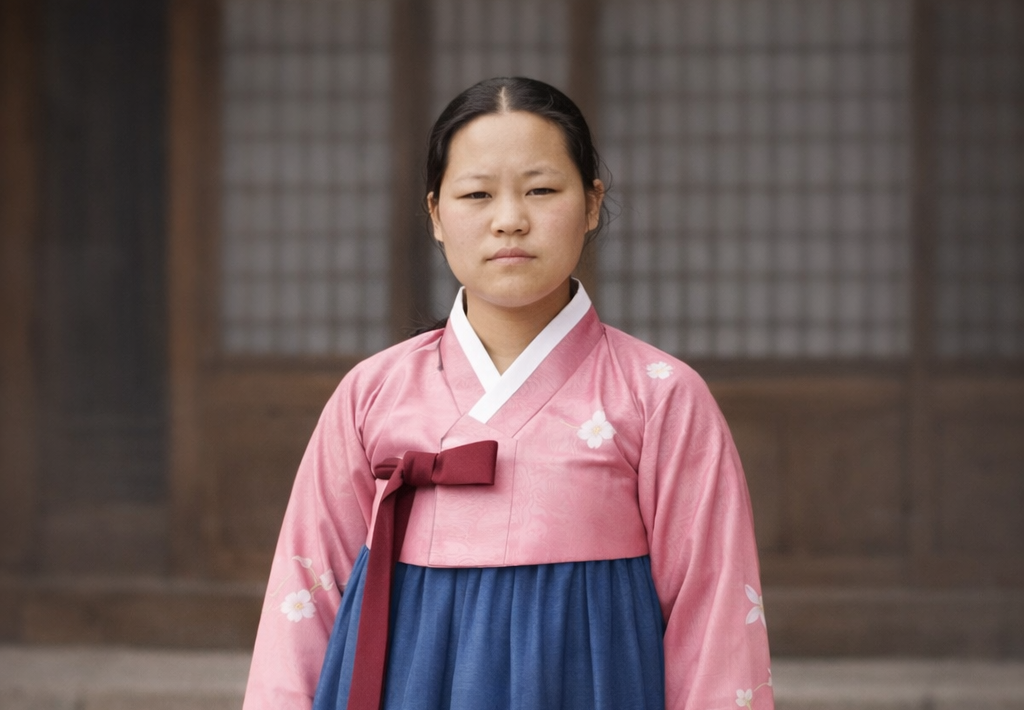
On Dano, there are several distinct customs. Women washed their hair and face with changpo (iris leaf) water as a ritual to ward off evil spirits. They also wore new clothes in red and blue and made binnyeo (hairpins) from changpo root to pin in their hair. On the other hand, men wore changpo roots around their waists to ward off misfortune. It was also believed that taking a bath on Dano would prevent illness, so people would do a Dano water ritual. People ate ssuktteok (mugwort rice cakes) shaped like a wheel.
On this day, Koreans also enjoyed activities such as traditional swinging (geune ttwigi) and wrestling (ssireum). Not far from Gwangju, you can experience the celebration of Dano, known as the Dano-je in Yeonggwang. The city is famous for its beautiful coastline and delicious gulbi (dried yellow corvina). Every year, Yeonggwang holds the Beopseongpo Dano Festival. Beopseongpo is a port and is famous for Yeonggwang gulbi. The Beopseongpo Dano Festival was registered as a National Intangible Heritage in 2012. The Beopseongpo region was an important center for managing state rice storage and fish markets during the Joseon Dynasty. This led to the early development of its commercial sector and naturally paved the way for the Dano Festival to emerge.
Did you know that the Dano Festival has been registeredasa UNESCO World Intangible Cultural Heritage? “Gangneung Dano-je” was included in 2008, recognized for its cultural uniqueness and outstanding artistry. It has been one of Korea’s most historically significant festivals, walking a beautiful and traditional path. Many of you may have heard of Dano, but perhaps you weren’t sure exactly when it takes place. It’s on the 5th day of the 5th month of the lunar calendar (May 31 this year), the day when the sun was thought to be closest to the earth. It’s a joyful event to pray for human health and prosperity. In Jeollanam-do, there is a festival in Yeonggwang where you can enjoy Dano in a unique and diverse way. Why not make your Dano in 2025 a little more special?
The Author
Park Yeonju is an undergraduate at Chonnam National University, majoring in political science and diplomacy as well as Chinese language and literature. Her third major is international development cooperation studies. She was born and raised in Gwangju and wants to promote the colorfulness of the city that she has been a part of for so long. Also, she wants to deliver various voices of the world. It is her dream to become a true journalist by inheriting the spirit of May 18.