



Essay: Across Empires and Aesthetics – Abanindranath Tagore and Kim Whanki in Conversation
By Reeti Roy ||
My fascination with India’s Abanindranath Tagore and Korea’s Kim Whanki began at very different moments in my life. I first encountered Abanindranath in a Class I textbook when I was just six years old. Kim Whanki arrived much later, through an unexpected pop cultural doorway when RM of BTS spoke publicly about his love for art. His references encouraged many young people, including me, to look more closely at Korean modern art. As I explored Kim Whanki’s works, I found myself noticing surprising parallels between him and Abanindranath Tagore. Although they belonged to different cultures and different periods, the two artists share a deep ideological kinship shaped by empire, national identity, and the longing for cultural renewal.
Both artists confronted similar questions. How does one create under political pressure. How can tradition serve modern needs. And how does art become a vessel for memory, identity, and quiet resistance. Their answers, expressed through their paintings, form the heart of this comparative exploration.
A Shared Century of Upheaval
The late nineteenth and early twentieth centuries were transformative for both India and Korea. India struggled under British colonial rule. Korea faced Japanese annexation in 1910. Intellectuals, writers, and artists in both countries responded by turning to their own languages, rituals, and visual traditions. They were not looking inward to retreat. They were looking inward to rebuild.
Independence arrived in 1945 for Korea and in 1947 for India. The fact that August 15 marks liberation for both countries is a symbolic reminder of their parallel histories. Abanindranath Tagore was born in 1871 and lived until 1951, which means he witnessed the full arc of India’s freedom movement and the birth of a new nation. Kim Whanki was born in 1913 during colonial rule and became one of the most important artists shaping post liberation Korean art. Even though the two men were not contemporaries, they lived in worlds influenced by modernity, empire, and the search for cultural self-definition. Their works become two different but related responses to these shared historical pressures.
Abanindranath Tagore and the Search for an Indian Aesthetic
Abanindranath Tagore is often remembered as the founder of the Bengal School of Art. At a time when British-administered art schools promoted European academic realism, he looked back to India’s own traditions. Mughal and Rajput miniatures, Persian manuscripts, and local folk forms entered his visual language. He was part of a larger cultural awakening that sought to revive Indian aesthetics at a moment when colonial rule had marginalized indigenous art.
A signature element of his work is the wash technique. Soft contours, translucent layers, and delicate lines create an atmosphere that feels gentle, lyrical, and introspective. This technique was influenced by Indo–Japanese exchanges at the turn of the century. Japanese artists visited Calcutta, shared their approaches, and created a moment of Asian artistic dialogue that helped shape the Bengal School.
Two of Abanindranath’s paintings illustrate his ideas particularly well.
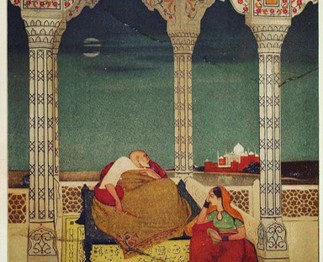
The Passing of Shah Jahan (1902)
This painting shows the Mughal emperor Shah Jahan at the end of his life. He looks toward the Taj Mahal, the monument he built for his beloved wife. The painting is quiet and contemplative. The emperor’s gaze becomes a metaphor for loss and longing. On the surface it is a historical
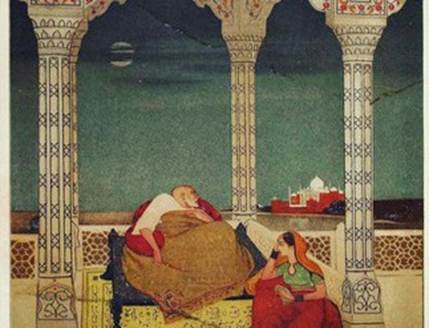
The Passing of Shah Jahan.
The Dreamer (1925)
In this work a lone figure sits in a state of stillness. The atmosphere is serene and introspective. The wash technique creates a dreamlike quality. Here contemplation becomes a form of quiet resistance. Abanindranath’s art suggests that self-knowledge and inner life can become forms of strength during political upheaval.
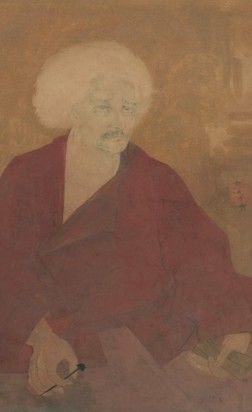
The Dreamer.
Kim Whanki and the Language of Korean Modernism
While India saw the rise of the Bengal School, Korea was moving through its own intellectual and artistic transformations. Newspapers, modern schools, and Hangul-based literature flourished during the Gaehwa, or Enlightenment, movement. After Korea’s annexation, art became a space where identity was negotiated and sometimes even quietly protected.
Kim Whanki was born into a prosperous landowning family in South Jeolla Province. In his later years, Kim developed a profound special interest in Korean ceramics. These shapes and colors inspired his lifelong artistic vocabulary.
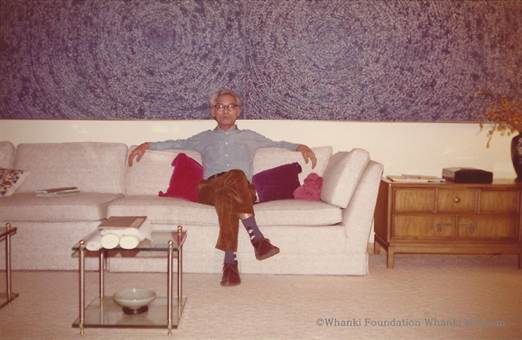
Kim Whanki, New York, 1971. (©Whanki Foundation·Whanki Museum)
Kim studied in Tokyo. However, it was his exposure to the artistry of Korea’s Goryeo and Joseon Dynasties from which his soft touch and painting technique were influenced. When he returned to Korea, he taught at Seoul National University. His early works often featured familiar Korean motifs such as plum blossoms, moon jars, mountains, and rivers. Later, when he moved to New York, he developed his well-known dot-based abstractions, which continue to be celebrated worldwide. Each dot was painted by hand. The resulting canvases feel meditative, rhythmic, and almost cosmic.
Two of his works highlight the emotional depth of his art.
Where, in What Form, Shall We Meet Again (1970)
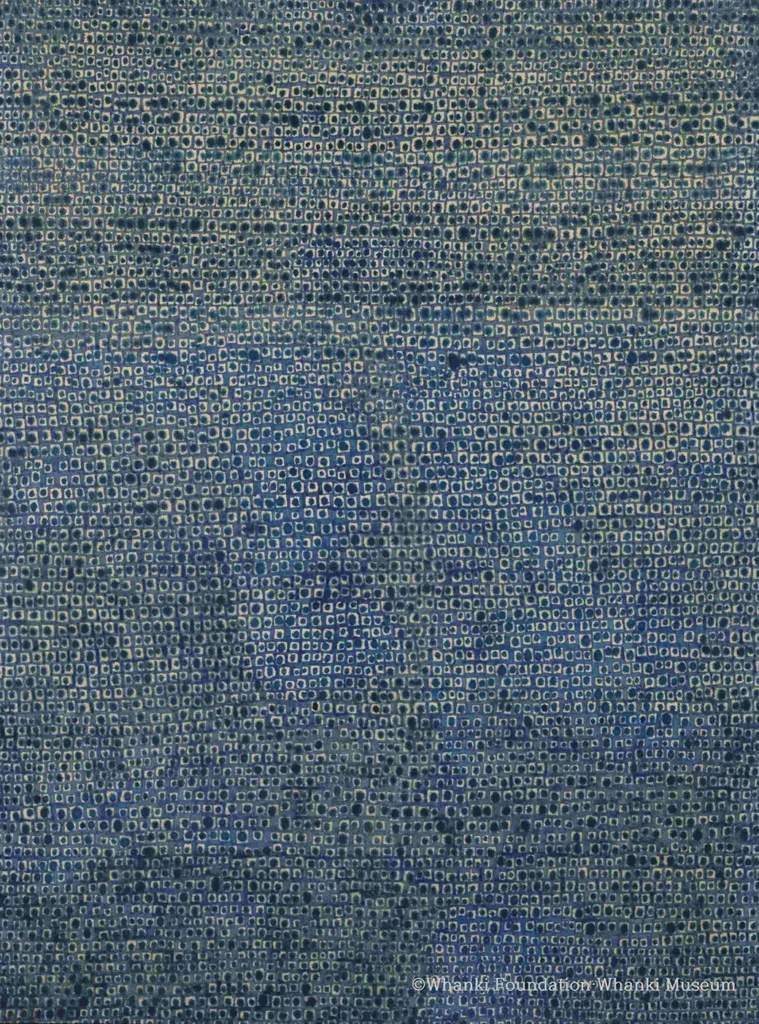
Kim Whanki, Where, in What Form, Shall We Meet Again, 1970. (©Whanki Foundation·Whanki Museum)
This monumental painting is composed of thousands of small dots. Each dot feels like a breath or a moment of longing. The work radiates a sense of yearning and contemplation. Many viewers read it as a record of memory, loss, and hope. It is both deeply personal and deeply tied to Korean history. Kim’s own experiences of migration and homesickness blend with larger questions about cultural identity.
Plum Blossoms and Jar (1957)
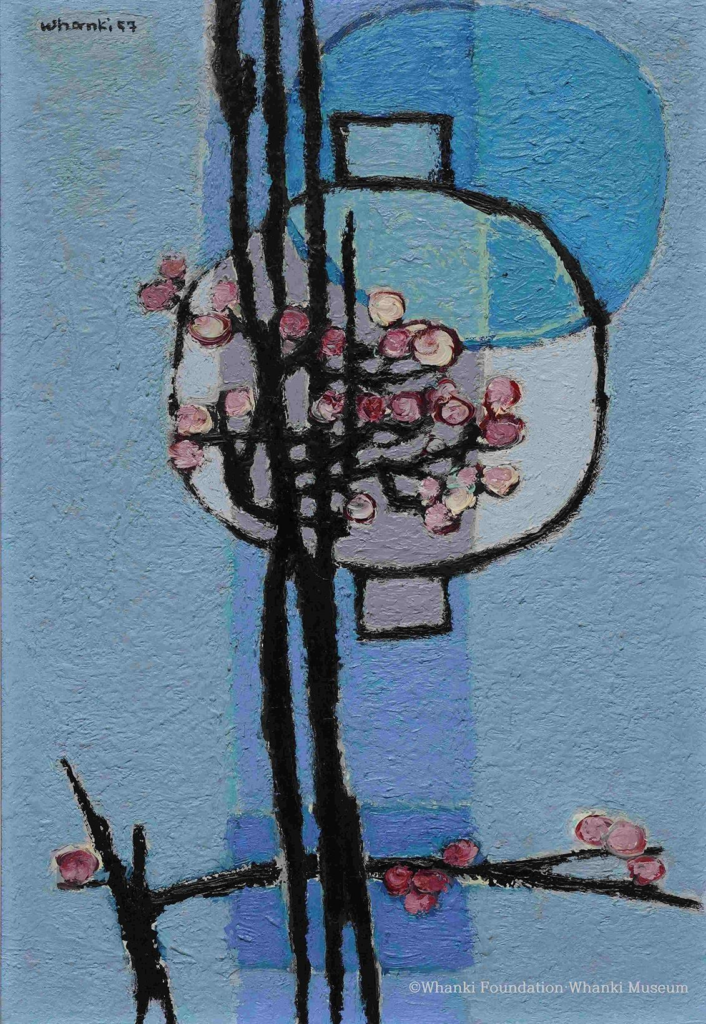
Kim Whanki, Plum Blossoms and Jar, 1957. (©Whanki Foundation·Whanki Museum)
Kim interprets a traditional Korean jar, a form known for purity, simplicity, and restraint. His brushwork and composition give it a modern visual language. The jar acts as a symbolic anchor. The plum blossoms add fleeting beauty and a sense of renewal. By pairing permanence with transience, tradition with innovation, Kim turns a still-life motif into a meditative space where cultural memory and contemporary aesthetics meet and coexist.
A Third Voice in the Tagore Household
To understand the diversity of artistic modernism in India, it is useful to consider Gaganendranath Tagore, the elder brother of Abanindranath. While Abanindranath’s modernism was lyrical and rooted in tradition, Gaganendranath experimented with Cubism, satire, and social commentary.
In works such as Pratima Visarjan and his Cubist sketches, he combined local rituals with global modernist forms. The fractured planes and angular lines of Cubism allowed him to depict traditional ceremonies in new and striking ways. His art shows how Indian modernism was never a single story. It was a conversation between tradition and experimentation. His presence in the Tagore family reminds us that artistic innovation often comes from within the same household, shaped by shared cultures but expressed through different sensibilities.
What Their Works Reveal When Seen Together
When we view the works of Abanindranath Tagore, Kim Whanki, and Gaganendranath Tagore side by side, an important truth becomes clear. Art in both India and Korea during the early twentieth century was never only about aesthetics. It was a means of survival. Their art preserved cultural memory. It protected dignity in the face of empire. It expressed longing for belonging and freedom. It created space for imagination during times of constraint.
Abanindranath responded to colonial rule with lyricism, introspection, and a revival of traditional Indian forms. Kim Whanki responded to historical rupture with abstraction, rhythm, and a cosmic sense of space. Both turned to tradition, not for nostalgia but for strength. Both artists show that creativity can hold history inside it. Their works remind us that art is not just about beauty. It is also about courage.
For me, whether encountered in a childhood classroom in India or through the voice of a Korean musician reflecting on art, these artists offer a shared message. In moments of upheaval, art becomes a quiet but enduring form of resistance. It becomes a reminder of who we are and who we hope to be.
The Author
Reeti Roy is a writer, cultural commentator, and creative entrepreneur whose work explores memory, art, identity, and social justice. She holds a BA in English literature from Jadavpur University and an MSc in social anthropology from the London School of Economics. Her essays and criticism have appeared in numerous publications, including Korean media. In September 2025, she had several international engagements in South Korea, including as keynote speaker at KOTE, Insa-dong, and at the Yeosu Egg Gallery.
Cover Photo: The Passing of Shah Jahan by Abanindranath Tagore.