





Sambok, Dog Days, and Bok-darim
By Chung Hyunhwa
In English, the hottest days of the year are called the “dog days,” which is the translation from Latin caniculares dies. The ancient Romans and Greeks thought the greatest summer heat was affected by a very bright star, Sirius, or the “Dog Star,” of the constellation Canis Major (Big Dog), which rises along with the sun during the hottest days of summer. In Korean, the three hottest days of the summer are collectively called “Sambok” (삼복) and are individually referred to as Chobok (초복, the “first bok” day), Jungbok (중복, the “middle bok” day), and Malbok (말복, the “final bok” day). We call each bok day a bok- nal (복날), and a lot of people keep the tradition of eating bok-darim (복달임, a special treat eaten on each bok-nal). The Chinese character for bok (복, 伏) means to “lie flat” or “lie on the belly,” which suggests that everything surrenders in front of the great summer heat. Interesting also, the Chinese character for bok (伏) is a combination of the radical for “man” on the left and the Chinese character for “dog.”
Regarding the origin of this summer observance, Dongguk-sesigi (동국세시기), a book about customs written during the Joseon Dynasty period, explained that the Sambok tradition started during the Qin Dynasty of China in the 6th century BCE. At that time, according to the record, it was observed by performing a rite with an offering of dog meat to wish for a summer without serious damage from harmful insects to keep the year’s harvest safe. In an agricultural society, it was also reasonable to have such days to encourage nutritious food and rest to keep the people healthy. There is no clear historical evidence, but such tradition must have been adopted in Korea along with the calendar system around the Three Kingdoms Period (8 BCE – 660 CE), when the interaction between Korea and China was frequent. The dates of the three bok- nal are decided by the 60-year calendar system, making them fall on different solar calendar dates each year, but mostly between mid-July and mid-August.
The idea of Sambok was to pause to find the balance of life by getting rest and eating nutritious foods with family and close friends to protect against the extreme heat, so the historic records show that people would go to a cool place where there was water or shade and eat special foods. Kings of the Joseon Dynasty would grant the imperial gift of beef to the government officials, but the public would commonly get chicken or dog meat because oxen were an important livestock asset in the agrarian society. Red bean soup and watermelon were consumed as well.
In 2025, the Sambok days fall on July 20, July 30, and August 9, ten days apart from each other as usual, but not so surprisingly, this summer is predicted to be hotter than usual. According to the latest BBC news, the polar sea-ice area is decreasing rapidly, and is at the lowest in recorded history. Some scientists predict the ice in the Arctic Ocean will completely disappear by 2030, ten years earlier than the previous predictions. Sea-ice works like a mirror, reflecting the energy from the sun into space, so the decrease in sea-ice will leave the dark-colored oceans to absorb more heat to speed up global warming – which doesn’t sound good. Therefore, taking care of one’s health during the Sambok days may have gained more significance than in the past.
However, due to our threatening climatic situation, we may want to give some thought to the bok-darim food choices to show our awareness. Which foods are good for our health and, at the same time, have the least effect on climate change? If we aim at releasing less carbon, plant-based foods are the best. Soybeans, soy products, and mushrooms are easy options for protein to replace meat. At the vegetarian level, eggs and cheese are much lower carbon options compared to meat. Among meats, poultry is still the lowest. I notice more and more people choose to reduce meat consumption as an action for the climate problem we have, although eating meat had been a very normal practice in most parts of the world.
Sambok is a nice tradition in many ways, but unlike olden days, we live in a time of abundance, so trying the low-carbon, light-calory alternative bok-darim dishes may be more beneficial health- wise, and it will make you feel good about the environment-friendly choice you make. Thus, how about a dish of a nice low-carbon Sambok treat to observe bok-nal this year? Here are some suggestions for the alternative bok-darim options:
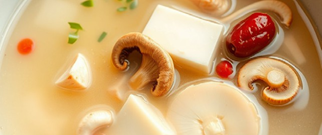
- Mushroom Tofu Soup with/without ginseng (인삼버섯두부탕): A very healthy alternative to samgetang (ginseng chicken soup).
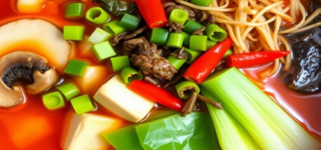
- Chaegejang (채개장, Yukgejang soup without meat). Considered to be temple food.
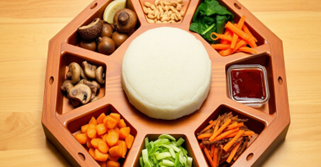
- Miljeonbyeong (밀전병) and Gujeolpan (구절판): Traditional crapes with a “nine delicacy platter.”
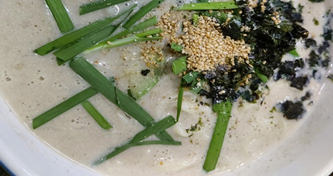
- Deulggae Kalguksu (들깨칼국수, noodles with ground perilla seeds): Perilla seeds contain a good amount of omega 3. Using buckwheat noodles (메밀국수) can add all of the essential amino acids.
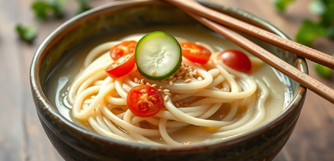
- Kongmul Guksu (콩물국수, Cold Noodles in Soy Bean Soup): A nutritiously balanced choice as a Sambok dish.
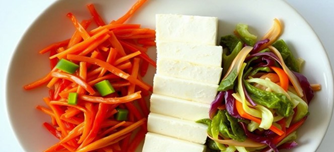
- Dubu Kimchi (두부김치, tofu served with kimchi): No-cooking required, zero-effort- taking balanced dish of sliced tofu and kimchi.
The Author
Chung Hyunhwa, a native of Gwangju, recently worked for a horticultural company. She led the international eco- hike group Gwangju Hikers at the GIC in 2020 and 2021. Previously, she taught English at Yantai American School and Yantai Korean School in China and worked in school administration at Branksome Hall Asia in Jeju. She holds a master’s degree in TESOL from TCNJ in the U.S. and a license to teach Korean. She loves plants, birds, and repurposing items creatively.