

Movie Review: A Taxi Driver – A May 18 Film
By Farrukh Anique
In an evening in October 1979, South Korea’s former-military president Park Chung-hee was sent to his grave in the midst of an elegant dinner, killed by his intelligence chief, Kim Jae-gyu. The investigation into his assassination was entrusted to a major general named Chun Doo-hwan. Chun declared Kim Jae-gyu deserving of the death penalty for the president’s murder and had him hanged a few months later. In the meantime, Chun’s influence grew to such an extent that he took the reins of the state into his own hands and, on December 12, declared martial law.
As told in A Taxi Driver, in May 1980, a protest that began at the main gate of Chonnam National University spread across the city, reaching, among other places, the Jeollanam-do Provincial Office. The media in Gwangju was forbidden to report these protests without heavy censorship. All roads into and out of the city were sealed. To the rest of the country, only one message was allowed through: that people with communist leanings were rioting in Gwangju, and that harsh measures to quell them were sadly unavoidable.
At that moment, a German journalist based in Japan got wind of what was happening. He flew at once to Seoul and sought out a journalist friend to ask what was really going on in Gwangju. His friend told him that no news was allowed to leave the city, so it was impossible to say with certainty what was taking place there. Apart from a few unverified rumors, he had nothing concrete to offer. The German reporter decided to find an English-speaking taxi driver for just one day, go to Gwangju himself, survey the situation by evening, and return the same day.
At this point, a widowed father of an eleven-year- old girl, an ordinary man of modest education, who knew only two or three words of English, allowed greed to get the better of him. By a trick, he managed to seat the German in his own taxi and set off. As they left Seoul, neither of them had the faintest idea into what calamity they were about to thrust their lives. When they found the main entrance to Gwangju blocked, a chill ran through the driver. But at the reporter’s insistence, he asked directions from local farmers and turned off onto rough back roads leading toward the city.
In Gwangju, they came across a student who could speak English and who dreamed of becoming a guitarist. They met a beautiful, warm-hearted woman who gave them, free of charge, the most delicious jumeok-bap, simple balls of boiled rice with anchovies and laver, and thanked them for coming from so far away to carry the voice of the struggle for democracy into the outside world. They met several taxi drivers who were ferrying the wounded to hospital without taking a single won, who stripped parts from their own cars to help their guest taxi driver, and who all longed to see democracy in their country. They met another taxi driver who, when their car broke down, sheltered them in his home for the night. His wife made kimchi from leafy greens for which she had no equal.
After dinner in that house, they listened to the young student sing, and then all of them danced together. In only a few moments more, flames would be leaping from the offices of a distant newspaper office, bright enough to be seen miles away. Then, suddenly, the crack of gunfire would begin to ring out, a sound that would refuse to fall silent, not even the next afternoon.
That simple taxi driver, his heart burning with anxiety for the little daughter waiting alone at home; that playful young student, laughing at everything, his fingers itching to dance across a guitar; that frail, middle-aged taxi driver, cradling his baby in his arms as he asked his wife to widen the table for the unexpected guests; and that German journalist, sitting silently in a foreign land across seven seas, surrounded by people speaking a foreign tongue, his thoughts with his own children far away, what message was tomorrow’s sun bringing for them all? Which of them would live to witness whose final breath? Which of them would make it safely home? Unaware of all this, they went on laughing and dancing to an off-key song. In the silent, deserted street beyond, their laughter echoed far into the distance.
* * * * *
In 2003, the Korean government awarded the German journalist, Jürgen Hinzpeter, the Song Gun-ho Press Award for risking his life to bring to the world the story of that historic uprising and the atrocities committed in Gwangju. From 1980 until his last breath in 2016, he searched tirelessly for the taxi driver who had taken him there. He made videos about him again and again, and had articles printed in the press, but that nameless hero never stepped into the public eye.
After the release of A Taxi Driver in 2017, a young man from Daegu contacted the media and said that the taxi driver shown in the film was his late father. His father’s name was exactly the one the German journalist had given, and in 1980 he had indeed driven a taxi in Seoul. Yet he had never spoken of those events to anyone, not even to his own family. Perhaps he had done all that for his homeland, for his children and their future, no desire for fame or honor. Or perhaps he had simply been afraid of how the regime might treat him if his role ever came to light; we can never know for certain.
Thanks to the courage of that unsung hero, the events of May 1980 reached the whole world, a chapter in Korea’s history that lit such a fire for democracy in the hearts of its people that, in 2024, when President Yoon Suk Yeol declared martial law, the resulting protests were so vast that this martial law survived only six hours. After the National Assembly passed a resolution, it died a democratic death.
A Taxi Driver deals with such a decisive milestone in Korea’s struggle for democracy that its very context is inherently compelling and inspiring; in a sense, it was almost destined to be a success. On top of that, it features Song Kang-ho – of Parasite and Memories of Murder – in the lead role. He plays a seemingly selfish taxi driver who, almost in spite of himself, discovers a braver and more selfless side he did not know he possessed. He performs the role with extraordinary skill and once again proves there is very little he cannot do as an actor. Even so, his character could have been written with a smoother, less abrupt arc; the transformation feels somewhat overly dramatic at times. In general, the screenplay is not exceptional, but it does contain some truly remarkable scenes.
One such scene is the dinner at the local taxi driver’s home, where the Seoul driver and his German passenger are treated as guests. It is shot with great care. A modest dining table is stretched to accommodate visitors who understand and respect their cause; an offbeat song is sung; clumsy dancing and unrestrained laughter fill the small room. Together these details create a perfect slice of domestic life, embodying that sense of community that has long been at the heart of Korean society. The film lets us rest in this warmth just long enough for the viewer to breathe out emotionally. Then, suddenly, there is a fire at the newspaper office, and tragedy crashes down without warning, reminding both the characters and the audience that this is not a love story and that it will not end happily. The tone of the film shifts in an instant. The director accomplishes all this through blocking, reaction shots, and carefully chosen camera angles, without the need for heavy-handed dialogue.
Then there is the massacre scene, which can be considered the emotional and cinematic peak of the film. When the soldiers open fire on the protesters, the camera stays close to the ground. Rather than offering a detached, distant view of “war,” the film shows tight, focused shots of people being shot, ordinary citizens and young students in blood-soaked clothes collapsing in the very streets they had called home only a day earlier. Taxis race in to pick up the wounded, their back seats already stained, and weave through a landscape of bodies to get them to the hospital.
The editing alternates rapidly between short, disorienting fragments of gunfire and panic, and slightly longer shots of the cars breaking through barricades. Close-ups of the protagonist’s face capture his internal shift from “I just want my money and to get back to my daughter” to “these are my people they are shooting, and I must save them, even if it means driving into flying bullets.” The whole sequence distills the chaos and terror into something almost unbearable to watch.
In this scene, collective heroism is depicted with particular force. There is no single savior. People fall, their friends scream for the soldiers to stop, taxi drivers lift the injured and place them in already bloody seats, and the German reporter continues to film. Everyone in the frame is a hero in their own way. It is the kind of scene that makes you forget to breathe and helps you understand why May 18 appears in every serious discussion of modern Korean history.
There are certainly moments in the film that feel over-dramatized, but it is, after all, a work of cinema. It must weave together elements of entertainment and suspense with the historical truth it is trying to convey. In that balancing act, despite its flaws, the film succeeds often enough to leave a deep and lingering impression.
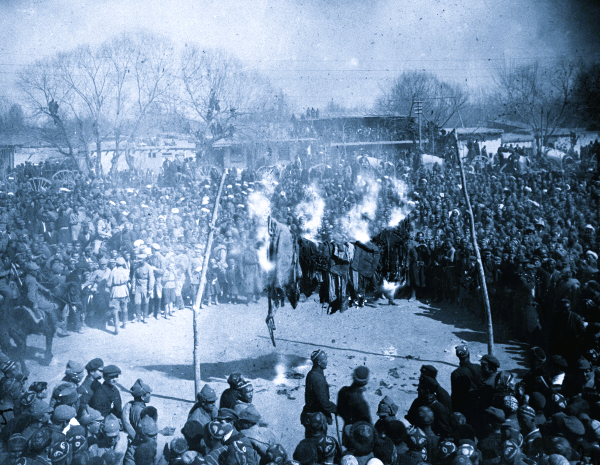
Before watching the film, I had already read a great deal about the Gwangju Uprising. I imagined I was simply going to see a historical drama: that my knowledge of the event would deepen and that I would pick up a few new words in the local Gwangju dialect along the way. But once the film began, the scenes on the screen pulled me back to the massacre at Jallianwala Bagh in British India, which we learned about in school. I felt as though I were watching the story of my own city. The unarmed people being gunned down were my own people. The blood-soaked bodies of students lying under white sheets in the hospital were my classmates, my friends. The old woman wandering from bed to bed searching for her grandson was my grandmother. The journalist being beaten in the newsroom was the neighbor from my street who always says hello when he sees me with a serious face.
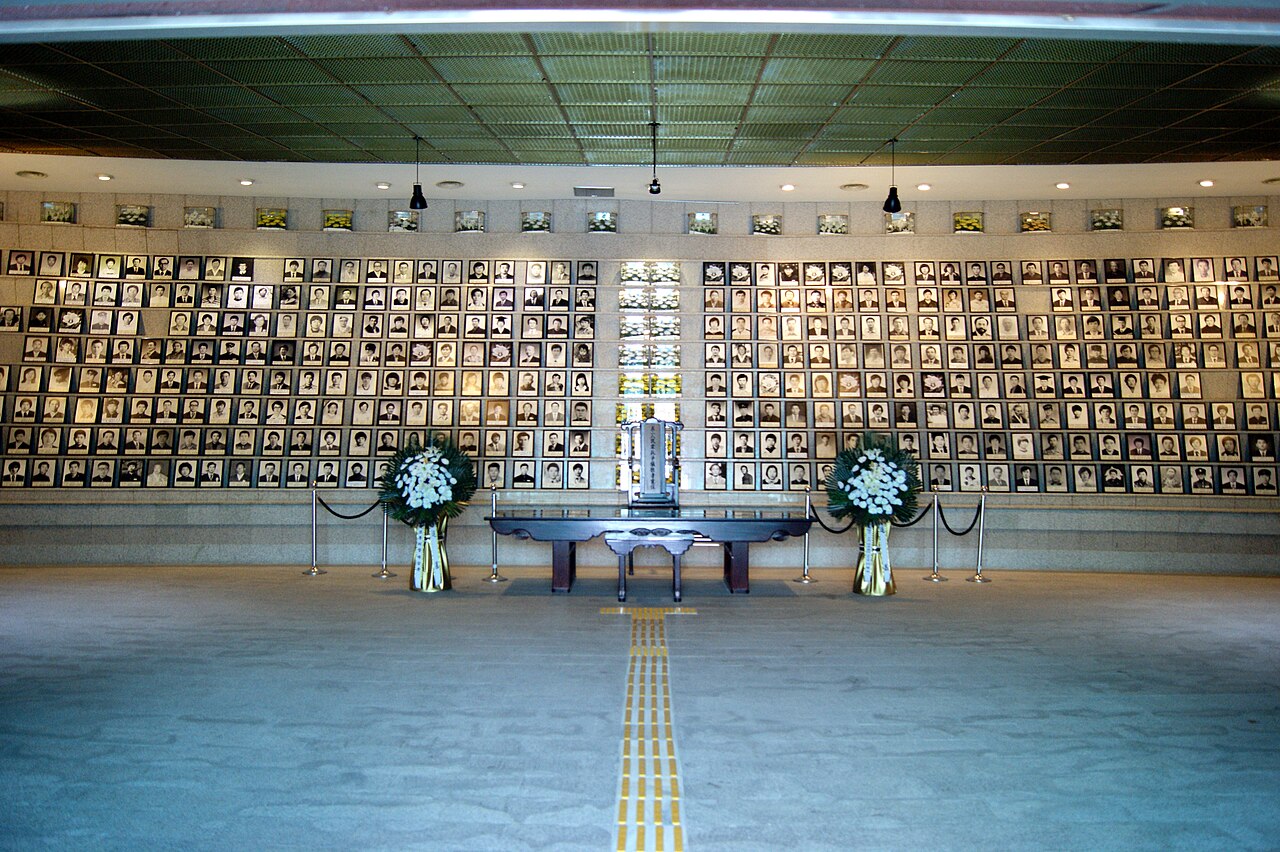
After watching this film, my feelings at the annual May 18 commemorations will be utterly and irrevocably changed. If you want to understand why the martial law declared in Korea in 2024 could not survive more than six hours, A Taxi Driver must be on your watch list. The martyrs of May 18 watered Korean democracy with their blood, and that sacrifice will keep it alive and green for a very, very long time.
The Author
Farrukh Anique is a PhD student immersed in mechanical engineering at Chonnam National University. Originally from Pakistan, he’s not all about gears and equations though. He’s got a real love for the performing arts, culture, literature, and languages. He is an amateur theater actor, short-story writer and speaks five languages. In his spare time, he dives into Korean culture and history, soaking up the vibrant traditions and stories that spark his curiosity. Oh, and he absolutely loves strawberries.
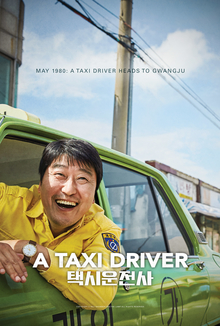
Cover Photo: A Taxi Driver movie poster.