
Friendship Cities: Gwangju and Hiroshima – Japan’s Shared Vision for a More Peaceful and Just World
By Murdock O’ Mooney
I first visited Hiroshima, Japan, in the summer of 2025, although I had wanted to go long before that. Having lived in Gwangju and worked at Chosun University for seven years, I felt Gwangju and Hiroshima shared a unique lineage as cities that had experienced great tragedy and loss, but also cities that had transformed themselves into beacons of hope for the future. In fact, unbeknownst to many, Gwangju and Hiroshima actually share the title of Friendship Cities, which bonds them to a shared vision of cooperation based on peace, humans rights, and civic networks.
Way back in 2011, when I was in my late twenties and hacking out an existence as an English teacher with EPIK (English Program in Korea), Steven Leeper, the then chair of the Hiroshima Peace Culture Foundation (HPCF), attended the inaugural World Human Rights Cities Forum (WHRCF) in Gwangju. Leeper was there on behalf of Hiroshima’s Mayor Matsui and spoke on Hiroshima’s peace policies as well as the policies of the Mayors for Peace, which is an international organization of mayors working towards nuclear disarmament and fostering a global culture of peace. It was at this time that the two cities were first publicly linked in regards to the pursuit of peace and human rights.
In August of 2011, Gwangju’s then mayor Kang Un-tae signed Gwangju onto the Hiroshima-led Mayors for Peace organization, further cementing the two cities shared vision of a future free from nuclear weapons and gross human misconduct.
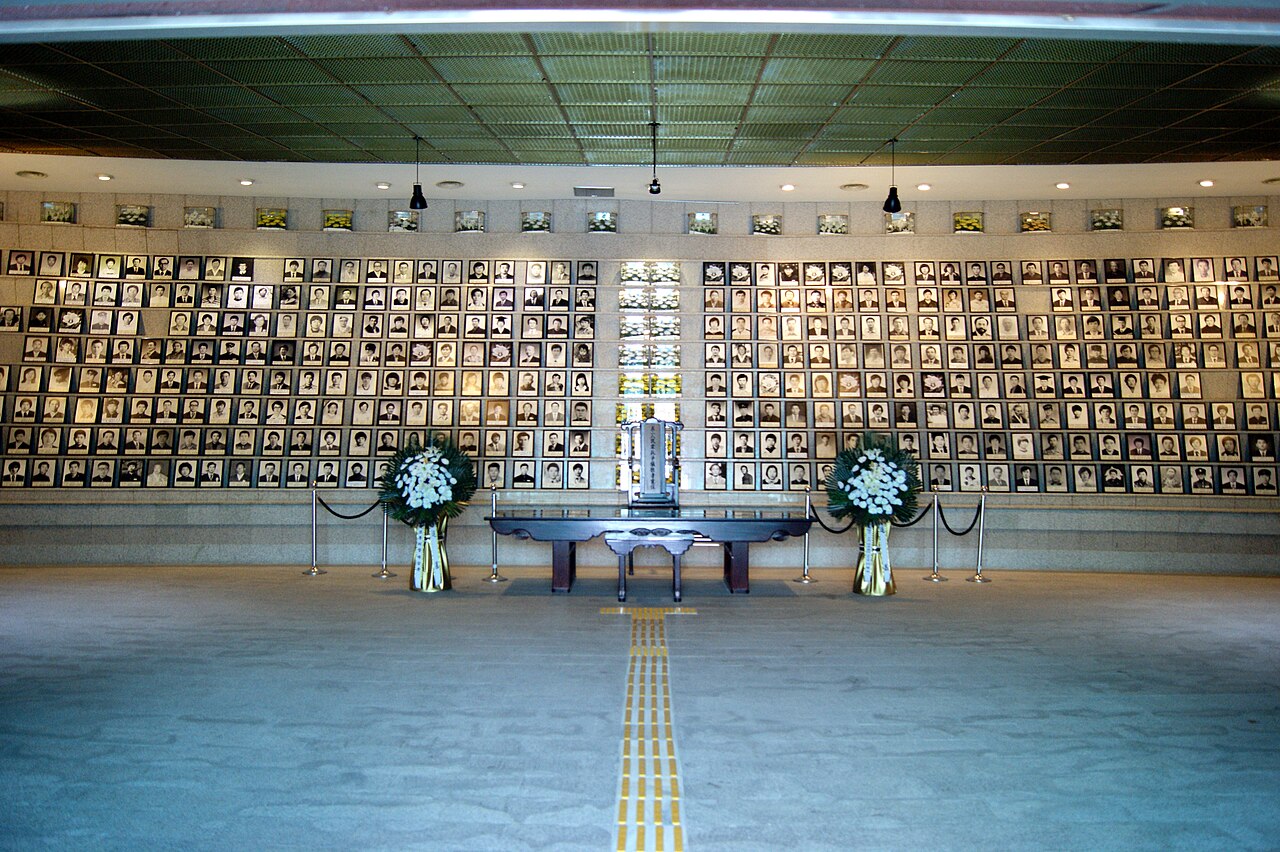
For those unfamiliar, Gwangju positions itself as a human rights city because of the tragedy that unfolded with the May 18 Democratization Movement of 1980 in which hundreds of protestors and civilians were killed by South Korean troops. According to the Gwangju section of the WHRCF’s website, Gwangju leads education for humans rights through the Gwangju Labor Center, Gwangju Non-Regular Worker Support Center, Gwangju Youth Labor Human Rights Center, and the Labor Counseling Center for Youth.
Further to this end, Gwangju adopted resolutions by the United Nations Human Rights Council on “Local Government and Human Rights” in August, 2015, and September, 2019. Hiroshima also follows these resolutions.
Mayors for Peace now has 7,756 member cities spanning 163 countries and was formed following the bombings of Nagasaki and Hiroshima in 1945, which took 210,000 lives in an instant. According to the Disruptor Awards website, Hiroshima’s Mayor Matsui believes that with the hibakkusha, or “bomb affected persons,” aging and dying off, it is even more crucial that organizations such as Mayors for Peace raise awareness of the horrible atrocities of war. Mayor Matsui believes it’s Hiroshima’s duty to transmit this message of peace to the world and try to influence polices that would help lead to denuclearization and increased cooperation between counties.
Hiroshima and Gwangju also have cultural crossovers. In March of 2000, Hiroshima-based artist Maruki Toshi’s “Crows and The Rape of Nanking” was shown at the Gwangju Biennale, which served as an early cultural bridge between the cities’ memory cultures.
Visiting Hiroshima this past summer, I got to experience the city first-hand. Hiroshima has a population of around 1.2 million people, which is similar with Gwangju. Despite its size, Hiroshima has a hometown feel and is pleasant to explore on foot. We stayed in the Fukuromachi district, which is about half a kilometer from the Hiroshima Peace Memorial Park, comparable with Gwangju’s Asia Culture Center.
The park occupies an island in the Motoyasu River. Peace Avenue will take you from the city to the island, with Hiroshima Green Arena and Hiroshima Castle about half a kilometer to the north. Beyond the museum and memorial, the park is also home to the Flame of Peace, which has been burning continuously since 1964 in protest of nuclear weapons. The park is served by several streetcars and buses at Fukuromachi and Hondori Stations to the south and Honkawacho and Kamiyacho Stations to the north.
While sitting at the Atomic Dome, I struck up a conversation with a Japanese English teacher. She was procuring free English lessons for her students, who were busy talking to tourists. “My grandmother was a survivor of the bombing,” she told me. “We call them hibakkusha, or bomb affected person,” she said. “At first my grandmother hated Americans. Then she saw American soldiers crying on TV and saying they were sorry. She realized they were humans as well. After that, she decided to hate war.”
The Atomic Dome building was completed in 1915 as an exhibition hall to promote trade. After the bombing, attempts were made to demolish it, but it wouldn’t come down – possibly a symbol of the indomitable spirit of the people of Hiroshima.
The Hiroshima Peace Park was designed by Japanese architect Kenzo Tange and constructed between 1949 and 1955. It’s a beautiful, vast space; however, a visit can be emotional. It’s not uncommon to see visitors shedding tears or staring blankly at the Atomic Dome. People also line up at the Cenotaph, which is an arched tomb structure dedicated to victims of the bombing, to pay their respects. The way the park is designed, if one stands at the Cenotaph and looks north, they can see the Peace Flame and Atomic Dome perfectly aligned in the distance.
No visit to the park is complete without seeing the Peace Museum. It is here that the horror of the atomic bombing becomes apparent through graphic photographs and memorabilia. And like Gwangju and May 18, Hiroshima doesn’t shy away from the brutal realities of what transpired. Some of the most disturbing images include mutilated and burned citizens, total annihilation of city blocks, and illustrations depicting the river spouting geysers of boiling water from the extreme temperatures produced by the bomb codenamed “Little Boy.” “Fat Man” was dropped on Nagasaki.
However, when you walk through the sky bridge into the museum’s East Building, you begin to explore Hiroshima’s history before the bombings. Here one learns that Hiroshima was an important military city and a center of business and commerce. The East Building also highlights Hiroshima’s post-war efforts to promote peace, unity, and human rights, which I found especially inspiring and uplifting. This part of the museum also reminded me of Gwangju’s Asia Culture Center, which is transformed into a vibrant and spectacular memorial space each May.
To get a break from the crowds, take a streetcar to Moto Ujinaguchi station near Ujina Island. From there, walk the half-kilometer to the island. The island is small but worthwhile boasting the new Grand Prince Hotel Hiroshima, which hosted the 2023 G7 Summit (you can even take a photo on the G7 stage if you like, just like the world leaders did).
From the hotel, you can walk a paved path along the coast that will lead you to the secluded Moto Ujina Beach with trails leading to the historic Ujina Lighthouse. Next to the lighthouse is a massive 127-year-old camphor tree. Beyond providing a great photo backdrop – I saw some local couples taking their wedding photos here – the tree is a stunning example of a hibaku jumoko or “survivor trees,” which became important symbols of resilience as human survivors began to die off.
One of the most beautiful scenes from my visit was seeing classes of Japanese schoolchildren singing at the Sadako Sasaki Memorial. Sadako was two years old when the bomb fell and became ill with leukemia soon afterwards.
According to Japanese legend, if one folds 1000 origami cranes, they are granted a wish. Even though bedridden, Sadako folded 1000 origami cranes in hopes of curing her cancer. She died at twelve years old, and her wish was never realized. She did, however, leave a lasting impression on her school friends, who published their letters to her to raise money for her memorial. In 1958, a statue of Sadako holding a paper crane was completed at the Peace Park. Visitors leave thousands of paper cranes near the statue in honor of Sadako, as well as for the Japanese Obon Holiday, which honors the departed spirits of ancestors.
In my opinion, the campaigns and peace efforts of Friendship Cities Gwangju and Hiroshima can be described with two words: grace and resolve. Few other cities so deeply define themselves through past tragedy, while simultaneously embracing a vision of peace, coexistence, and human rights for the future. Both cities also stand as beacons of light in a world increasingly overshadowed by war, authoritarianism, and conflict. In this way, we can look to Gwangju and Hiroshima as cities to lead us into a future that values peace and coexistence over war and violence.
Sources
- Chiarella, J. J. (2023, September). The world and human rights: The WHRCF. Gwangju News. https:// gwangjunewsgic.com/uncategorized/the-world-and- human-rights-the-whrcf/
- The City of Hiroshima. (n.d.). Paper cranes and children’s peace monument. https://www.city.hiroshima.lg.jp/ english/peace/1033408/1009685.html
- Mayors for Peace. (2019, March 28). Disruptor Awards. https://www.disruptorawards.com/2019honoree-summary/2019/3/28/mayors-for-peace?utm_ source=chatgpt.com
- Hiroshima Peace Memorial Museum. (n.d.). https:// hpmmuseum.jp/?lang=eng
The Author
Murdock O’Mooney is an educator and writer based in Albuquerque, New Mexico, USA. He lived in Gwangju and worked at Chosun University from 2015 to 2022. He’s interested in geopolitics, education and trying to help build a more just world.