


Bridging Cultures Through Stories: Ukrainian Volunteers in Gwangju
By Anastasiia Prysiazhniuk
I came to Gwangju to study Korean as a GKS-IRTS scholar, but I ended up finding something even more meaningful. Through a friend, I learned about the UNESCO KONA Storybook Center and started volunteering there, helping with English classes. What began as a way to try something new turned into a much deeper experience – one that connected my background in Ukraine with the people I was meeting in Korea.
As a Ukrainian living in Korea, I realized I was in a unique position. I wasn’t just helping teach English – I was also sharing my own culture and building a small bridge between two countries that are located far from each other. Language was a tool for communication, of course, but it was also a way to build understanding. That part mattered to me most.
KONA is a unique place and stories are at the heart of everything they do. We used picture books and short stories in almost every session, whether we were working with kids or adults. At Jungheung Library, as an example, we ran casual reading groups where students would read aloud, act out characters, or just talk about lessons gained from the stories.
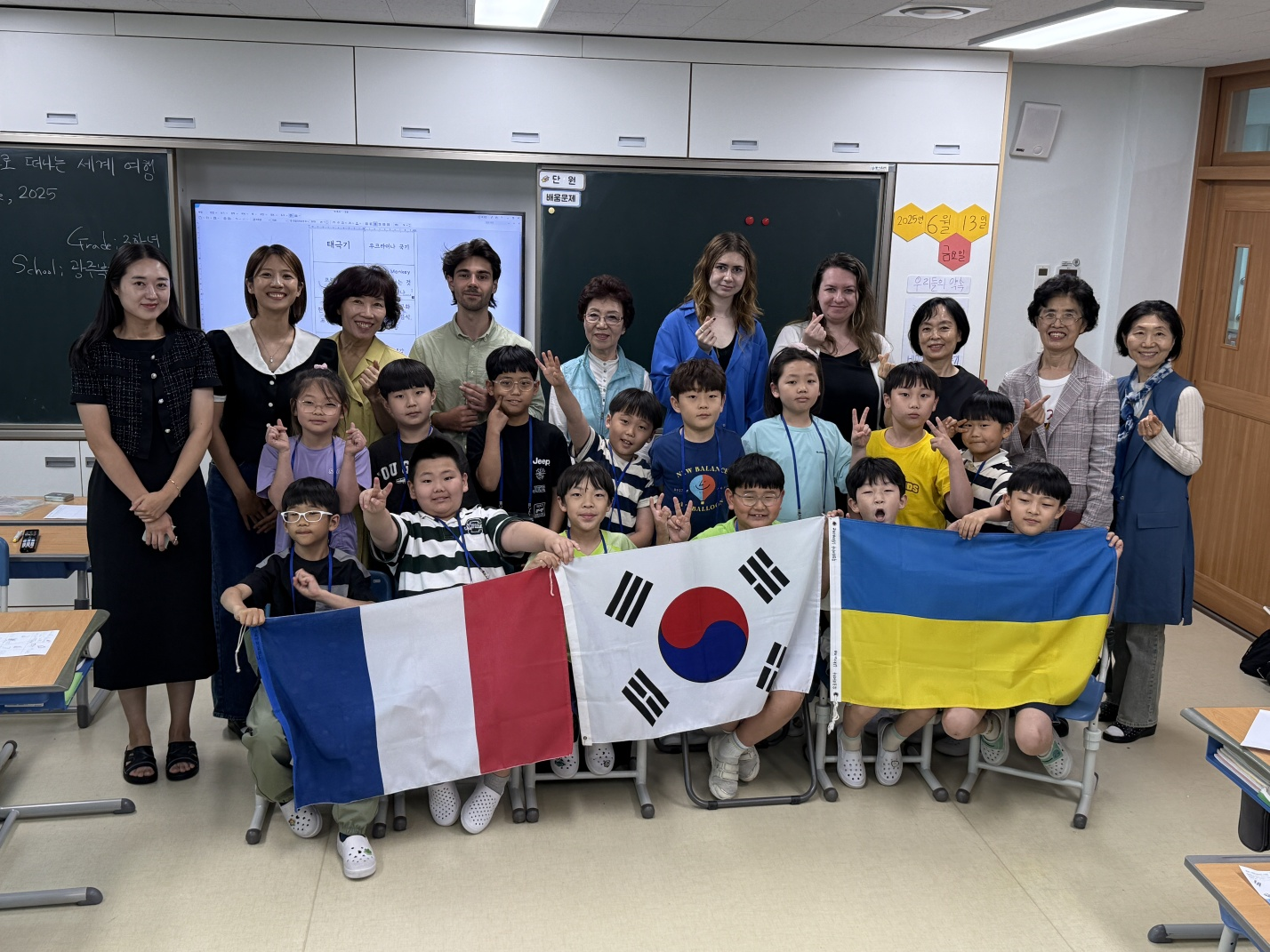
At two local schools in Gwangju, we gave short presentations about Ukraine to elementary students. These were fun and interactive, mixing English learning with cultural exchange. The students were always excited to ask questions and learn about a country they didn’t know much about.
One method that we used a lot was speed reading. Coming from Ukraine, this was familiar to me – speed reading has been part of education back home for years, especially when it comes to learning foreign languages like English. I was surprised and happy to see that the KONA center also uses it as a core part of their teaching approach. It really helps students read with more confidence and understand more in a short amount of time.
While I was helping others improve their English, I was also learning Korean every day – through real conversations, daily practice, and even during translation activities. I often helped with simultaneous translation during presentations, which pushed me to keep learning and improving.
Volunteering gave me the chance to talk about Ukraine, answer questions, and share my perspective. But more than anything, it showed me how powerful traditional stories and shared learning can be. This experience wasn’t just about teaching English. It was about connecting two cultures – those of Ukraine and Korea – through stories, language, and mutual curiosity.
The Author
Anastasiia Prysiazhniuk is a GKS-IRTS scholar from Kyiv in Ukraine, a graduate of Kyiv National Linguistics University, and currently based in Gwangju. She is focused mainly on teaching, translation, and cultural exchange, especially sharing the richness of Ukrainian culture through language education and volunteering.
Cover photo courtesy of Anastasiia Prysiazhniuk and the UNESCO KONA Storybook Center.