


Global Focus: The Day that Changed Everything – Ukraine After February 24, 2022
By Anastasiia Andriievska
February 24, 2022 – the date that forever changed the lives and daily reality of every Ukrainian. It marks the beginning of Russia’s full-scale invasion of Ukraine. The whole world has heard about it through the news, social media, and online posts, but few truly understand how deeply this war has affected the life of every Ukrainian. In this article, I would like not only to remind everyone that the war in Ukraine is still ongoing but also share how, for almost four years now, Ukrainians have been living in a completely new reality.
Of course, the war has impacted Ukrainians not only psychologically but also in their everyday routines. Every time an air raid siren sounds, people have to stop everything; leave their homes, workplaces, or classrooms; and run to the nearest shelter to save themselves from missile or drone attacks. In Ukraine, there are even special mobile applications and websites that warn people about air raids even before the sirens go off. Local television channels and radio stations also interrupt their broadcasts to report potential attacks from Russia.
Russia deliberately destroys infrastructure: power and heating plants, transportation networks, hospitals, schools, and residential buildings to make life in Ukraine unbearable. Recently, another thermal power plant was hit, killing and injuring civilians. There were no military facilities or equipment in any of those areas – only civilian infrastructure. Major enterprises that provide thousands of jobs are being destroyed, along with expensive equipment worth hundreds of millions of dollars. Civilians lose their homes; many are forced to flee, especially those living near the frontlines, leaving everything behind just to survive. Large farms and crops have also been targeted. In just a few months, over 100,000 heads of cattle were killed on one farm alone. Russia is also trying to erase our language and culture – this summer, the largest Ukrainian-language printing house was destroyed, and in occupied territories, Russian forces burn or confiscate any books written in Ukrainian.
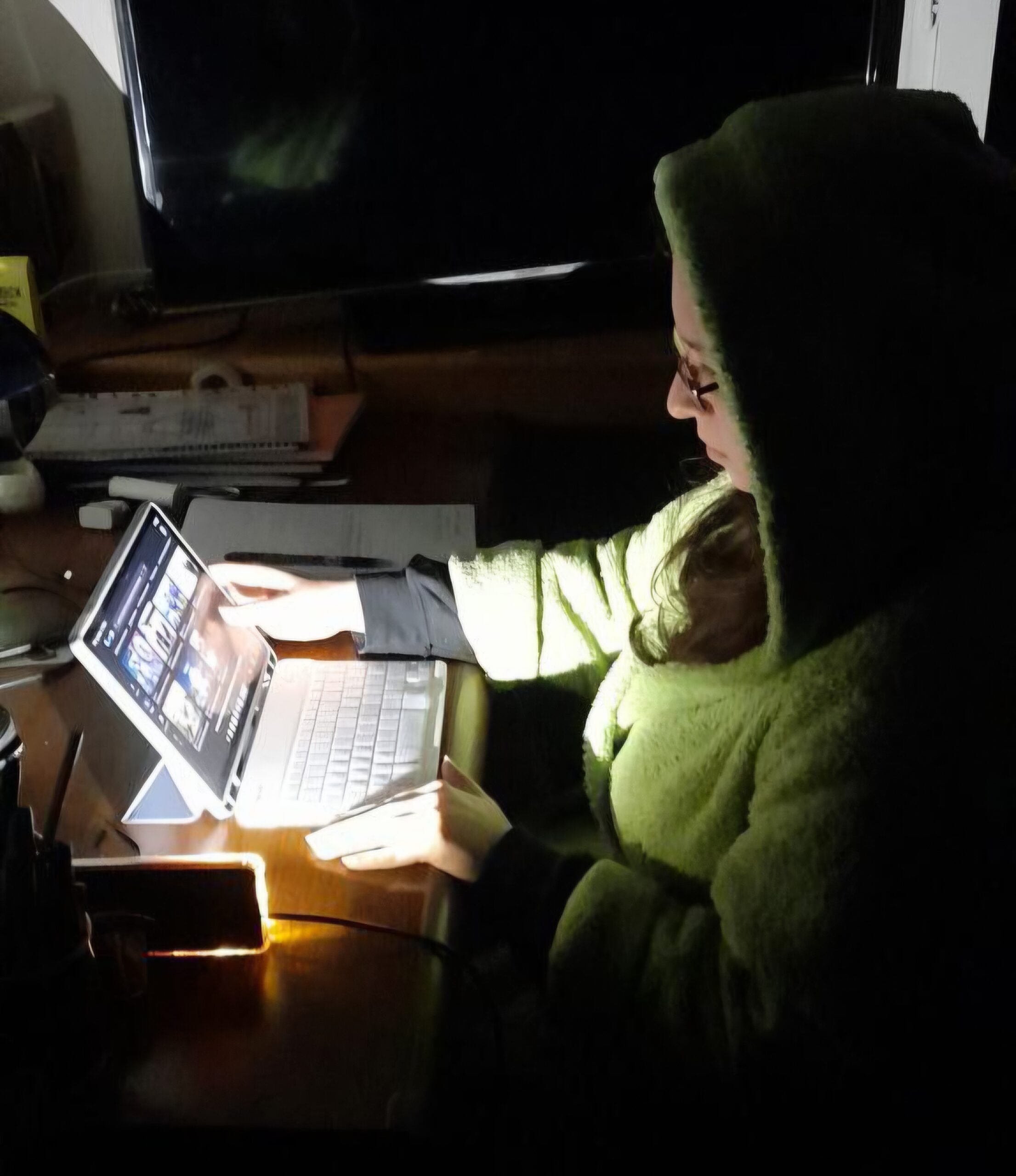
Because of this, the everyday life of Ukrainians has drastically changed. The destruction of power plants has caused severe electricity shortages. Across the country, scheduled power outages last for many hours, sometimes even for entire days. This also leads to water, communication, and internet disruptions, leaving people unable to contact relatives, read the news, or perform their daily work tasks. The destruction of gas facilities and oil refineries has caused fuel shortages and price increases. Many Ukrainians cannot afford to heat their homes, even during freezing winters. Food supply is unstable due to the destruction of farms and crops, leading to shortages and price hikes. Constant Russian attacks on roads and railways disrupt deliveries of essential goods. Pharmacies face shortages of medicine because pharmaceutical companies and warehouses have been destroyed. Imported medicine is extremely expensive and unaffordable for many Ukrainians.
Education has also changed dramatically. During air raids, students and teachers must stop classes and move to shelters. In the worst cases, schools and universities switch completely to online learning. The most tragic part is that Russia targets kindergartens, schools, universities, and orphanages. Every sixth educational institution in Ukraine has suffered from Russian aggression. As of October this year, 17.11% of 25,465 educational facilities have been damaged (3,958) or destroyed (400). Among them, the majority are schools (2,046) and kindergartens (1,506). The Kharkiv region suffered the most: 96 educational buildings have been destroyed and 727 damaged. Many students, teachers, and children have lost their lives. More information about the destruction of schools across Ukraine is available on the official website of the Ministry of Education and Science of Ukraine: https:// saveschools.in.ua/en/.
Despite all this, Ukrainian soldiers continue to defend the country. Unfortunately, many lose their lives every day. Although there are no official statistics, almost every local news broadcast includes announcements about farewells to fallen heroes. When the bodies of soldiers return home, citizens line the streets, kneeling and holding flowers – a symbol of honor and deep respect. Every morning at 9:00 a.m., Ukraine observes a nationwide minute of silence to pay tribute to fallen soldiers and thank those who continue to protect our country.
Sadly, war has become a part of daily life in Ukraine. Many citizens, regardless of age, now know how to provide first aid, stop bleeding, or perform CPR. They know how to act in emergencies. Yet despite the constant danger, Ukrainians volunteer and help one another. For us, volunteering carries a special meaning. Volunteers actively support the army: sewing clothes, preparing long-lasting foods, and creating items to help soldiers in the trenches. As autumn and winter come, Ukrainians make “trench candles” – small, long-burning candles used for heating or cooking in field conditions. Others weave camouflage nets for soldiers. For example, my family makes natural homemade energy bars, which are delivered to soldiers near the front line. Soldiers often have no way to cook or rest, and rely on these nutritious and sustaining bars. Ukrainians help each other by donating food, ingredients, clothing, and money – all voluntarily, without expecting anything in return.
When I shared all of this with my Korean and other international friends during my stay in Korea, many were shocked to hear about the reality of the war started by Russia. Sadly, young people often know little or are not interested in what happens in other countries, including Ukraine. The older generation in Korea, however, understands and sympathizes deeply with what is happening in my homeland – which truly touched me. People often asked whether it was safe in Ukraine and if I needed any help. In Korea, I met wonderful people who began not only reading more news about Ukraine, but also spreading awareness among others.
For us, the war in Ukraine is not a distant event on the news; it is a daily reality that has reshaped how millions of people live, work, study, and simply exist. Yet despite constant danger and loss, Ukrainians continue to support one another, rebuild communities, and protect their country’s future. Our resilience is not only about survival but about preserving our identity, culture, and humanity. And as long as we stand together, we continue to believe in peace and in the day when the war will end.
The Author
Anastasiia Andriievska was a Global Korea Scholarship student from Vinnytsia, Ukraine, from 2024 to 2025. She is an active Ukrainian and international volunteer.
Cover Photo: Anastasiia’s family makes trench candles for Ukrainian soldiers, courtesy of Anastasiia Andriievska.