

Migrant Workers’ Rights: Forklift Abuse in Naju Sparks National Outcry
By Yousra Feriel Drioua
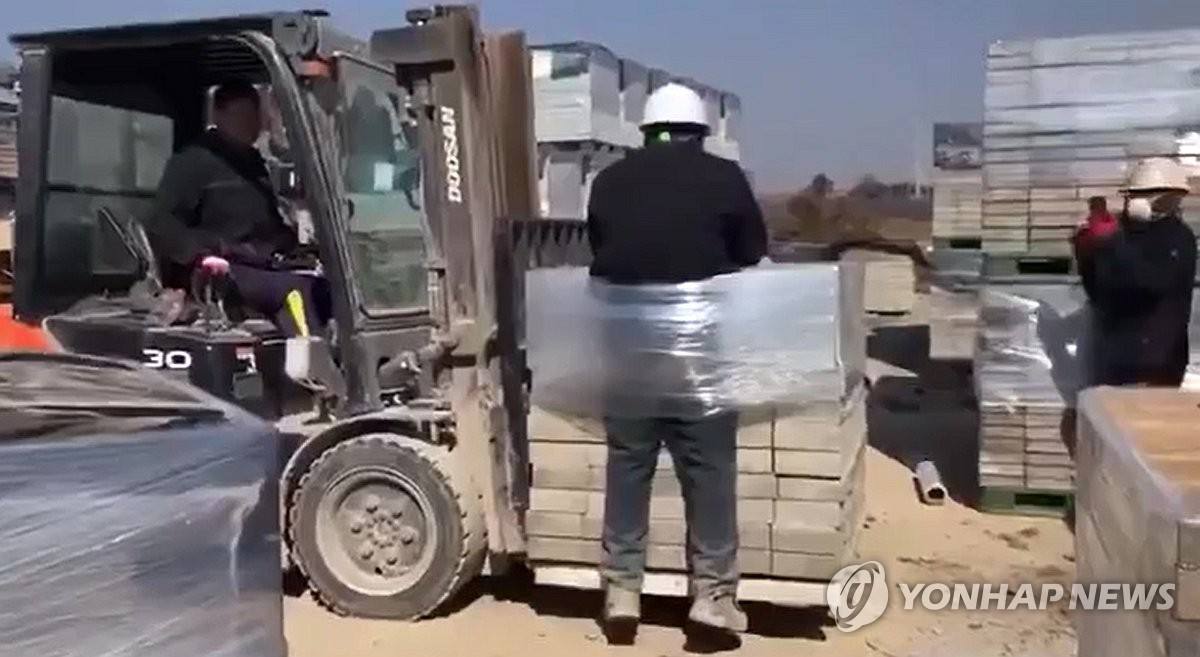
A disturbing case of workplace abuse in Naju, Jeollanam-do, has sparked national outrage, drawing attention to what advocates describe as systemic flaws in South Korea’s migrant labor policies. In February, a Sri Lankan migrant worker in his 30s was bound with plastic to a stack of bricks and hoisted by a forklift at a local brick factory. Video footage shows other workers laughing and filming as the man was lifted and moved like cargo. The incident remained hidden for months until it was obtained by the Gwangju-Jeonnam Migrant Workers Network and released in late July,
prompting widespread condemnation.
Migrant rights groups argue that this was not an isolated incident. In a statement on July 25, the Korean Confederation of Trade Unions (KCTU) described the Naju abuse as “the product of structural violence,” citing other recent tragedies such as the February suicide of a Nepali worker at a pig farm in Yeongam after beatings, verbal abuse, daily roll calls, and pressure to return home, and the July heat-related deaths of a Vietnamese worker in Gumi and a Nepali worker in Pohang, both of whom were forced to work outdoors until late afternoon despite extreme temperatures exceeding 40 degrees Celsius. The statement also pointed to a July case in Gangneung, where a Filipino worker had his passport and bankbook confiscated, was falsely accused of phone fraud, kicked by his employer, and coerced into signing away severance pay.
Advocates point to the Employment Permit System (EPS) as a central problem. The system ties E-9 visa holders to a single employer, sharply restricting job changes and making it difficult to leave abusive conditions. “Without the freedom to leave a workplace, harassment becomes a weapon for employers,” said Udaya Rai, chair of the Migrants’ Trade Union, in interviews with Yonhap News and during a joint press conference on July 29. “This is forced labor by design.”
The press conference, held outside the Presidential Office in Yongsan, brought together more than 100 organizations, including KCTU, the Justice Party, Lawyers for a Democratic Society, and migrant advocacy groups. Speakers such as Justice Party leader Kwon Young-guk and Minbyun lawyer Choi Jung-kyu called for abolishing EPS restrictions, introducing a labor permit system, granting workers the right to extend their own contracts, and strictly punishing discrimination, violence, and harassment. Activists criticized the government’s proposal to ease transfer rules only after three or more years as “inadequate” compared to earlier discussions of full freedom after one year. The rally’s five key demands included abolishing all workplace change restrictions, scrapping discriminatory migrant visa systems, granting contract extension rights to workers, enforcing strict penalties for abuse, and creating a labor–government consultation body for systemic reform.
The problem extends beyond employers. A Korea Institute for Health and Social Affairs study in 2020 found that 31.2 percent of E-9 workers reported experiencing discrimination, with nearly 80 percent enduring it or taking no action. Women respondents reported a 7.1 percent rate of sexual harassment or assault, and 26 percent of all respondents said they experienced depression.
Court records analyzed by the Hankook Ilbo reveal multiple cases in which Korean co-workers assaulted migrant colleagues over trivial disputes, such as losing an arm-wrestling match, being served less alcohol, or reporting misconduct. In one 2021 case, a worker threw a metal machine part at a foreign colleague and struck him on the head; the court described the victim’s “great humiliation and mental suffering” but still handed down a suspended sentence.
For Rai and other advocates, the solution is straightforward. “If workplace transfers were truly free, more than 80 percent of these problems would disappear,” he told the Hankook Ilbo and reiterated it at the July 29 rally. In a public message, the Naju victim expressed gratitude for the presidential condemnation but urged deeper change: “I hope for a Korea where foreign workers can work at the company they choose and have their labor rights protected.”
Whether the government’s promised measures will deliver that vision remains to be seen. For now, migrant rights advocates are bracing for a long fight. They say they will keep pressing until this case marks a genuine turning point, one where migrant workers are no longer bound by fear or restrictive laws but can stand on equal footing with their Korean peers. Anything less, they warn, would condemn the Naju incident to join the long list of forgotten outrages in Korea’s labor history and leave us waiting for the next tragedy to occur.
The Author
Yousra Feriel Drioua is a freelance journalist and media enthusiast from Algeria, currently based in South Korea. A former Global Korea Scholarship scholar, she holds an MA in media and communication and writes on issues at the intersection of gender, media framing, sociopolitics, and civic society. In her free time, she enjoys being a barista. Instagram: myyilgi