



Sports Focus: Pay Cuts, Caps, and Caution – How Gwangju’s Three Pro Teams Are Recalculating Value
By Zhang Jiuzhou (Julius) ||
Recent salary-related developments across Gwangju’s three major professional teams – the Kia Tigers, Gwangju FC, and the AI Peppers – highlight a shared shift in philosophy. Despite competing in different leagues and sports, all three organizations are being pushed toward the same conclusion: Sustainability, availability, and cost efficiency now outweigh reputation and past success.
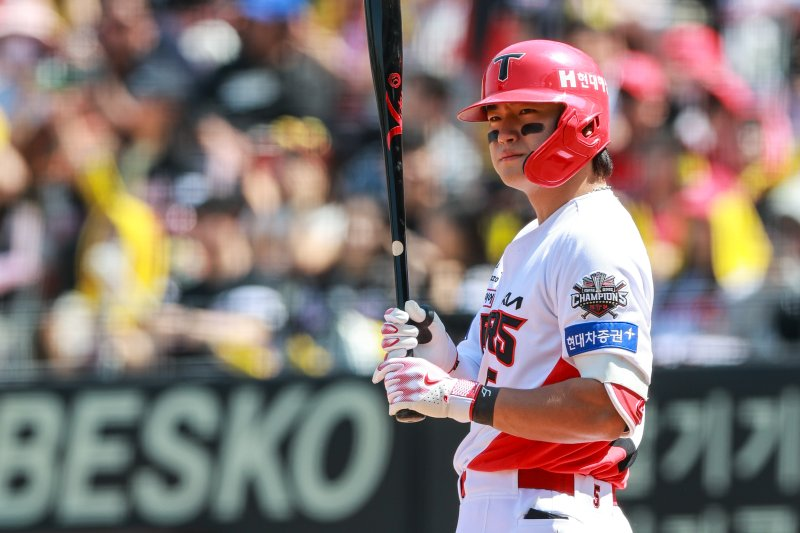
The most eye-catching case involves Kia Tigers star Kim Do-yeong, whose 2026 salary is set to drop to 250 million won, a 50 percent cut from last season. The reduction is jarring given his historic 2024 campaign (a .347 batting average, 38 home runs, 109 RBIs, and 40 stolen bases), which earned him league MVP honors and helped deliver a championship.
Yet Kim appeared in only 30 games this past season due to recurring hamstring injuries. In today’s KBO, even generational talents are not immune to strict scrutiny if they cannot stay on the field. The debate around Kim’s pay cut mirrors a broader reality faced by Gwangju’s teams: Performance is no longer judged in isolation from durability.
From a business perspective, however, Kim’s value extends far beyond his salary. He remains Kia’s most powerful commercial asset, accounting for over 40 percent of the club’s jersey sales. Industry insiders widely believe that a healthy Kim entering free agency could command a total value exceeding 16 billion won, and MLB scouts continue to monitor him closely for his rare blend of power, speed, and infield versatility.
Health, therefore, has become the decisive currency – not just for Kim but across Gwangju professional sports.
“Sustainability, availability, and cost efficiency now outweigh reputation and past success.”
That same principle underpins Gwangju FC’s financial reset. According to the K League’s 2025 salary expenditure report, the club reduced its total payroll by 23.7 percent, from 9.66 billion won in 2024 to 7.38 billion won this past season. The move followed sanctions for breaching financial sustainability rules and forced the club to abandon high-risk spending in favor of restraint.
Crucially, the cutbacks did not trigger a collapse. Gwangju FC finished seventh in the league, reached the ACL Elite quarterfinals, and placed second in the Korea Cup – results that suggest efficiency and stability can offset reduced investment. Like Kia’s approach with Kim Do-yeong, Gwangju FC is betting that disciplined management will protect long-term competitiveness.
In women’s volleyball, the AI Peppers face a parallel challenge under even tighter constraints. Veteran outside hitter Park Jeong-ah, once known as a “championship machine,” signed a high-profile deal worth 775 million won per year in 2023. At the time, the struggling franchise needed star power to establish credibility.
Two seasons later, the calculus has changed. Park’s scoring efficiency has dropped below 30 percent, and her long-standing weakness in serve reception has become more pronounced. Meanwhile, the Korea Volleyball Federation has announced that the individual salary cap will fall sharply to 540 million won beginning with the 2026–27 season – just as Park’s contract expires.
Like Kim Do-yeong, Park now stands at a crossroads where past achievements collide with present limitations and future rules. For both athletes, health and adaptability will define their next contracts more than name value alone.
Across baseball, football, and volleyball, Gwangju’s three teams are converging on the same reality. Injuries, financial regulations, and structural caps are reshaping how success is measured. In this new environment, availability, efficiency, and long-term planning have become the common ground – binding together three very different teams under a single, increasingly cautious economic logic.
The Author
Zhang Jiuzhou (Julius) is from Harbin, China. He began writing in 2022 and has contributed to the Chinese media in Gwangju. Julius currently serves at a sports data company and is pursuing a master’s degree in media and communications. He is also responsible for the Chinese Students Association at Chonnam National University.
Cover Photo: Kim Do-yeong steps into the batter’s box during a 2025 game. (Kia Tigers)