






Gwangju Future Industry Expo 2025: Showcasing Advanced Technologies and Future Visions
By Bae Sangdon
The Gwangju Future Industry Expo was held over four days from June 26 to 29, 2025, at the Kim Daejung Convention Center. This annual event is one of Korea’s leading industrial exhibitions, offering a comprehensive look at the latest technologies and trends in next-generation core industries, such as artificial intelligence (AI), robotics, future mobility, and renewable energy. During the exhibition, domestic and international companies, research institutes, and investors gathered to expand cooperation and exchanges through exhibitions, conferences, and business meetings.
As the exhibition planner for Hyundai Motor Group, I took part in preparing for and participating in this event. Although there were challenges during the preparation process, I felt a great sense of fulfillment after its completion. I would like to share some of the things I saw and felt at the event.
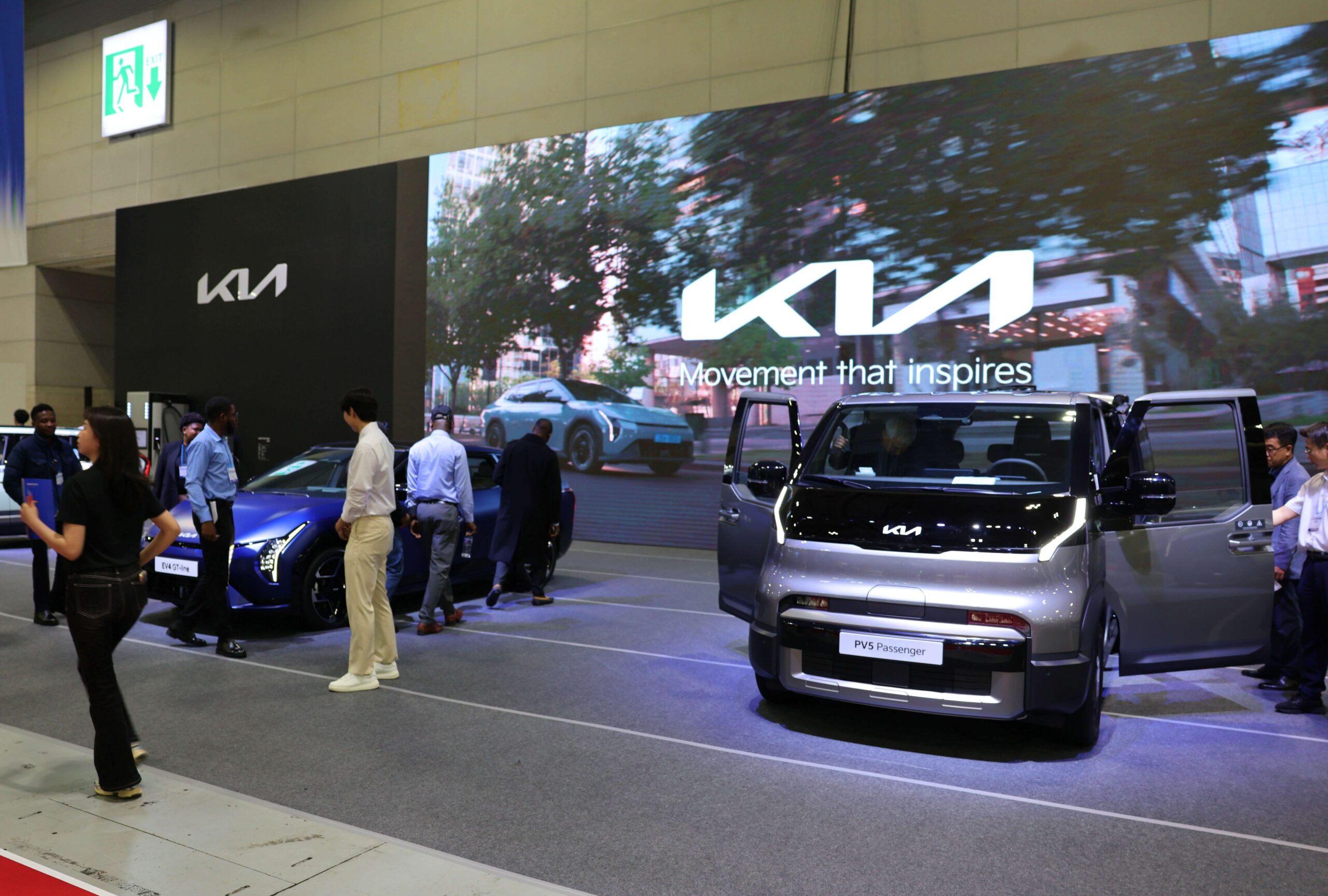
Our Hyundai Motor Group pavilion served as a platform to share our vision for future mobility and advanced manufacturing technologies with the public and partner companies, aiming to build a sustainable future together. In the Hyundai Motor and Kia exhibition hall, we showcased the hydrogen fuel cell vehicle NEXO, the PV5 (PBV, purpose-built vehicle), and the latest electric vehicle models, presenting the direction of future mobility and sustainable transportation.
In particular, Kia’s PBV business strategy focuses on supplying simple, modular, and eco-friendly multi-purpose vehicles that can be customized at a low cost to meet customers’ business needs. The first model developed under this strategy, the PV5, was designed for a wide range of applications, such as mobility services for transportation- vulnerable groups, pop-up stores, logistics, leisure activities, ride-hailing services, and more. With its optimized and versatile design, the PV5 attracted significant attention among the many futuristic vehicles on display at the Expo.
At the Hyundai Motor Group Tech Hall, a one-third scale model of the Group’s future advanced air mobility (AAM) aircraft, the SA- 2, was on display. NASA defines AAM as an air transportation system that moves people and cargo between locations underserved or unserved by aviation. This includes both urban air mobility (UAM), which addresses urban traffic congestion by maximizing intra-city travel efficiency, and regional air mobility (RAM), which connects regional hubs.
Future air mobility aircraft are similar to small airplanes but can take off and land vertically, combining features of both light aircraft and helicopters. The SA-2, developed by Hyundai Motor Group’s independent subsidiary Supernal, is designed to cruise at an altitude of about 400– 500 meters at a speed of 200 km/h. Several other companies also showcased AAM models, making it one of the major highlights of the Expo.
In addition, various innovative technologies were presented, including digital twin technology (which creates a real-time synchronized virtual replica of a factory), logistics robots, collaborative robots, vision systems, and LiDAR-based application systems. Of particular interest was the logistics robot scheduled to be introduced at Kia’s Gwangju plant in 2025. This system mounts a collaborative robot on an autonomous mobile robot (AMR) to automate the process of delivering parts from the warehouse to workers.
Since 2024, the Hyundai Motor Group Tech Hall has showcased key technologies, such as autonomous parking robots, the quadruped robot Spot, AAMs, PBVs, and mobile picking robots (MPR). For 2026, an exhibition themed around humanoid robots is planned.
Among the various sectors, I believe Gwangju politicians should particularly focus on developing the robotics industry. Robotics integrates advanced technologies such as AI, precision machinery, photonics convergence, batteries, sensors, and control systems. Gwangju, with its industrial foundation in AI, photonics convergence, and future mobility, is in an ideal position to attract and foster the humanoid robotics industry.
According to global investment bank Goldman Sachs, the humanoid robot market is expected to grow to about US$37.8 billion by 2035. The global robotics industry is rapidly expanding due to aging populations, labor shortages, and increased demand for manufacturing automation, with humanoid robots showing high potential for applications in manufacturing, logistics, caregiving, healthcare, and national defense systems. Few regions can simultaneously demonstrate and apply such foundational industries, which is why I hope Gwangju City will use the expo as a platform to bring together domestic and global humanoid-related conglomerates, universities, research institutes, and startups, showcasing technologies and attracting investment from large corporations and the government.
Personally, I look forward to a day when Hyundai Motor Group’s Boston Dynamics humanoid robot Atlas, along with humanoid robots from around the world, will gather for a competition inspired by the concept of Squid Game to demonstrate their technological capabilities. For this vision to become reality, I believe strong support from Gwangju City is essential.
The Gwangju Future Industry Expo 2026 is scheduled to be held in September, and participation from many industry stakeholders is highly anticipated.
For more information:
The Author
Bae Sangdon works for the Kia Motors Gwangju Plant, being responsible for introducing new technologies to transform it into becoming a smart factory. He is strongly interested in the future automotive industry of Gwangju City. He directed the Hyundai Motor Group Tech Hall at the Gwangju Future Industry Expo and showcased new technologies, including future mobility and automation applications.
Cover Photo: The PV5, Kia’s purpose-built vehicle. (Bae Sangdon)