








Nanorobots: Particles for Big Problems
By Saqib Sharif
Imagine a tiny robot so small that millions of them could fit on the tip of a pencil. Now imagine these robots swimming through your bloodstream, guided like GPS-controlled submarines, carrying medicine directly to where it’s needed most – like a tumor or an infection. This is not science fiction. It’s the exciting world of micro- and nanorobots for drug delivery, a cutting-edge innovation in modern medicine.
Misconception About Nanorobots
If you do a Google search for nanorobot images, you will see lots of AI-generated and exaggerated images of robots with arms, legs, propellers, GPS, batteries, wings, cameras, lights, lasers, etc. In reality, a nanorobot is just a particle without a battery or microchip controller. In fact, it’s wirelessly powered and controlled from outside using external magnetic fields, acoustics fields, and IR light.
What Are Micro- and Nanorobots?
These are microscopic machines – some thousands of times smaller than a grain of sand. They can travel through blood vessels and even navigate tight spaces like the brain or urinary tract. Think of them as tiny couriers that can bring medication right to the problem spot, minimizing harm to healthy parts of the body.
How Do They Work?
Microrobots move using external controls such as magnets or sound waves. For example:
- Magnetic fields can pull or push tiny magnetic robots, steering them like remote-control boats.
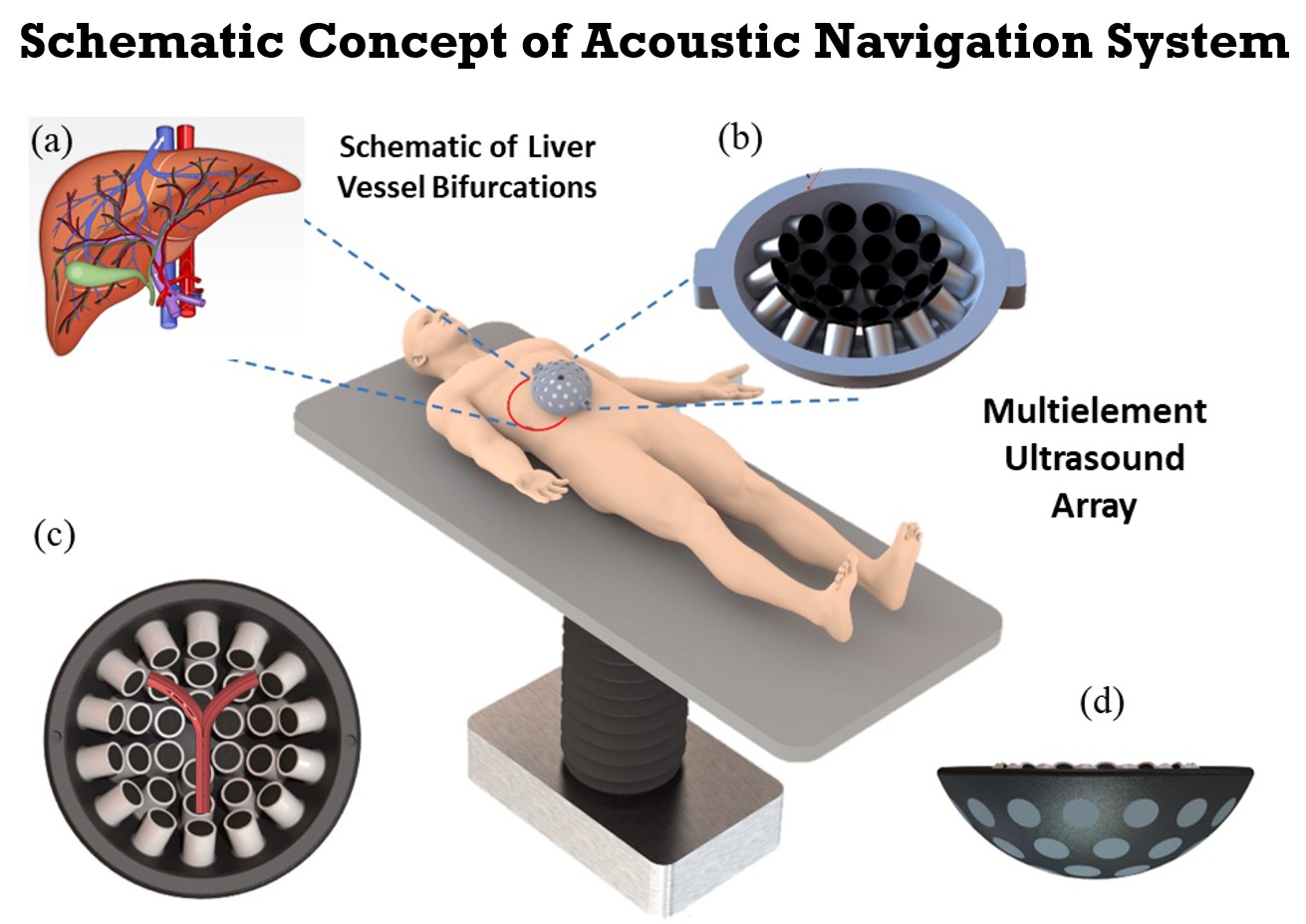
- Ultrasound waves (like those used in pregnancy scans) can push tiny particles to a target area, especially in complex blood vessels.
Once the robot reaches its destination, it can release the drug and, in some cases, even disappear or be safely removed. The doctoral thesis by Saqib Sharif at Chonnam National University shows how researchers use computer simulations to test how these microrobots behave inside vessels and how they can be controlled. These simulations help predict how robots will act in real life before they are tested in humans.
Why Do We Need Them?
Traditional cancer treatments like chemotherapy affect the whole body, often harming healthy cells along with the bad ones. This leads to side effects like hair loss, fatigue, or worse. But with microrobots, drugs can be delivered directly to the tumor, avoiding unnecessary damage elsewhere. This means stronger effects on disease with fewer side effects.
Where in the Body Can They Go?
- The brain: through tiny routes in the spine, – designed to move through the human body. avoiding brain surgery.
- The urinary system: to treat kidney stones or bladder cancer.
- The blood vessels: reaching nearly any organ in the body.
Depending on where the disease is, doctors can choose the best route for the microrobot to travel.
Are They Safe?
So far, most microrobots are made from safe materials like biodegradable polymers or magnetic particles already used in medicine. Researchers are working on making sure they don’t cause immune reactions or clog blood vessels. The goal is complete safety and zero side effects.
Nanorobot Research in Gwangju
The Korean Institute of Medical Microrobotics (KIMIRo), in collaboration with Chonnam National University and the Gwangju Institute of Science and Technology (GIST), stands at the forefront of global research in medical microrobotics. This pioneering collaboration brings together expertise in engineering, biomedical science, and nanotechnology to develop cutting-edge micro- and nano-scale robotic systems for medical applications.
KIMIRo is particularly renowned for its advancementsintargeteddrugdelivery,minimally invasive surgery, and diagnostic microdevices. By leveraging Korea’s strong foundation in robotics and innovation, the institute plays a critical role in shaping the future of precision medicine. With state-of-the-art facilities and a multidisciplinary research team, KIMIRo continues to push the boundaries of what is possible in microrobotics, making significant strides toward safer, more effective treatments for complex diseases such as cancer and neurological disorders.
What’s Next?
According to recent research, scientists are exploring “smart robots” that can sense the environment and change shape. Another task is to track them in real time through imaging techniques like magnetic particle imaging (MPI). These robots might one day diagnose and treat
diseases on their own. The idea of sending microscopic robots through your veins may sound like something out of a sci-fi movie, but it’s already happening in labs around the world. These microrobots could transform how we treat cancer, infections, and even brain disorders, making medicine faster, safer, and more precise.
In a few years, getting treated might not mean swallowing a pill or having surgery. It might mean launching a tiny robot army inside your body – with a mission to heal you from the inside out.
Sources
- Kim, D. I. et al. (2019). Magnetic nano-particles retrievable biodegradable hydrogel microrobot. Sensors and Actuators B Chemical, 289, 65–77.
- Sharif, S., Jung, D., Cao, H.X., Park, J.-O., Kang, B., & Choi, E. (2024). Ultrasonic manipulation of hydrodynamically driven microparticles in vessel bifurcation: simulation, optimization, experimental validation, and potential for targeted drug delivery. Micromachines, 15, Article 13. https://doi.org/10.3390/mi15010013
- Sharif, S, Song, H.-W., Jung, D., Cao, H.X., Park, J.-O., Kang, B., et al. (2023). Ultrasonic targeting of NK cell in vessel bifurcation for immunotherapy: Simulation and experimental validation. Journal of Sensor Science and Technology, 32, 418–424. http://dx.doi.org/10.46670/JSST.2023.32.6.418
- Sharif, S., Nguyen, K.T., Bang, D., Park, J.-O., & Choi, E. (2021). Optimization of field-free point position, gradient field and ferromagnetic polymer ratio for enhanced navigation of magnetically controlled polymer-based microrobots in blood vessel. Micromachines, 12(4), Article 424. https://doi.org/10.3390/mi12040424
The Author
Saqib Sharif is a robotics engineer with a PhD in mechanical engineering, specializing in the design of smart healthcare devices and microrobots. With a strong background in medical technology and innovation, he is passionate about creating solutions that enhance smart healthcare. Dr. Sharif has been living in Gwangju for the past ten years. Currently, he serves as a senior researcher at Shinsung Tech Pvt. Ltd., Gwangju.
Cover Graphic courtesy of Saqib Sharif.