





UNESCO-APCAD Youth Camp: For AI in an Inclusive Future
By Luis Andrés González
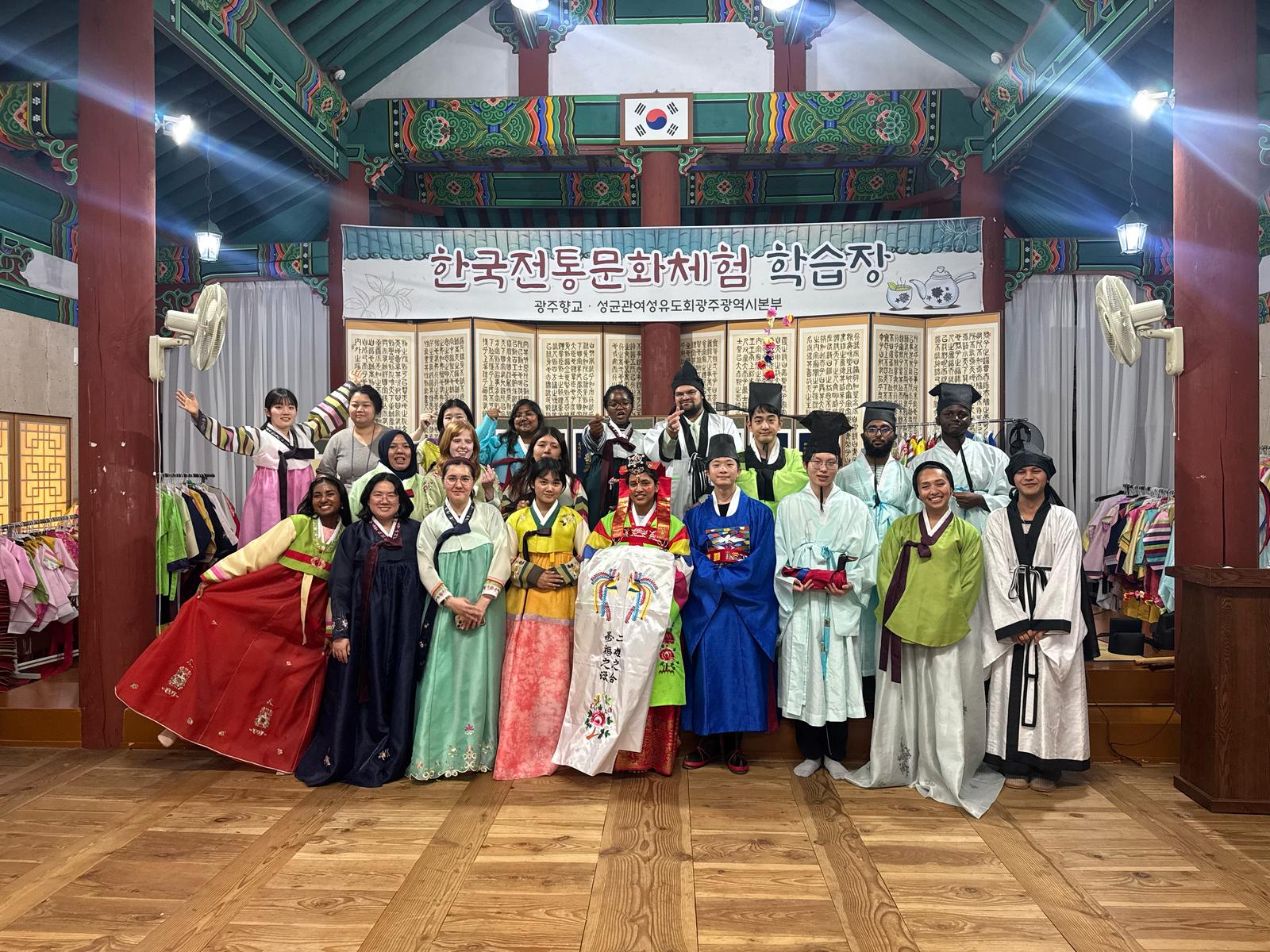
From July 3 to July 8, Gwangju City hosted the 2025 Youth Camp organized by UNESCO (United Nations Educational, Scientific, and Cultural Organization) and APCAD (Asia-Pacific Coalition of Cities Against Discrimination) under the theme “AI for All: Upholding the Value of Inclusion.” The camp brought together 21 young participants from 14 countries to learn, reflect, and co-create a vision for a future with artificial intelligence that leaves no one behind. Designed as a rich and immersive educational and cultural experience, it included expert lectures, workshops, site visits, collaborative projects, shared meals, and more than a few heartfelt laughs.
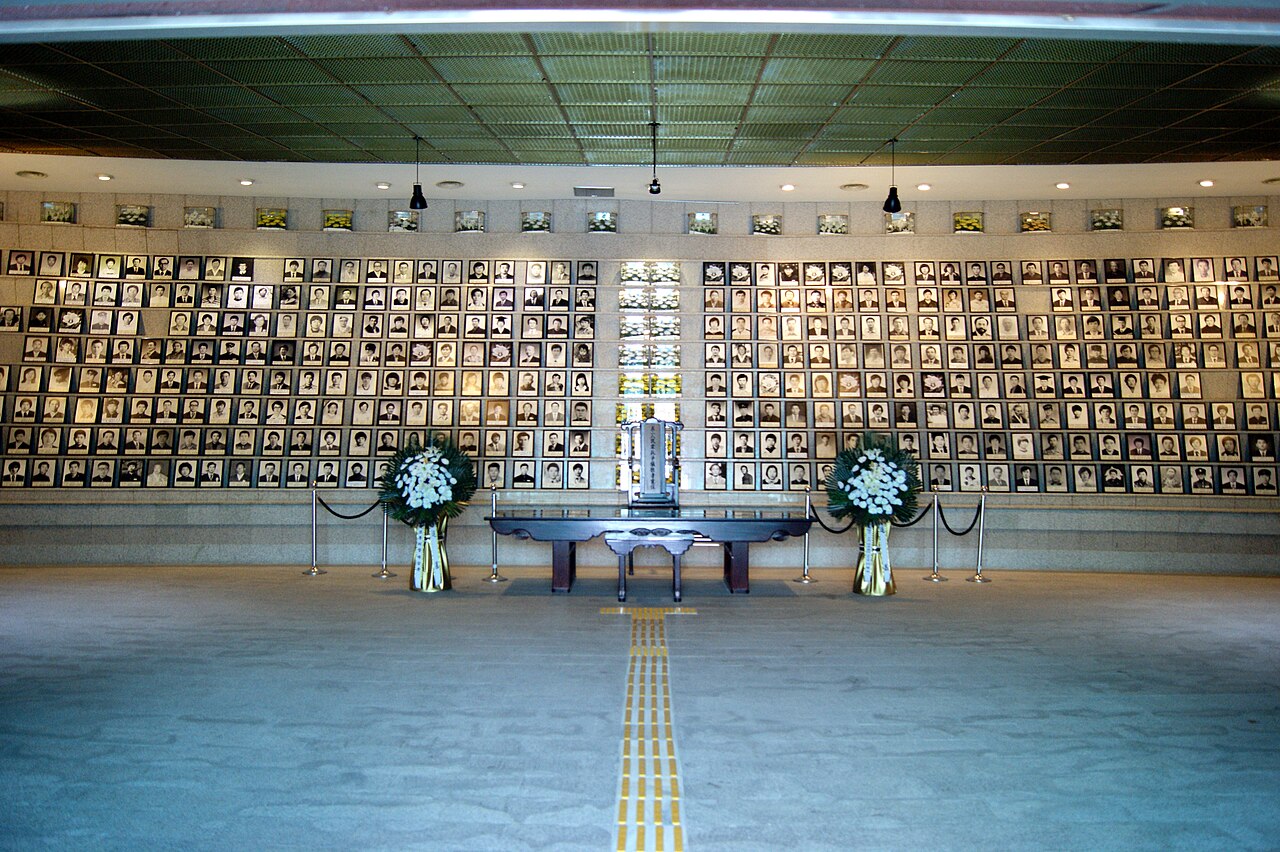
It’s no coincidence that Gwangju was chosen as the host city. This is not just any place – it is a living archive of Korea’s democratic spirit, globally recognized by UNESCO as a Memory of the World site for the May 18 Uprising. It is also a UNESCO Creative City and a rising hub for AI innovation, backed by local institutions like Chonnam National University and GIST (Gwangju Institute of Science and Technology). Gwangju breathes inclusion, memory, and forward thinking. It is a city where political legacy meets technological ambition, and few places are better suited to imagine a better, smarter, more ethical future.
The camp opened with a powerful lecture by Dr. Gyonggu Shin, Director of the Gwangju International Center, who reminded us that youth-led democracy is not a theory here – it is the city’s lived history. His words grounded the experience with a sense of duty and possibility, reminding us that being young is not a limitation but a superpower. We are not just witnesses of change – we are its drivers.
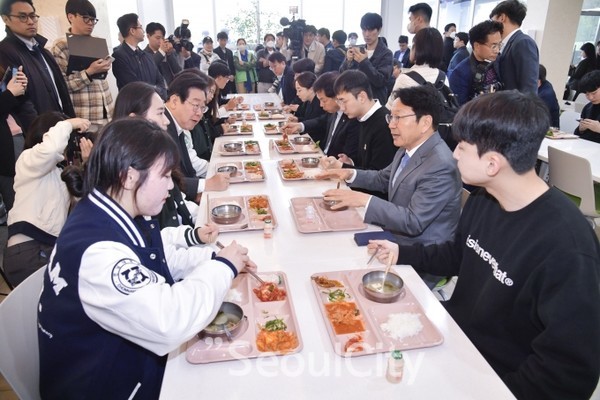
After visiting Gwangju City Hall, we were officially welcomed by the city’s international ambassador, who emphasized the importance Gwangju places on democracy, inclusion, youth, and its international guests. That same day, Linda Tinio-Le Douarin from UNESCO Paris delivered a compelling lecture titled “Building Capacities of Youth to Become Anti-Racism and Anti-Discrimination Champions.” Her message made it clear that inclusion and scientific progress are not parallel paths – they must intersect. Her presence also reinforced that this camp was not an isolated initiative but part of a broader global movement supported by UNESCO’s vision for ethical, inclusive development.
From vision to action, the baton passed to Agung Zulhatta from UCLG-ASPAC, who invited us to embrace our own political power – not just as activists but as future policymakers and urban designers. His session pushed us to identify real social challenges in our communities and sparked the first brainstormings that would later shape our group projects. We weren’t there to simulate solutions – we were there to plant the seeds of transformation.
The philosophical side of AI soon entered the picture. Prof. Kang Hyun Jeong, from the Department of Philosophy at Chonnam National University, led a session titled “The Future of the Humanities: Coexisting with AI.” This was a turning point. Technology met ethics, and we were asked to rethink AI not only as a tool but as a mirror of our intentions and values. The question wasn’t just “how” or “for what” should AI be used – but also “why” and “for whom.”
This shift opened the door to deeper concerns: Can AI exacerbate inequality? Will its benefits be distributed fairly? Could it replace the human touch in education or care? These were not far-off speculations; they were urgent questions. Meyda Nento from UNESCO Jakarta, brought these issues to the regional policy level by introducing UNESCO’s Recommendation on the Ethics of AI. She encouraged us to think critically about AI’s implementation across Asia-Pacific cities and to always ask: Who is included – and who is left behind?
With these reflections in mind, we dove into the current realities and future trajectories of AI. Prof. Kim Joonha from GIST presented real-world applications and ongoing research in AI. His session reminded us that Gwangju is not just speaking about AI; it is actively building its future. As a city aiming to become a hub for AI companies and innovation, the responsibility of embedding ethics, inclusion, and sustainability lies at the very core of its vision. For this reason, our generation must be the one to lead – not just adapt.
All these exchanges culminated in team projects where participants developed AI-based proposals to address real social issues. From anti-scam training for the elderly to inclusive public transportation, support systems for deaf and hard-of-hearing communities, and access to education for marginalized regions, each project reflected deep creativity and a shared ethical commitment. My own team – formed by peers from Bangladesh, Indonesia, and Korea – proposed a tripartite educational model that integrates AI literacy, emotional well-being, and human reconnection. It was a synthesis of all we had explored: Inclusion is not a checkbox; it’s a philosophy of care.
Throughout the week, it became clear that this camp was more than an event – it was a microcosm of what international cooperation for youth can be. Backed by UNESCO, APCAD, and local academic institutions, it offered not only knowledge but community. Through shared meals, games, and late-night conversations, we discovered that connection doesn’t require sameness – just shared purpose.
In a world obsessed with smartness, we were reminded that no future is truly intelligent if it forgets to be human. The golden rule we took home? AI should never aim to replace us. It should support us all, and reflect our best values. And that begins with us.
The Author
Luis Andrés González is a Mexican Global Korea Scholarship scholar and master’s degree student in cultural anthropology at Chonnam National University. He advocates for LGBTQ+ rights and gender equality, and explores global affairs through pop culture. He is the founder of Erreizando, a digital magazine.
Instagram: @luisin97 / @erreizando
Cover Photo by Luis Andrés González.