




Welcoming Global Students: A Call for Gwangju’s Open Arms
By Luis Andrés González
This September, Gwangju welcomed a new cohort of Global Korea Scholarship (GKS) students – young people from all over theworld who come here to pursue graduate studies. As every year, they arrive with big dreams but also with very real fears. Starting life in a new country is never easy: new language, new culture, new classrooms, and – let’s be honest – the loneliness of trying to fit your whole life into just one or two suitcases.
The GKS program, run by the Korean government, aims to strengthen international ties through education while showcasing the quality of Korea’s universities. It offers full scholarships, Korean language training, and even pathways into the job market. But make no mistake, it’s tough to get in. On average, only about five students are selected per partner country, with some nations sending up to 20. Each student represents a kind of “dream team” of young professionals, and their home countries are proud to send them off.
But let’s not romanticize it too much. For all the glitter of “global exchange,” the reality is that many students struggle. Some never finish their first year – not because they lack talent, but because they lack a sense of belonging. Integration in Korea can be hard, especially when polite smiles turn into empty promises of inclusion, and when closed social circles leave newcomers out in the cold.
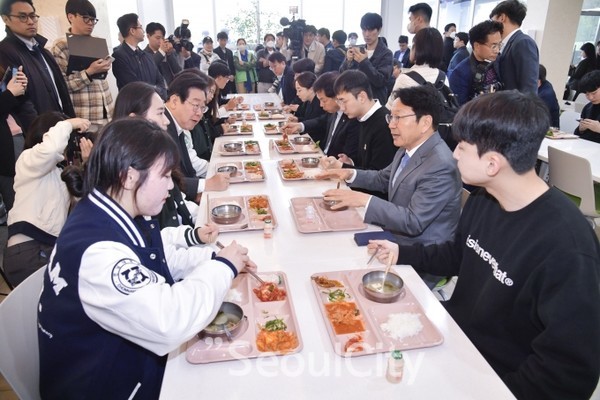
This is where Gwangju shines. Our city calls itself a democratic, international, and human rights city – and those words have to mean something in practice. Welcoming GKS students is one way to embody that spirit. Locals and long-term foreigners alike can make the difference between lonely years of studying abroad and a truly transformative experience.
For the fall of 2025, 62 new GKS students will begin their language year here in Jeollanam-do. Thirty-four of them will study in Gwangju – most at Chonnam National University, with four joining Chosun University and two at GIST. Another 28 will be based at Sunchon National University in Suncheon. Once again, Indonesia leads with the largest group, followed by Cambodia; Rwanda and Cameroon represent African countries, while Latin America also makes its mark with students from Colombia, Mexico, and Panama. Slowly but surely, Gwangju’s diversity grows – not only on paper but in the cafés, markets, and classrooms of this city.
I truly believe Gwangju is the best place in Korea for foreigners to grow roots. But that only happens if we – citizens, students, neighbors – open the circle wide enough to let them in. So here’s my proposal: Let’s not just wave from a distance. Let’s invite them for coffee, share a meal, show them the shortcut to the bus stop, or simply ask how they’re doing. Small gestures become lifelines.
The Author
Luis Andrés González is a Mexican Global Korea Scholarship scholar and master’s degree student in cultural anthropology at Chonnam National University. He advocates for LGBTQ+ rights and gender equality, and explores global affairs through pop culture. He is the founder of Erreizando, a digital magazine. Instagram: @luisin97 / @erreizando