






Addressing Korea’s Low Birth Rate: 3-Plus Family Benefits for Foreigners
By Saqib Sharif
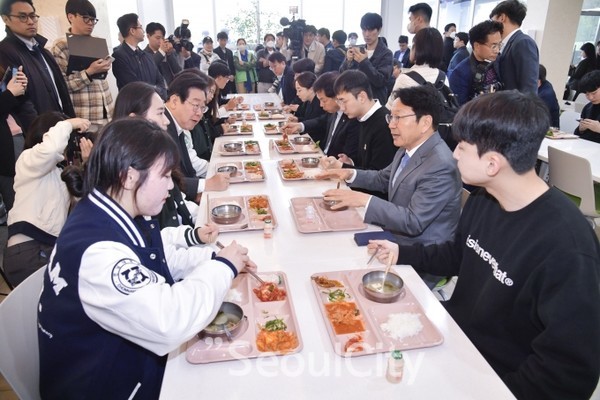
South Korea has long grappled with a declining birth rate, prompting the government to introduce various financial incentives to encourage larger families. These benefits include discounts on mortgage interest rates, subsidies for artificial insemination, and expanded childcare support for families with three or more children. Additionally, certain districts, such as those in Busan, have significantly increased birth bonuses, offering up to 10 million won for families with three or more children.
However, these benefits predominantly target Korean nationals, often excluding foreign residents. While some progress has been made, such as Seoul extending childcare subsidies to all children from infancy to age five regardless of nationality, many foreign families remain ineligible for comprehensive support.
“Some landlords are hesitant to rent to families with multiple children.”
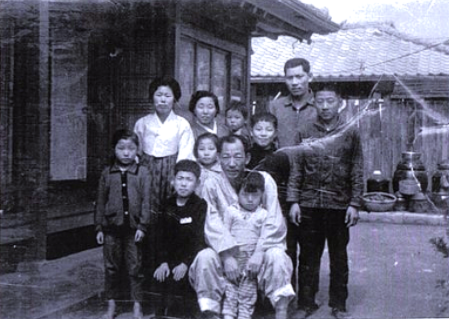
Consider the case of a foreign researcher who has lived in Korea for over a decade. As a single- income father of four children, two of whom were born in Korea and all attending government schools, he faces significant financial challenges. Despite a reasonable salary, the high cost of raising children in Korea strains his finances.
His situation is well-known among his Korean colleagues at two universities and his workplace, where he interacts daily with over 50 locals. Observing his struggles, some coworkers express reluctance to marry or have children, joking that they would never consider parenthood under such circumstances.
Beyond financial strains, he also encounters challenges in securing housing. Most Korean landlords are hesitant to rent to families with multiple children, fearing potential noise or property damage. This reluctance exacerbates the difficulties faced by larger families, particularly those of foreign nationals, in finding stable and suitable housing. While South Korea’s Housing Lease Protection Act offers certain rights to tenants, including foreigners, in practice, discrimination persists. The National Human Rights Commission of Korea has recognized that policies excluding children from certain establishments are discriminatory, highlighting a broader societal issue of acceptance toward families with children.
This scenario illustrates a broader issue: the exclusion of foreign residents from family benefit schemes may inadvertently discourage the local population from expanding their families. When Koreans witness their foreign colleagues struggling without adequate support, it reinforces the perception that raising multiple children is financially untenable.
To address this, the government should consider extending family benefits to include foreign residents with three or more children, especially those whose children were born in Korea. Such inclusivity would not only alleviate the financial burdens on these families but also send a positive message to the broader community about the support available for larger families. By ensuring that all families, regardless of nationality, receive adequate support, South Korea can take a significant step toward reversing its low birth rate trend.
Sources
Al Jazeera. (2023, April 12). South Korea has so few babies it is offering new parents $10,500. https://www.aljazeera. com/news/2023/4/12/south-korea-splashes-the-cash- in-scramble-to-fix-fertility-crisis Al Jazeera
Child Benefit. (2025, February 3). In Wikipedia. https:// en.wikipedia.org/wiki/Child_benefit
The Korea Times. (2025, March 11). Korea unveils additional steps to boost birthrate. https://koreatimes.co.kr/www/ nation/2025/04/281_393926.htmlKorea Times
The Korea Times. (2025, February 26). Major conglomerates encourage employees to have babies. https://www. koreatimes.co.kr/www.tech/2025/03/129_392991. htmlKorea Times=
National Human Rights Commission of Korea. (2024, January 25). Child with Disabilities Denied Education at international school, Commission Seeks Justice. https://www.humanrights.go.kr/eng/board/read?board ManagementNo=7003&boardNo=7609793&menu Level=&menuNo=&page=2&searchCategory=& searchType=&searchWord=Human Rights Commission
The Author
Saqib Sharif is a Pakistani national, he earned his PhD from Chonnam National University in February 2024. Currently, he serves as a senior researcher at Shinsung Tech in Gwangju.