


Korea in Focus: The Other Side of Global Korea – Anti-Foreigner Rallies
By Yousra Feriel Drioua
Reading news about anti-foreigner rallies is a hard pill to swallow for any tax-paying alien, anywhere on earth, including Korea, a country that often leverages the word “global” to market its different sectors, such as entertainment and education.
“In a Confucian society that prizes harmony and sameness, even foreigners are placed in a box.”
With foreigners making up 5.17 percent of South Korea’s population – 2.65 million out of 51.2 million – the country now qualifies as a multicultural society by OECD standards, as the Dong-A Ilbo reported in late May. Foreign residents are now deeply embedded in daily life: restaurants, factories, and even schools rely on their presence.
However, one survey conducted this year revealed that despite the increasing number of long-term immigrants, Korean society remains harsh in accepting them, even more so when it comes to refugees. According to a Korea Institute for Health and Social Affairs (KIHASA) report, 96 percent of the Koreans surveyed, said they were willing to accept immigrants as part of society, but only 8 percent said they would accept them as family members. The same survey found that 38.7 percent of respondents were fine with immigrants as neighbors, 30.5 percent as colleagues, and 18.35 percent as best friends. However, just 8.37 percent said they would welcome one as family – just 8.37 percent – The Korea Herald reported on July 18.
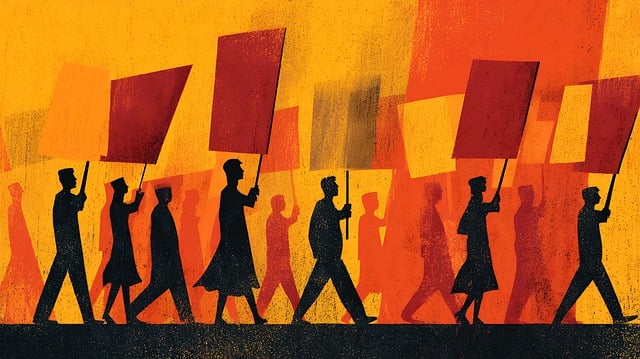
President Lee Jae-myung has recently taken measures to crack down on anti-foreigner rallies, calling them a “self-harming” act to Korea’s image and economy. A new bill introduced by the ruling Democratic Party of Korea targets rallies that incite hate or discrimination against specific groups. This move comes as a surprise to many, since Korea has been increasingly open toward freedom of speech and the right to assemble. Critics have called it selective enforcement, noting that anti-China rallies have been restricted while anti-U.S. protests have been left unbothered. The debate has since reignited discussions over whether restricting discriminatory speech strengthens or weakens democracy, according to The Korea Times on October 14.
As someone who has experienced both hospitality and indifference from Koreans, these rallies don’t come as a surprise. In a highly competitive society, nationalism is bound to appear, especially among those with the shorter end of the stick. Despite the efforts of global and international centers to integrate foreigners and migrants in Korea, discrimination remains a common social experience, whether at school or in the workplace.
These patterns reveal a deeper challenge. The problem is not the absence of pertinent centers and institutions but how effective they are at reshaping social attitudes. Integration cannot stop at language classes or cultural events; it must also teach how to welcome difference, not as a gesture of tolerance but as part of everyday coexistence among neighbors, friends, colleagues, and even spouses.
“President Lee Jae-myung has recently taken measures to crack down on anti- foreigner rallies, calling them a ‘self-harming’ act.”
For many foreigners, this coexistence is a mixed experience. At times, foreignness can be liberating, freeing you from expectations to perform a specific role or fit a certain stereotype. Yet that same difference can quickly turn into distance. In a Confucian society that prizes harmony and sameness, even foreigners are placed in a box. For Korea, becoming a truly global society may depend less on how many foreigners it welcomes and more on how comfortably they are allowed to belong.
The Author
Yousra Feriel Drioua is a freelance writer and activist with an MA in media communication and journalism. She’s an Algerian citizen residing in South Korea and aspires to be someone of benefit to society. In her free time, she’s a barista! Instagram: @myyigli