

Global Focus: Winter in Ukraine – Survival Instead of Celebration
By Andriievska Anastasiia ||
For most people around the world, winter is one of the happiest seasons of the year – a time for holidays, vacations, and celebrating winter traditions with family. Snow and cold usually add a special, cozy atmosphere. The same used to be true for Ukrainians. Christmas, one of the most important holidays, has always been a time when families gathered together for a festive dinner. But once again, Russia has reminded the world of its presence – through missile strikes and drone attacks. This is not only about “ruining the holiday spirit”; it is about constant danger and survival.
This winter, for the first time in many years, Ukraine is experiencing truly severe cold: Temperatures drop to –20ºC or even –30ºC, with constant snowfall. For many countries, this might seem like a perfect winter. For Ukrainians, however, it is a harsh reality. In the 21st century, it is impossible to live without electricity. Almost everything depends on it – cooking, heating homes, communication, internet access, and everyday appliances. At the same time, Russia has repeatedly targeted Ukraine’s critical infrastructure, especially thermal power plants. As a result, since autumn, scheduled power outages have been introduced across the country. With the beginning of winter, the situation has worsened dramatically. After heavy shelling, many cities and towns are left without electricity for a full day or even longer.
This leads to devastating consequences: no heating – apartment temperatures drop to 10ºC degrees, sometimes even to 5ºC; food spoilage – refrigerators stop working, frozen food thaws and goes bad; cooking becomes impossible because many homes rely entirely on electric stoves. At the same time, due to the lack of heating, pipes burst, causing even more problems for residents.
Food supply has also become a serious challenge. Without electricity, stores struggle to keep products refrigerated. Not all businesses can afford generators, so many shops simply close during outages. As a result, food quality deteriorates, and stores or producers are forced to lower prices and sell at a loss just to prevent their goods from being wasted. Electricity shortages also affect water supply and sewage systems. Water freezes in pipes and cannot reach homes. In some places, Ukrainians light fires near water reservoirs just to thaw the water so people can get at least some access to it.
Schools are switching to remote learning because classrooms cannot be heated to acceptable temperatures. But studying at home is often impossible as well: Children cannot join online lessons due to dead phones, internet connection being poor or non-existent, and homes being freezing cold. The same applies to work: Employees simply cannot work in cold offices.
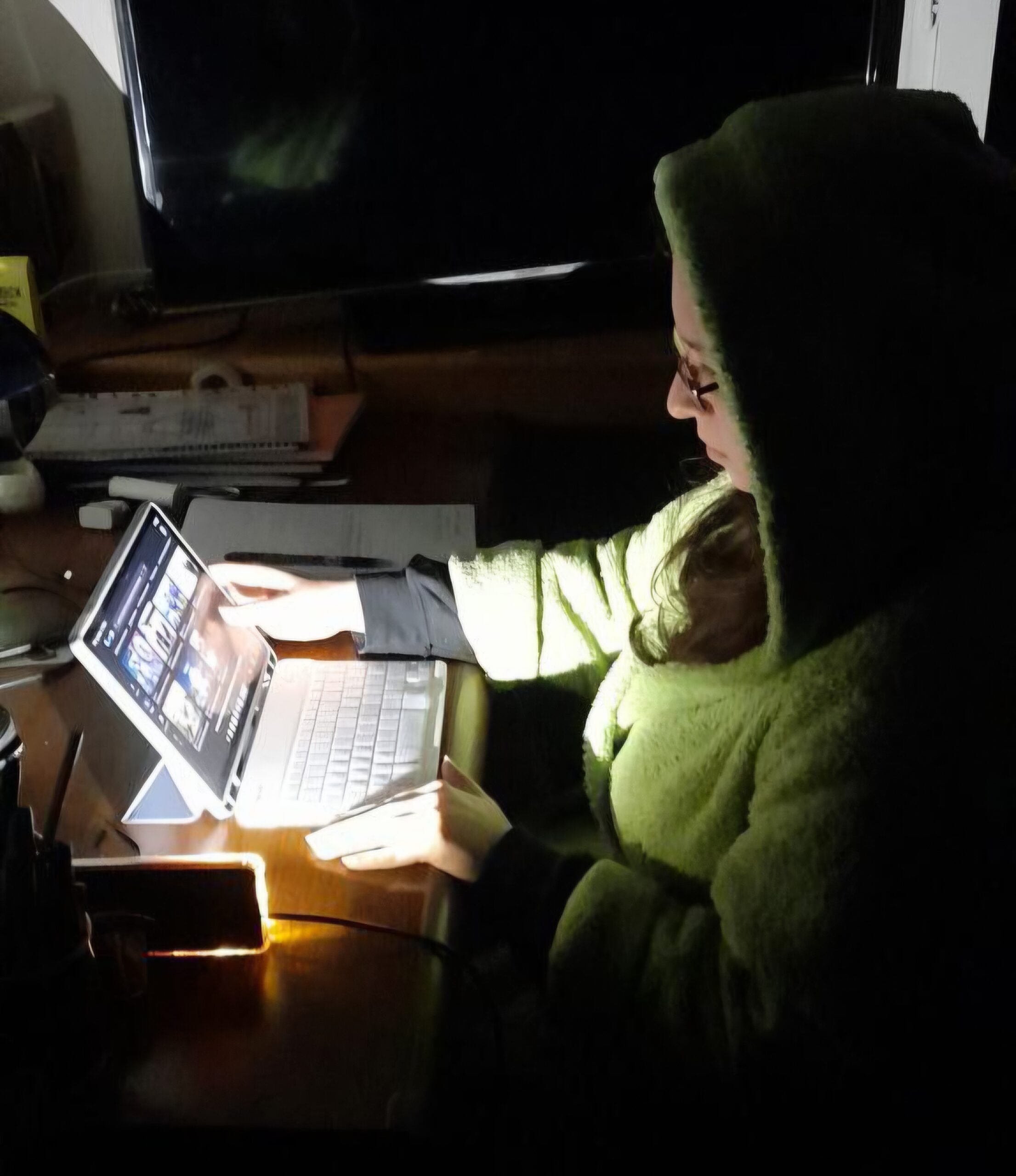
I live in Ukraine myself; this is my homeland, and life is extremely difficult right now. Under more normal circumstances, we used to have electricity for about six hours a day at best. But after recent attacks in January, emergency outages were added on top of scheduled ones, making the situation unpredictable. In my city, we had no electricity for almost two days. The temperature in our apartment dropped to around 10°C. We wear several layers of warm clothing, but even that does not always help. Communication has also become a major challenge. It was difficult not only to text someone but even to make a phone call just to say, “I’m alive and I’m okay.” In frontline regions, the situation with communication is even worse.
Due to power outages, it is almost impossible to go somewhere to eat; only places with generators remain open, and there are very few of them. Reaching them is another challenge, as roads are covered in ice and often impassable. Fortunately, our apartment has gas, which allows us to cook or heat food and make hot tea. This became our only real source of warmth and comfort during this difficult period. My younger brother, who is seven years old, studied remotely for some time. As a family, we searched around the apartment for any signal so he could attend his online classes.
Yet, despite everything, Ukrainians remain brave, compassionate, and united. People take out their thawed food and cook outdoors, sharing meals with neighbors or anyone in need. Some post notices saying they have gas and can help heat food or prepare hot drinks in thermoses. Caring Ukrainians build shelters for stray cats and dogs so they can eat and rest in warmer conditions. Because of the extreme weather and lack of heat and electricity, “Points of Invincibility” are opening across cities and villages. These are places where people can warm up, charge their devices, and rest. They now operate 24/7 so that even during curfew hours, people can escape their freezing homes.
This is one of the most difficult periods of the full-scale war started by Russia. But Ukrainians have always been known for their free spirit and courage. Despite all hardships, Ukrainians will endure again and again, no matter what happens. Even without stable electricity or internet, I am writing this article so that as many people as possible can learn about the reality of life in Ukraine today. Because together, we are united – and unbreakable.
The Author
Andriievska Anastasiia was a Global Korea Scholarship student from Vinnytsia, Ukraine, studying in Korea in 2024 and 2025. Now back home, she is an active Ukrainian and international volunteer.
Cover Photo: Anastasiia, author of this article, works on the article text while living in today’s Ukrainian reality – just like thousands upon thousands of Ukrainians across the country. (Andriievska Anastasiia)