






How Design Embraces Humanity: The 2025 Gwangju Design Biennale and a Conversation with Prof. Choi Sooshin
By Luis Andrés González
Gwangju welcomes its 2025 Design Biennale this month, promising art, innovation, and purpose. This year’s edition is titled “You, the World: How Does Design Embrace Humanity?” (“너라는 세계: 디자인은 어떻게 인간을 끌어안는가?”), which resonates deeply with the democratic and increasingly diverse spirit of Gwangju. This year’s Design Biennale focuses on inclusive design, emphasizing the creation of a future that serves everyone. The exhibition stands out not only as a significant event in South Korea but also as a key gathering for East Asia and beyond.
For those unfamiliar, biennales are international exhibitions that follow a “world fair” format for contemporary art, starting with the Venice Biennale. The term biennale itself comes from the Italian word meaning “biannual” – occurring every two years. There are a variety of biennales covering everything from film to sculpture to design. These events aren’t just about showcasing art; they also serve as platforms for promoting artistic values in society, education, and more. The true beauty of a biennale lies in its purpose to reflect the spirit of the host city – and the Gwangju Design Biennale nails this every time.
Since its inception in 1995, the Gwangju Biennale (not to be confused with the Gwangju Design Biennale) has been dedicated to promoting democracy and human rights in remembrance of the May Uprising of 1980. As the first and one of the largest biennales in East Asia, it has grown to become a milestone for contemporary art in Korea. Yet, its dedication to inclusion and its challenge to the dominance of Western art have made it a space for voices from Latin America, Southeast Asia, and other regions of the Global South.
The Gwangju Design Biennale was founded in 2004 and has taken place in odd-numbered years, while the Gwangju Biennale is held in even- numbered years. Both biennales are organized by the Gwangju Biennale Foundation, ensuring not only the quality of each exhibition but also the preservation of the city’s unique spirit.
The 2025 Gwangju Design Biennale centers around inclusion, aiming to demonstrate that design for current and future societies should focus not only on aesthetics and utility but also on accessibility for all. To achieve this, the exhibition is broadly divided into four main perspectives: the world, life, mobility, and the future. These themes recognize the natural diversity of our societies, the need for participation beyond challenges, the constant demand for space and movement, and the collective intention to overcome differences, inequalities, and boundaries as we move forward.
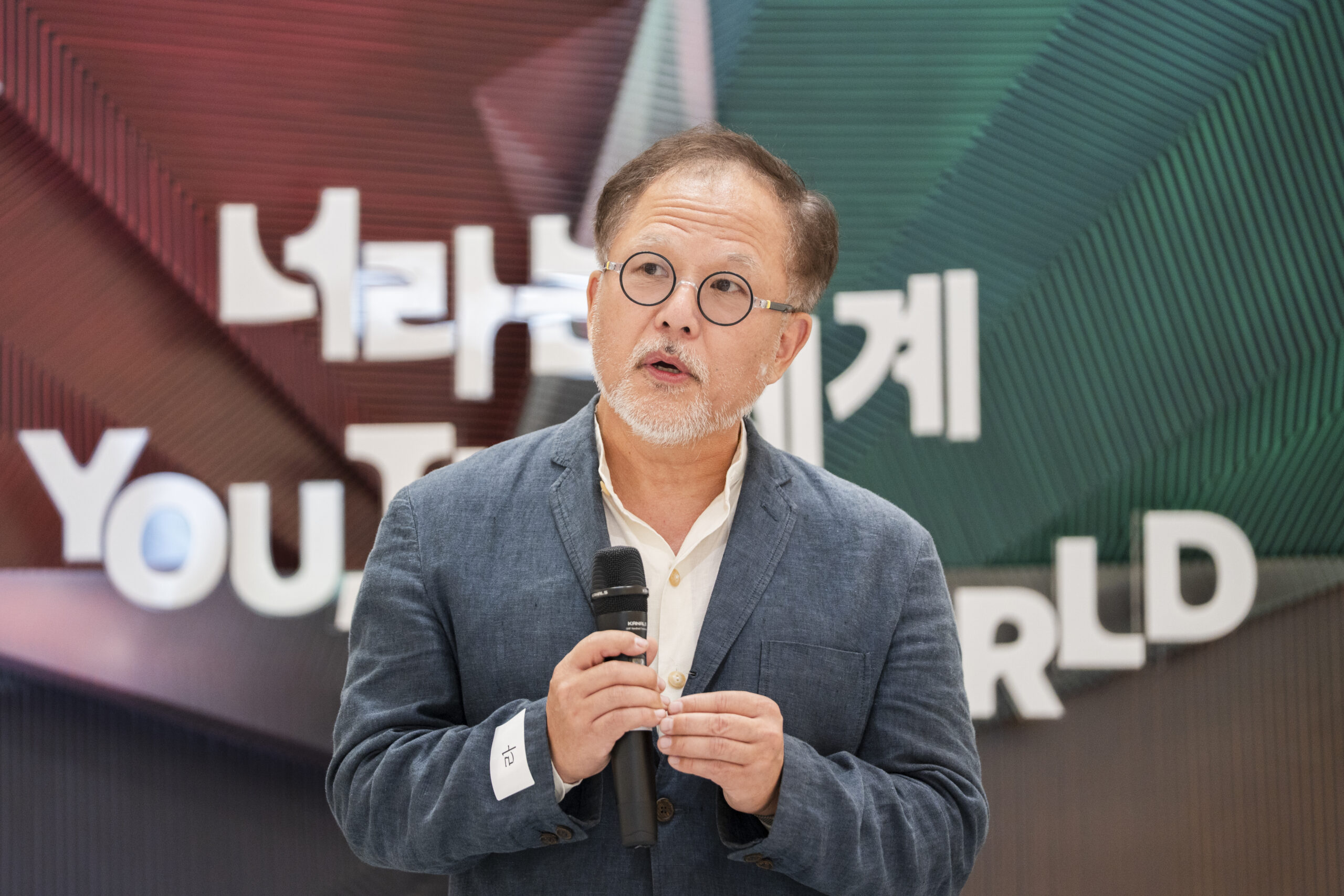
Portraying this message requires a titanic effort from all those involved in the curation and arrangement of the exhibition. The Gwangju Biennale Foundation, therefore, is relying on the immense talent and experience of Prof. Choi Sooshin to lead this enterprise as artistic director.
Prof. Choi is not only currently chair of Industrial Design at the Savannah College of Art and Design (SCAD), but he also has rich experience in senior positions at companies like P&G, LG, and Boeing. He studied at Seoul National University, Hongik University, the Royal College of Art in the UK, and Ohio State University in the US. With a lifelong dedication to user-centered production systems, the values of inclusion and empathy are deeply embedded in his work and the curation of the Design Biennale.
I was honored to ask a few questions to Prof. Choi about what we should expect to see in the Design Biennale and the core knowledge, experiences, and purposes that guide his work in the design and art scene in Gwangju and beyond. Here is that interview:
Luis Andrés: Your career spans design leadership, education, and research across Korea and the United States. How have your international experiences influenced your vision for the Gwangju Design Biennale?
Prof. Choi: Design is inherently not local but interdisciplinary and global in nature. My experiences, spanning academic studies and careers in Korea, the UK, and the United States, have played a pivotal role in shaping the vision for the Gwangju Design Biennale. These international experiences have enriched the planning process, ensuring that it incorporates a global perspective. While international events in Korea have often been centered on domestic concerns, this biennale is poised to be genuinely global, with a significant impact on the world. I hope my diverse experiences will contribute positively to this vision.
Luis: The theme for this year’s Design Biennale is “You, the World: How Does Design Embrace Humanity.” What personal values or beliefs inspired your focus on inclusive design?
Prof. Choi: I accepted the invitation to be the artistic director of the Gwangju Design Biennale for three main reasons. First, it presents an opportunity to contribute to the Korean design community with the experience I gained during my 25 years abroad. Second, it allows me to bring attention to inclusive design, a field I have researched and practiced for many years, both domestically and internationally. Lastly, the fact that this event will be held in Gwangju makes it even more meaningful.
Over the past 30 years, I have worked as a designer in fields such as automotive design, system furniture design, and medical device design. Through this experience, I came to realize that the true focus of design should not be products but people, particularly those in diverse and vulnerable situations. This realization led me to develop a deep interest in inclusive design. Inclusive design, at its core, is about creating products and environments that care for and embrace all people.
The Gwangju Design Biennale will be a rare opportunity to showcase inclusive design projects that have been developed and considered from various perspectives around the world. I look forward to presenting these projects and spreading the values of inclusive design through this remarkable event.
Luis: Inclusive design has become a significant direction in contemporary design. What, in your view, are the key difference-makers that set inclusive design apart from universal or accessible design principles?
Prof. Choi: Inclusive design is undoubtedly an important concept, yet its widespread adoption remains limited. It is for this reason that we have chosen inclusive design as the central theme for the Gwangju Design Biennale, aiming to raise awareness and spark interest. Universal design mainly focuses on improving the accessibility and usability of objects or buildings. In contrast, inclusive design is built on a broader foundation that centers on the people who use these objects or spaces. It goes beyond just the physical environment or the objects themselves, placing importance on acknowledging the diversity of individuals and their experiences.
These two concepts are not mutually exclusive; their focus differs. Through this biennale, we aim to raise awareness across industries, governments, societies, and individuals about the importance of understanding and embracing perspectives different from our own. Ultimately, we hope that this will lead to the creation of a truly inclusive society, guided by the principles of inclusive design.
Luis Andrés: The Design Biennale is organized around four perspectives: world, life, mobility, and future. How did you determine these categories, and what does each mean to you in the context of inclusive design?
Prof. Choi: Inclusive design originated in Europe and the U.S., significantly impacting society and industry. While Korea has been a relatively latecomer in recognizing the importance of inclusive design, we aim to reflect global progress and development while fostering a uniquely Korean interpretation of it. Thus, the category of “Inclusive World” was created to showcase the global significance of inclusive design and envision how it can evolve within Korea’s cultural and social context.
Inclusive design directly impacts individuals’ lives. It addresses overlooked inconveniences in our daily lives, the understanding of marginalized people, and the role designers play in resolving these issues. The “Inclusive Life” exhibition explores how design can address these challenges, improving the quality of life for all people, particularly those often left out.
“Inclusive Mobility” is a category that resonates deeply with our daily lives. It addresses the difficulties people face when moving, especially those with permanent or temporary disabilities, and presents solutions like autonomous driving technology. This exhibition will also highlight inclusive redesign projects for the Gwangju subway system, demonstrating how transportation can be made accessible to all.
Finally, “Inclusive Future” tackles the critical theme of technological progress and the protection of human dignity. In this exhibition, we will explore the future through the lenses of artificial intelligence, robotics, nature, and well- being, showcasing how technology can advance while ensuring it remains human-centered and aligned with dignity. This exhibition aims to present a vision of the future where technology serves humanity without compromising fundamental human values.
Luis Andrés: Can you share a specific project from your career – perhaps during your work with global organizations such as P&G, LG, or Boeing – that embodies the principles of inclusive design?
Prof. Choi: For over 25 years, inclusive design has been at the heart of my collaborations with global companies. While I can’t share specific details from these collaborations due to confidentiality, I can highlight examples such as working with P&G on travel-related products, LG on family- centered activities and mobile device use at home, and Boeing on addressing discomfort during long-haul flights. Many of these design solutions have been implemented in actual products.
What’s fascinating is that while each project was rooted in the principle of inclusivity, they all led to innovative design outcomes. This counters the common, yet mistaken, perception of “inclusive design” as being only for the elderly or disabled, or “unattractive design.” Instead, these projects demonstrated that inclusive design can result in solutions that are not only functional but also appealing and exciting to businesses and people alike. As a result, most of these projects were protected by patents, proving that inclusive design can truly be competitive in the marketplace.
Luis Andrés: Collaboration appears central to your approach, both academically and professionally. How are you facilitating collaboration among designers, artists, and the community for this year’s Design Biennale?
Prof. Choi: The design process is never a monologue or soliloquy; it is a dialogue, and this dialogue involves a multitude of voices and perspectives. Design is not for an individual alone; it is for a broad audience. Therefore, the process involves not only designers but also many other experts who contribute their insights and ideas, creating a dynamic exchange. This process is a continuous conversation with society, with design serving as a bridge that connects us all.
This year’s Design Biennale will showcase efforts from not just designers and companies, but also social enterprises, government bodies, and various other participants. This collaboration goes beyond just different fields of expertise coming together; it merges their efforts and values to create a force capable of driving social change. Through this biennale, you will experience how design can have a positive impact on society by highlighting different models of collaboration.
Luis Andrés: The Design Biennale will host an international symposium and a design challenge for students. What outcomes do you hope to achieve through these events in highlighting the importance of inclusive design?
Prof. Choi: The international symposium at this year’s biennale will serve as a key opportunity to highlight the importance of inclusive design from a global perspective. Experts from academia, education, and industry who have led inclusive design initiatives around the world will gather to discuss its significance, role, and impact.
Additionally, the 72-hour design challenge for students will bring together students from various design disciplines both domestic and international. Under the guidance of five expert mentors, these students will explore and analyze local problems from an inclusive design perspective, presenting creative solutions to create more inclusive environments. The outcomes of this challenge will be shared at the biennale’s venue and on the World Design Organization’s website. We are excited to share these results with the global design community.
Luis Andrés: With technologies like robotics and AI featured in this Design Biennale, how do you see advanced technology helping to break barriers in inclusive design?
Prof. Choi: Robotics and artificial intelligence (AI) have the potential to evolve in ways that may inherently aim for the dehumanization of tasks. However, from an inclusive design perspective, these technologies can be understood and applied to enhance human experiences and break down barriers. This Design Biennale will showcase efforts to demonstrate that technology is not about replacing humans but about creating environments that make people more human. Inclusive design focuses on using technology to provide equal opportunities for a diverse range of people, enriching their lives. At this biennale, you will see how these technologies can move beyond functionality to create better, more inclusive experiences for everyone.
Luis Andrés: Gwangju has a unique historical and cultural background, noted for its spirit of democracy and equality. How has the city’s character influenced your curatorial approach?
Prof. Choi: Gwangju holds significant importance to me as the ideal place to discuss inclusive design. Its unique historical and cultural background influenced my decision to take on the role of general director. Known as the cradle of democracy and equality, Gwangju has embodied these values through numerous historical events. At the heart of inclusive design lies respect for humanity. Despite the diverse differences we may have – be it in disability, aging, origin, culture, education, or language – the essence of inclusive design is about making people feel valued as individuals.
This philosophy aligns perfectly with Gwangju’s legacy of democracy and the spirit of Mudeung, which has endured for thousands of years. Furthermore, the warmth and empathy of Gwangju’s people, who never ignore the struggles of others, deeply connect with the core of inclusive design. For these reasons, Gwangju is the most fitting stage for talking about and practicing inclusive design. In this city, we have the opportunity to explore how to build a world where everyone can live together, through design that acknowledges and respects our differences.
Luis Andrés: How would you measure the success of this Design Biennale in shifting public perceptions or industry practices toward more inclusive design?
Prof. Choi: This year’s Design Biennale has been prepared under significant constraints, including a delayed appointment of the general director, limited budget, and changes in the organizing institution. Despite these challenges, we anticipate a considerable impact on public awareness and industry practices. The launch of a new government focused on inclusivity, the aging society, and the increasing foreign population all underscore the urgent need for inclusive design.
The goal of this biennale goes beyond being just an exhibition. Visitors will experience a sense of agency as they explore the Intro Zone, where they will realize that they are not mere observers but active participants in creating an inclusive society. The success of this event will be measured by the increased civic awareness, the design of policies that make Gwangju a more inclusive city, and the growing interest and practical adoption of inclusive design by companies.
Thus, the success of the Gwangju Design Biennale will be gauged by the heightened awareness of inclusive values among Gwangju citizens, the incorporation of these values into city policies, and the active implementation of inclusive design practices by industry. This will mark the beginning of a broader societal shift towards sustainable, inclusive design.
Luis Andrés: As an educator and academic leader, what advice do you have for emerging designers who want to champion inclusivity in their work? Prof. Choi: Emerging designers, particularly in Korea but also globally, often tend to focus on corporate success. As a result, they become engrossed in utilizing new technologies, creating more aesthetically pleasing forms, and developing competitive characteristics, often losing sight of the people who should be at the center of design.
To become a competitive designer, understanding design techniques, new technologies, and aesthetic abilities is crucial. However, these are essentially “mechanical” qualities, and much of it is already being replaced by artificial intelligence. As we look toward the future of design, it is clear that these technical skills alone will not be enough. To lead in the design world, future designers must develop a philosophy and sensitivity to the diversity of people – qualities that others may not possess. And at the heart of this is inclusive design.
Inclusive design goes beyond just designing for diverse people; it involves considering social, cultural, and physical differences in the design process. Designers must not only provide technical solutions but also present a vision and values that create positive changes in people’s lives. Therefore, emerging designers must establish their own philosophy and, through a commitment to understanding diverse social contexts, practice inclusive design in their work.
Luis Andrés: Looking to the future, what legacy would you like the 2025 Design Biennale to leave for both the city of Gwangju and the global design community?
Prof. Choi: In the past, when international exchanges were limited, design biennales played a crucial role in showcasing art and design from other parts of the world, introducing new artists and designers to global audiences. However, in today’s world, where art and design from the other side of the globe are shared in real-time, the role of a design biennale has shifted. It now needs to present important issues and provoke interest in relevant topics.
The 2025 Gwangju Design Biennale will take a significant step by declaring the Gwangju Inclusive Design Manifesto, which will also be shared through global design associations. Through this manifesto, I hope Gwangju will be remembered as a city that sets forth a crucial design agenda for both designers and society to pay attention to. I look forward to seeing this role continue in future Gwangju Design Biennales, ensuring that it remains an important event that influences the global design community.
Luis Andrés: I would like to finally thank you deeply for your time and for your responses.
Through the 2025 Gwangju Design Biennale, we can see that inclusion should be part of everything. From public policy to art to design, inclusion is a principle that touches every part of our society. We sometimes take for granted the inclusion we benefit from – the human rights others fought for us to enjoy, or the tools we use every day. It’s time to make sure that these advances are accessible to everyone through inclusion.
The Author
Luis Andrés González is a Mexican Global Korea Scholarship scholar and master’s degree student in cultural anthropology at Chonnam National University. He advocates for LGBTQ+ rights and gender equality, and explores global affairs through pop culture. He is the founder of Erreizando, a digital magazine. Instagram: @luisin97 / @erreizando
Cover Photograph courtesy of the Gwangju Biennale Foundation.