


Human Rights in Harmony: Gwangju’s Dreamers Carry the Torch to Myanmar
By Kaitlyn Wachter
This October, on the border between Myanmar and Thailand, a group of people came together in a cacophony of cultural exchange, music, and solidarity. The culmination of this week was Letters from Gwangju to Myanmar, a sprawling concert featuring musicians and performers from six countries. It was a collaboration between Burmese pro-democracy activists and members of the Dreamers community from Gwangju.
Dreamers, which was established in 2015 by Park Taesang, is a community of Korean and international residents of Gwangju who have held Saturday night Break the Walls open mic-style music nights at Gwangju’s downtown Daein Market for the past ten years, and now has members spread over the world. Dreamers was created with the intention of bringing people of different cultures together with the common language of music and has a primary focus of promoting human rights.
“What seemed like a pipe dream started to take shape.”
It was that focus on human rights that brought this group of Gwangju residents 2,000 miles across Asia to a small border town in Thailand. Following the banks of the muddy river that separates the two countries, border towns like this one have become the reluctant home to many thousands of Myanmar refugees who have been forced to flee due to the brutal military coup that took place in February 2021.
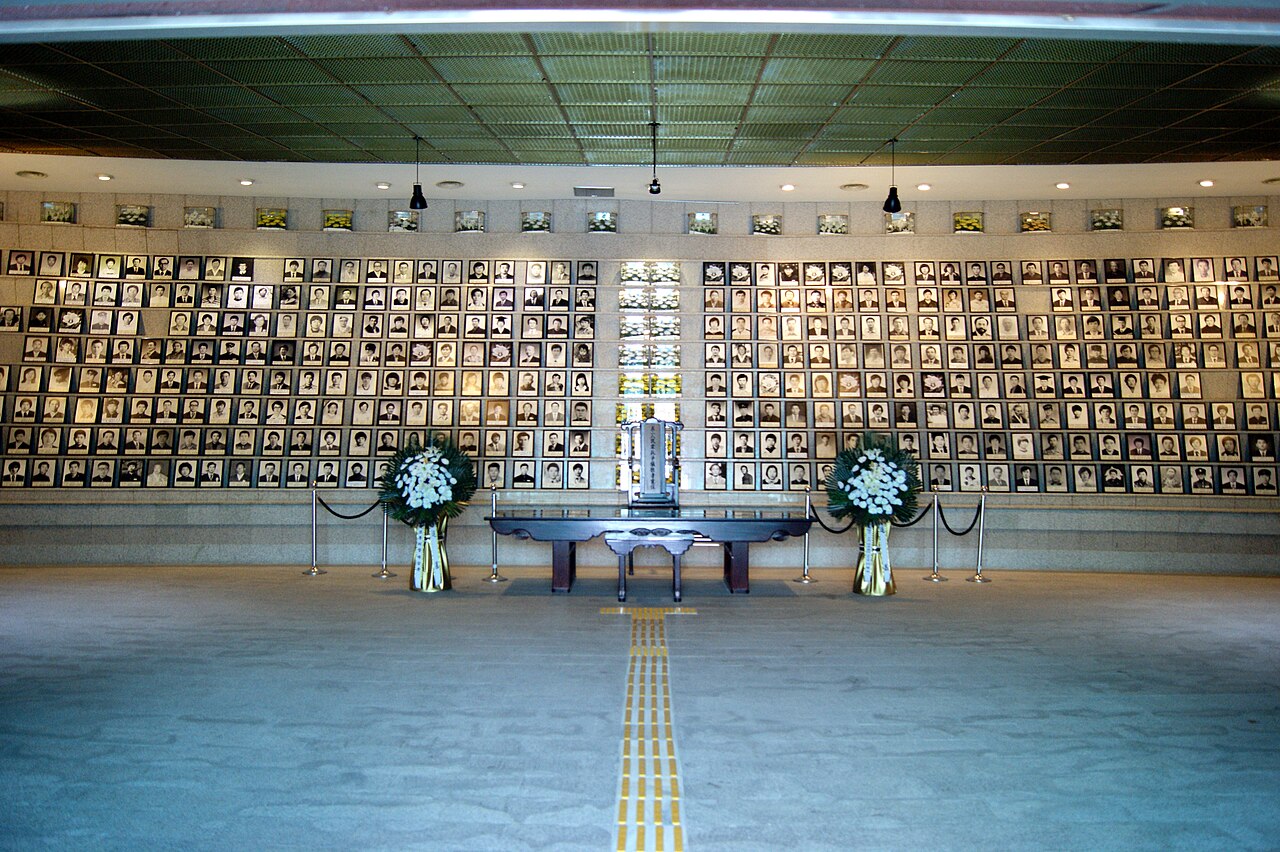
This coup echoed that of Korea’s past. The subsequent democratic movements, called the Spring Revolution, further echoed Gwangju’s 1980 May 18 Uprising, which helped to bring about democracy in Korea. In those early days of Burmese protest, the world cried out with the protesters in Myanmar. Gwangju citizens held protests and put the faces of fallen activists and victims of government violence up in Democracy Square. Dreamers collaborated with Burmese students and musicians to create two music videos in support. We felt the kindred spirit of revolution and hoped Myanmar would soon celebrate democracy just as Gwangju had done not so many years ago. Unfortunately, the reward of democracy has yet to come to the freedom fighters of the Burmese Spring Revolution, though they continue to work tirelessly toward that end.
Dreamers could see their friends lose hope that the world still remembered and stood with the people of Myanmar. Through three visits over the past three years Park came to know and love a number of pro-democracy activists and artists. He met with musicians, editors, painters, and filmmakers. On his visit in 2024, he started to make a plan. He promised that he would come back and create a concert that would show the people of Myanmar that Gwangju continues to stand with them. “We Dreamers have been striving for positive and better change in our society and the world through music. Therefore, we planned the Myanmar–Gwangju Solidarity Concert as a way to express our solidarity and comfort to all Myanmar citizens resisting the Myanmar military, not only in the Myanmar border region but also around the world,” said Park of the prospective project.
Dreamers set to work gathering the support that would be necessary to put on such an event. Approximately six million won was raised through internal fundraising in cooperation with Gwangju International Center, with 10 million won in support from the Gwangju Human Rights Peace Foundation. A total of 16 million won was spent on the production costs for the concert. It was important to Park to support the living expenses of the Myanmar musicians, technicians, and democracy activists who participated in the concert, and to use whatever funds remained to support refugee children. Dreamers members personally covered most of their own travel and accommodation expenses. Park stated, “I would like to take this moment to express my sincere gratitude to the Dreamers members who have sacrificed time, money, and hardship to participate in this meaningful concert and journey.”
At the same time, musicians began their own planning. Over Zoom calls and group chats, over hours of meetings and artistic debates, a plan began to form. Each musician selected songs that reflected the messages of the concert: solidarity, a call to action, a fight for democracy. What seemed like a pipe dream started to take shape.
Finally, in early October, all of the once separate worlds began to come together to put to sound what had previously just been ideas. Nine Dreamers musicians from Korea, the US, Canada, the UK, and Thailand came together with a dozen Burmese musicians, including vocalists, traditional drummers, a classically trained violinist, and several multi-instrumentalists. The group collaborated and folded together their many styles to create a powerful fusion of modern and traditional cross-cultural sound. Soon it was time for the big event.
The stage was constructed using large, four- meter-tall banners. To accommodate the stage, four construction scaffolding towers were installed within a concert hall. In center stage hung a grand copy of a woodblock print by Gwangju native artist and victim of military government violence Lee Sang-ho, entitled “The Battle of Jungang-ro 1987” which was hung with his permission. In the June Struggle of 1987, the Korean people overcame the pain of 1980 and achieved their first victory over the military junta, securing a constitutional amendment for direct elections. Artist Lee Sang-ho, who fought against the military dictatorship in the 1980s and suffered trauma from torture and imprisonment, has continued to portray the May spirit by capturing the stories of democratic martyrs on canvas.
The “letters from Gwangju” referenced in the title of the concert took the form of a large banner on which folks young and old had written messages of support to the Burmese freedom fighters. This joined Lee Sang-ho’s print, as well as a banner of messages to Gwangju from the Myanmar activists and protest banners written in Burmese calling out against the military junta and the upcoming sham election to take place in Myanmar this December and January. It was against this backdrop that the performers took the stage.
For over ten hours, performers, stage crew, audio engineers, and camera technicians worked to put together a spectacular show featuring a medley of Burmese protest songs, a collaboration of traditional Korean and Burmese drums, traditional dances from both cultures, covers of artists such as Kim Jung Mi and The Cranberries, originals by Daniel Saw, and Emily Terry, and a final bombastic medley of the Korean protest song “March for the Beloved,” the Burmese protest song “How Can I Forget,” and a musical setting of the poem “Let’s Walk This Road Together” by Jeollanamdo’s Kim Namju. Each song meticulously translated from its mother tongue into Burmese, Korean, and English.
As the lights came down on the stage, many tears were shed. Musicians, stage crew, and technicians embraced one another as comrades and friends. A heavy buzzing feeling hung in the air. A feeling of hope and possibility for a future without fear and violence for our Burmese family.
Letters From Gwangju will be published on YouTube by Myanmar pro-democracy media channels ahead of the upcoming sham election. This will allow more Myanmar citizens to access this content. All proceeds generated from this video, as well as all other music projects, videos, and song recordings made on this trip, will be donated to the Myanmar democracy movement. Every view directly benefits the brave Burmese people fighting to reclaim their home.
The “Letters” music concert is now available on YouTube. Enjoy it at https://www.youtube.com/watch?v=TfqkcZsmWy4 — Ed.
The Author
Kaitlyn Wachter is a New York native who has called Gwangju her home since 2016. She enjoys crochet and the change of the seasons, and lives with her husband, two-year-old son, and sweet pets in a traditional hanok home outside Daein Market.
Cover Photo: “iwalk” is a Myanmar civilian group that manufactures prosthetic legs and arms. They provide free assistance to civilians and militias who have lost limbs to landmines, airstrikes, and other atrocities committed by the Myanmar military, Sept. 28, 2025. Courtesy of Park Taesang.