

Remembering the Jeju 4.3 Incident: The Role of Literature in Expressing Cultural Memory and Trauma
By Diane Dooley
Jeju Island, located in the waters southwest of the Korean Peninsula, is known today for its beautiful landscapes, subtropical climate, and thriving tourism industry. Affectionately referred to as the “Korean Hawaii,” Jeju has become a popular destination for both domestic and international travelers, promising picturesque beaches, resorts, museums, art galleries, and nature trails. Jeju’s undeniable beauty and tourism infrastructure, however, masks a painful history that has shaped the cultural memory of the island and of South Korea as a whole.
One of the darkest moments in South Korea’s modern history is the Jeju 4.3 Incident (제주 4·3 사건, Jeju Sasam Sageon). The official English name is deceptive. While the word “incident” implies a single, short or insignificant event, the Jeju 4.3 Incident refers to a period of violent political turmoil that spanned roughly from April 3, 1948, to 1954. This remains one of South Korea’s most significant traumas and continues to be an important subject in the country’s political, cultural, and literary worlds.
The Jeju 4.3 Incident: A Historical Overview
The Jeju 4.3 Incident refers to a series of violent confrontations between leftist insurgents and government forces that led to widespread atrocities committed primarily towards civilian Jeju islanders. These atrocities include massacres, torture, and forced relocations (Kim, 2014). This started during a time of political instability in Korea after the country’s liberation from Japan in 1945. Korea, which had been under oppressive Japanese colonial rule for 35 years, suddenly found itself in the middle of an ideological divide between the Soviet Union-controlled North and the United States in the South. Attempts to form an interim authority post-liberation came to a standstill when the U.S. Army arrived on September 7, 1945, and established the U.S. Military Government. However, slowly, dissatisfaction with the U.S. Military Government’s policies began to grow nationwide.
Exacerbating the situation in Jeju was a significant administrative change. Jeju Island, which had long been a part of the larger South Jeolla Province, was elevated to provincial status in 1946, but this administrative upheaval caused dissatisfaction among the locals in Jeju. Economic distress (namely, increased taxes and food insecurity), political repression, anxiety due to the increased police and military presence on the island, and tensions between Jeju citizens and mainland authorities led to increasing unrest (Kim, 2014). It is out of this growing dissatisfaction that violence eventually irrupted.
On March 1, 1947, leftist groups organized a rally to commemorate the twenty-eighth anniversary of the March 1st Independence Movement of 1919. The demonstration, which began peacefully, escalated into violence when a mounted police officer knocked down a child spectator and rode off (Kim, 2014). When spectators pursued him, other police officers opened fire on the crowd, killing six people. This event fueled protests and a large general strike across Jeju, led by leftist groups but included a large percentage of the population, including police officers. These activities were met with increasing repression from the local authorities. In April 3, 1948, armed uprisings broke out, marking the beginning of a prolonged period of violent conflict.
The military and police, largely supported by U.S. occupation forces, launched a brutal campaign, targeting not only leftist insurgents but also innocent civilians they suspected of being related to or supporting the insurgents. Entire villages were destroyed, and civilians were massacred in what is now seen as one of the most horrific examples of state violence in modern Korean history. The Jeju 4.3 Incident Investigation Report estimated that up to 30,000 people, or roughly 10 percent of Jeju’s population at the time, were killed. Most of the harm inflicted was said to have been caused by “state agents”: the police, the military, and rightist youth groups. Most victims were in their teens or twenties, but a staggering 12 percent were children under ten years old or elderly citizens over sixty years old (Kim, 2014). This statistic tells us that the killings were indiscriminate.
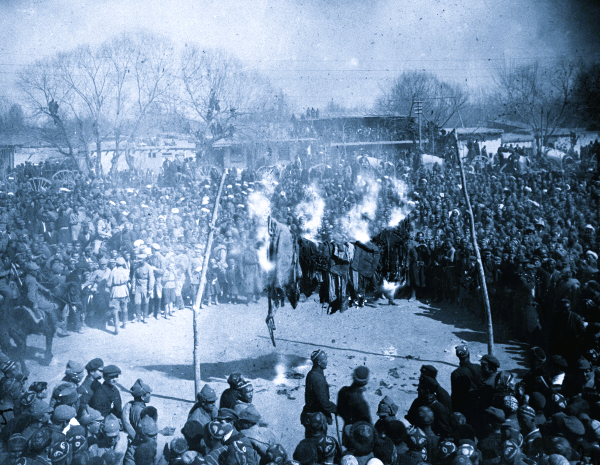
Most mass killings were in the mountain villages surrounding Jeju’s Mt. Halla. Anyone who encountered the counterinsurgency forces risked being considered a rebel and executed. Entire villages were wiped out within a matter of hours. In Gyorae, for example, at 5 a.m. on November 13, 1948, the military entered the villages and began to burn houses, killing everyone who tried to escape from the fires engulfing their homes. Their dead bodies were then unceremoniously thrown back into the fires. Within one hour, soldiers killed twenty-five residents, including children. On the soldiers, one survivor commented concisely: “They were not human” (Kim, 2014).
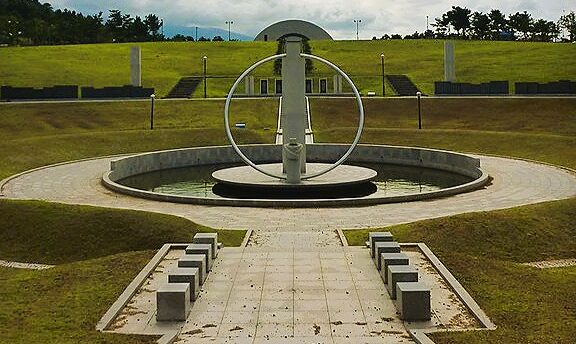
There are countless stories like this. These villages are today referred to as Jeju’s “lost villages.” Dotted along Jeju’s now busy roads, behind resorts, golf courses, and popular cafes, there are many unassuming stone memorials – the remains of what were once small towns and villages where people lived and worked. In an article for Hankyoreh, Huh writes that there is estimated to be 84–134 such villages (Huh, 2020).
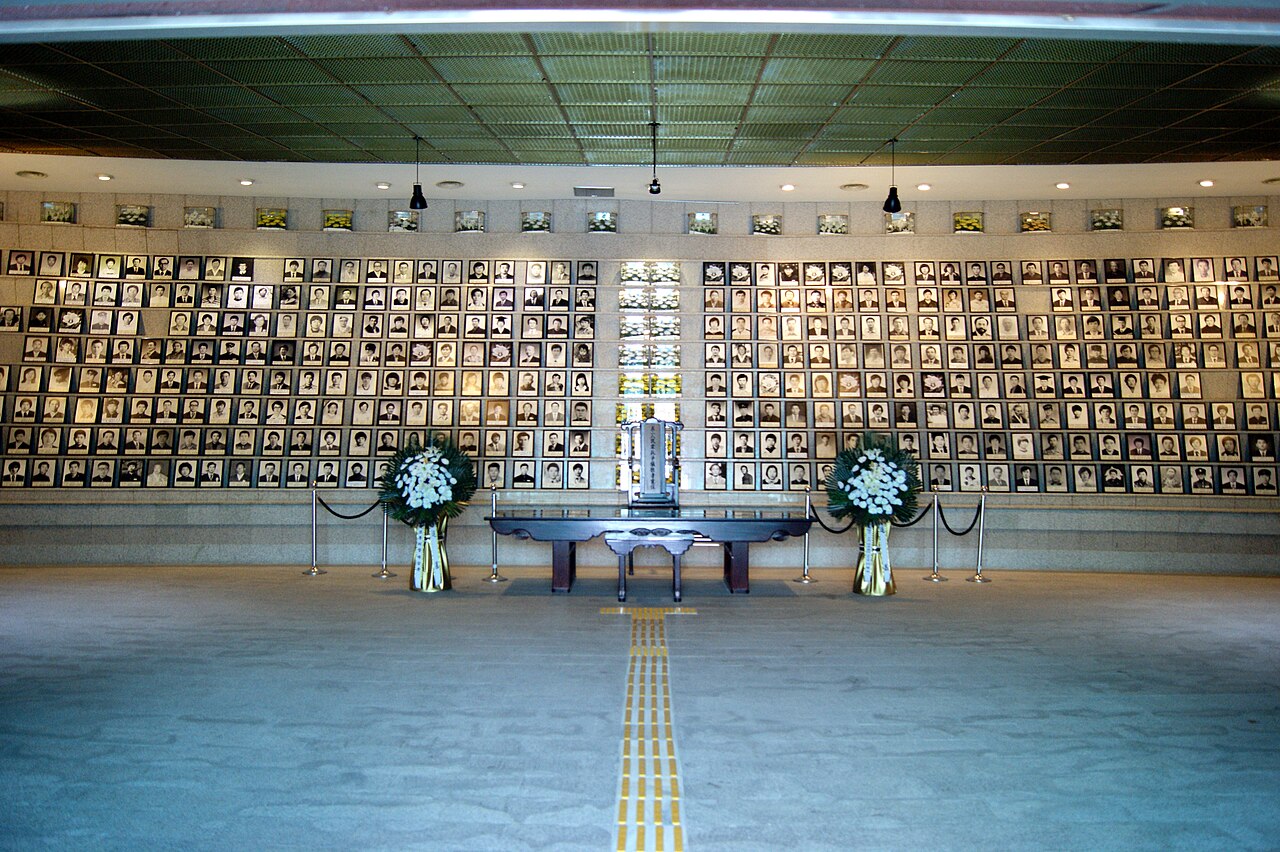
The violence continued until 1954, but the memory of the incident was suppressed for decades under authoritarian regimes. It was not until the 1980s, as South Korea began to democratize, that efforts to uncover the truth about the Jeju 4.3 Incident began to gain traction. These efforts were led by activists, journalists, and family members of the victims. In 2000, after years of advocacy, the National Committee for Investigation of the Truth about the Jeju 4.3 Incident was established to investigate the atrocities, provide compensation to victims’ families, and promote reconciliation. Despite this official recognition, apologies, and the opening of memorial parks on the island, the pain left by the traumatic events remains, and the Jeju 4.3 Incident is still a deeply sensitive and controversial topic in South Korea today.
Cultural Trauma and Memory in Literature
Literature plays a crucial role in processing and transmitting cultural trauma. Cultural trauma refers to the collective experience of loss, violence, or destruction that deeply impacts a community and shapes its identity and collective consciousness (Alexandar, 2004). Unlike individual trauma, cultural trauma is shared by a group and passed down through generations. The trauma experienced by the people of Jeju is not only a personal experience for the survivors but a collective memory that has been transmitted through families and communities.
Through literature, authors document the experiences of those affected by trauma, ensuring that these experiences are not forgotten. In the context of South Korea’s modern history, literature has been instrumental in preserving the memory of the victims and survivors, providing a space for their stories to be told and allowing healing to take place. This is particularly important given the historical suppression of the incident by successive authoritarian governments, which attempted to erase or downplay the violence purported by government agents that took place in Jeju. The creative narrative techniques employed by authors allowed them to write covertly about otherwise banned topics and, after democratization, to explicitly detail the traumatic memory for the first time. One of the most significant literary contributions to this discourse in recent years has come from the author Han Kang.
Han Kang’s We Do Not Part and the Jeju 4.3 Incident
This year marks the seventy-seventh anniversary of the Jeju 4.3 Incident. Last year, Han Kang became the first Korean and the first Asian woman to be awarded the Nobel Prize in Literature. We Do Not Part is set on Jeju Island, and while it does not overtly address the 4.3 Incident, it does explore themes of cultural trauma, memory, and the search for reconciliation. The novel follows Kyungha, a woman who is struggling with depression, unable to process the silence surrounding the brutal events of the past. Kyungha is haunted by nightmares of graveyards and tree stumps that resemble dead bodies. Her arduous journey to Jeju to rescue her friend’s pet bird becomes a metaphorical exploration of not only her own personal trauma but of the intergenerational trauma caused by the Jeju 4.3 Incident. The novel’s fragmented structure, which shifts between the present and flashbacks to the past, more like a long-form poem at times, mirrors the way in which trauma often disrupts the continuity of personal and collective memory.
In We Do Not Part, Kyungha’s journey to Jeju represents the greater search for truth and reconciliation. It represents the ongoing effort by the people of Jeju and South Korea to confront the legacy of the Jeju 4.3 Incident. By engaging with these traumatic histories, literature helps to keep the memory of the past alive, ensuring that future generations will not forget the suffering and loss that have shaped the country’s identity.
Conclusion
The Jeju 4.3 Incident remains one of the most significant and painful episodes in South Korea’s modern history. Although much progress has been made in terms of truth and reconciliation, the emotional and psychological scars of the incident continue to shape the lives of those who lived through it and their descendants. Through the works of authors like Han Kang, literature helps to keep the memory of Jeju 4.3 alive, ensuring that the lessons of the past are not forgotten.
References
Alexander, J. C. (2004). Toward a theory of cultural trauma. In J. C. Alexander, R. Eyerman, B. Giesen, N. J. Smelser, & P. Sztompka (Eds.), Cultural trauma and collective identity (pp. 1–30). University of California Press.
Caruth, C. (2016). Unclaimed experience: Trauma, narrative, and history. Johns Hopkins University Press.
Han Kang. (2025). We do not part (E. Yaewon & P. A. Morris, Trans.). Penguin Books.
Huh, H. J. (2020, April 3). The quest to rediscover Jeju’s lost towns and villages. Hankyoreh. https://english.hani.co.kr/arti/english_edition/e_ national/935577.html
Jeju 4.3 Peace Foundation. (2014). The Jeju 4.3 incident investigation report (Revised translation).
Kim, H. J. (2014). The massacres at Mt. Halla: Sixty years of truth seeking in South Korea. Cornell University Press.
Photo Credit: Flickr.
The Author
Diane Dooley is originally from Glasgow, Scotland. She has a BA in Korean and an MA in Korean literature. Diane enjoys reading, writing, learning, and talking about Korea to anyone willing to listen. She currently lives and works in Gwangju as an English teacher. Instagram: @yeloodenaid Email: dianedooley@naver.com