


Survivor of South Korea’s Gulag: Interview with Suh Sung – May 2025
By Shin Gyeonggu
I first met Suh Sung nearly 20 years ago, expecting to encounter a man marked by anger and resolution after enduring nearly two decades of imprisonment and unbearable torture. He had even attempted self-immolation, which severely disfigured his face and body. However, my expectations were completely negated by his vibrant spirit and sharp sense of humor.
Professor Suh Sung (서승) is one of the main speakers at the 2025 World Human Rights Cities Forum (May 16–17) in Gwangju. Suh was born on April 3, 1945, in Kyoto, Japan, to Korean parents. He completed his early education in Japan and graduated from Tokyo University of Education in 1968. He later pursued graduate studies in sociology at Seoul National University in South Korea. In 1971, Suh was arrested by South Korean authorities on suspicion of being a North Korean spy and spent 19 years in prison, enduring torture and harsh treatment before his release in 1990.
A tragic aspect of South Korea’s history is that Suh’s 19 years of imprisonment is overshadowed by the cases of 63 other long-serving prisoners of conscience. A South Korean holds the world record for the longest imprisonment. Mr. Kim Seonmyong, who refused to write a letter of ideological conversion, spent 42 years in prison until his release in 1995 under a special amnesty.
After his release in 1990, Suh became known for his advocacy for human rights and his academic work, specializing in contemporary Korean law and politics, human rights law in East Asia, and comparative human rights law. He served as a professor of law at the law department of Ritsumeikan University in Japan from 1998 to 2018 and was a research advisor at the Ritsumeikan Center for Korean Studies. Now Suh is endowed-chair professor at Woosuk University in Jeonju. He is also the author of numerous significant books on peacebuilding and human rights in East Asia, including the following:
- The Ufugazi of East Asia (2016): This travelogue and collection of essays is based on Suh’s visits to sites of state violence and human rights violations across East Asia. The term Ufugazi, meaning “great wind” in Okinawan, reflects his activism for peace and human rights in the region. This book is available in both Korean and Japanese.
- Korea Toward Peace, Japan Toward Empire (2019): This work addresses Korea–Japan relations and peace in East Asia, examining Japan’s imperialist attitudes, discussing the necessity of overcoming colonial legacies, and reflecting on the prospects for a peaceful future in Korean society. It holds Japan accountable for its colonial rule and emphasizes the importance of international solidarity and the role of civil society in achieving peace and human rights in East Asia.
- Unbroken Spirits: Nineteen Years in South Korea’s Gulag (2022): This memoir details Suh’s experience as a political prisoner in South Korea, covering his arrest, imprisonment, and eventual release after 19 years. It provides a personal account of state violence, torture, and the struggle for human rights under South Korea’s authoritarian regime. This book is also available in both Korean and English.
“I remember my uneducated mother, who would say during visits, ‘Don’t bow your head to such a dirty flock.’”
The following is the interview with Professor Suh Sung, touching on his imprisonment and post- prison activism.
On Suffering and Endurance
Gwangju News (GN): You spent 19 years in prison due to the 1971 so-called “Korean Spy Ring Incident.” What was the most difficult moment for you during that time, and what gave you the strength to endure it?
Suh Sung: Unlike ordinary inmates, I was subjected to long-term solitary confinement and isolation, along with violence, torture, and relentless efforts at conversion of thought. That was the hardest part. However, I managed to endure, to some extent, thanks to the solidarity and trust among my comrades.
GN: Despite extreme ordeals such as torture, a death sentence, and a self-immolation attempt, what do you think enabled you to uphold your convictions?
Suh: At the time, I was only 26 years old and cannot claim to have had any clear ideology or conviction. I simply resisted the absurdity of a system, which uniquely revived the “conversion of thought” system, a remnant of the Japanese colonial rule, and which demanded blind obedience to the will of those in power. I remember my uneducated mother, who would say during visits, “Don’t bow your head to such a dirty flock.” The Park Chung-hee Yushin regime was truly a gathering of despicable individuals.
On Activism and Movements
GN: After your release, you actively participated in anti-torture and East Asian peace movements. What activity or achievement stands out most to you?
Suh: The international symposium movement on “East Asian Cold War and State Terrorism,” which began in Taipei in 1997 and continued in Jeju, Okinawa, Gwangju, and Yeosu-Suncheon. Through this movement, we investigated the brutality of state violence against those who fought against imperialism and dictatorship, campaigned for the restoration of victims’ rights and compensation, and achieved results, such as the enactment of the Compensation Law for Victims of the White Terror (unfair judgment) of the 1950s in Taiwan, the Jeju 4.3 Incident Truth and Honor Restoration Act, and similar legislation for the Yeosu-Suncheon Incident. These efforts laid the groundwork for independent movements and historical reckoning in each region.
GN: You have long been dedicated to international solidarity movements, such as addressing historical issues between Korea and Japan and joint actions against the Yasukuni Shrine. What do you see as the most urgent task for peace and human rights in East Asia today?
Suh: The objective and fair recognition of the past and subsequent historical reckoning – that is, acknowledging the crimes of imperialist aggression and rule, uncovering the truth, offering
apologies, punishing perpetrators, compensating victims, and preventing the recurrence of imperialist aggression and colonialism.
GN: As a long-time human rights activist, how do you perceive the differences in human rights consciousness and civil movements between Korean and Japanese societies?
Suh: The very concept of “human rights” is rooted in Western individualism, and “Western human rights” have often been used – under the guise of “civilization versus barbarism” – to justify the historical wrongs of imperialist domination. In Japan, which emulated Western civilization, historical responsibility has beenexempted, and the universality of human rights is emphasized while avoiding fundamental issues like imperialist rule and colonialism, reducing human rights to a plain issue of “discrimination” and overlooking the core issue of sovereignty. In Korea, although the country still struggles with division and anti- communist sentiment, the resistance against the Yushin military dictatorship of Park Chung-hee, Chun Doo-hwan’s military regime, and Yoon Seok Yeol’s prosecutorial authoritarianism has led the people to realize that they are the true sovereigns of the nation and that the constitution itself embodies human rights.
On Teaching and Research
GN: While teaching comparative human rights law and contemporary Korean law and politics at Ritsumeikan University, what value did you emphasize most to your students?
Suh: I emphasized the importance of standing with the oppressed and becoming sovereign individuals who are independent from ruling powers.
GN: You have worked to promote Korea–Japan historical and cultural exchange, including founding the Korea Research Center. What was your most rewarding academic or social moment?
Suh: In 2007, I had the honor of inviting President Kim Dae-jung to give a lecture and facilitating dialogue between him and students, citizens, and Koreans in Japan.
On Present and Future
GN: Could you share your thoughts on the significance of the 1980 Gwangju Uprising for Korean democracy and the global human rights movement?
Suh: This is the theme of my lecture at this year’s World Human Rights Cities Forum. The Gwangju Uprising did not begin with good- looking, refined theories; it was a fierce struggle by those oppressed to the edge. That is the spirit of May 18. The events of May 18 were a “Gwangju Massacre,” a massive act of state violence against citizens, and the final stand of the citizen militia, surrounded at the provincial office, embodied the unyielding Gwangju Spirit.
The atrocities committed by the new military regime left deep wounds and a desire for vengeance in Gwangju, drawing overwhelming condemnation from both domestic and international communities. The uprising developed into the May Movement, demanding truth and justice, resulting in legislation for truth- finding, honor restoration, and compensation, and ultimately bringing Chun Doo-hwan and Roh Tae-woo to justice.
The Gwangju Uprising was a miraculous event in which, within a generation, the people overthrew military dictatorship and achieved democratization. The annual commemoration of May 18 has become an established event. The Gwangju Uprising represents the most acute exercise of the right of resistance in East Asia. Gwangju will be remembered in human history as a city of resistance and a city of uprising, akin to Philadelphia or Paris, for standing against massive state violence.
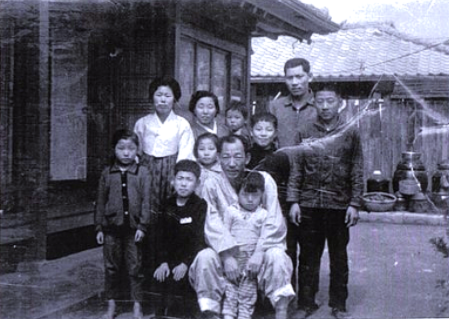
Photograph courtesy of Suh Sung.
The Interviewer
Shin Gyonggu has served the Gwangju International Center as its volunteer director for the past 26 years. He served as a professor for more than 30 years at Chonnam National University until his retirement in 2013. Dr. Shin is also the publisher of the Gwangju News.