



The 2025 KOICA Fellowship Program: Strengthening Local Human Rights Administration Across Asia
By Jana Milosavljevic
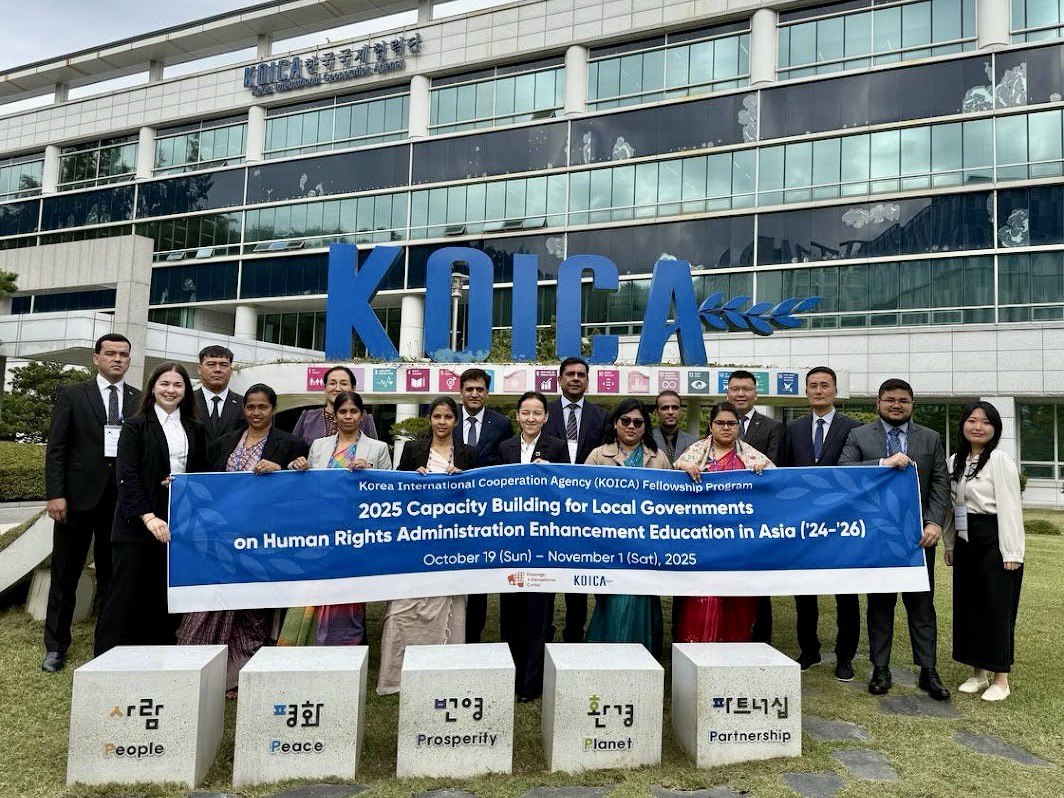
Building on the momentum created during the first year of the 2024–2026 KOICA Fellowship Program titled “Capacity Building for Local Governments on Human Rights Administration Enhancement in Asia” (see Gwangju News, September 2024), the Gwangju International Center (GIC) welcomed a new cohort of fifteen public officials from Bangladesh, Sri Lanka, Pakistan, Kyrgyzstan, and Turkmenistan for the second year of the training program, held in Seongnam and Gwangju from October 19 to November 1, 2025.
While the previous year’s program targeted high- level officials and encouraged each country team to define broad institutional goals related to human rights administration capacity building, this year, the program placed emphasis on providing middle-level officials from both local and central governments with the tools, skills, and confidence needed to translate human rights principles into practical public policy at the local level. The program was designed not only to raise awareness and deepen theoretical understanding, but also to address the persistent implementation gap many countries face when integrating human rights into everyday governance. Over the course of two weeks, the participants engaged in a comprehensive curriculum that combined lectures led by Korean and overseas experts on topics ranging from AI ethics to climate change and human rights administration, along with study visits and extracurricular cultural activities.
The training program opened with country report presentations, where teams of three representatives from each country shared the human rights challenges and institutional realities of their local administrations related to human rights sensitivity. This exchange laid the foundation for collaborative learning, helping participants situate their work within a broader regional context while identifying common challenges. The key component and main output of the program was the development of an action plan in which participants designed improvement strategies aligned with the human rights conditions and needs of their respective countries, as identified through the country report presentations.
“Seeing how theoretical concepts are applied in actual institutions helped me understand their relevance and feasibility.”
Through a series of Action Plan Workshops, each team refined its plan with a strong focus on feasibility and practical execution, drawing on the guidance provided by the program’s facilitators coming from the GIC’s long-lasting partners – Morten Kjærum, adjunct professor at the Raoul Wallenberg Institute of Human Rights and Humanitarian Law, and Janica Puisto, human rights officer at the United Nations Office of the High Commissioner for Human Rights (UN OHCHR). By incorporating the experts’ feedback, participants strengthened and advanced their plans, laying the foundation for integrating them into real policy processes and ensuring that the program yields concrete, sustainable outcomes, reinforcing its overall purpose.
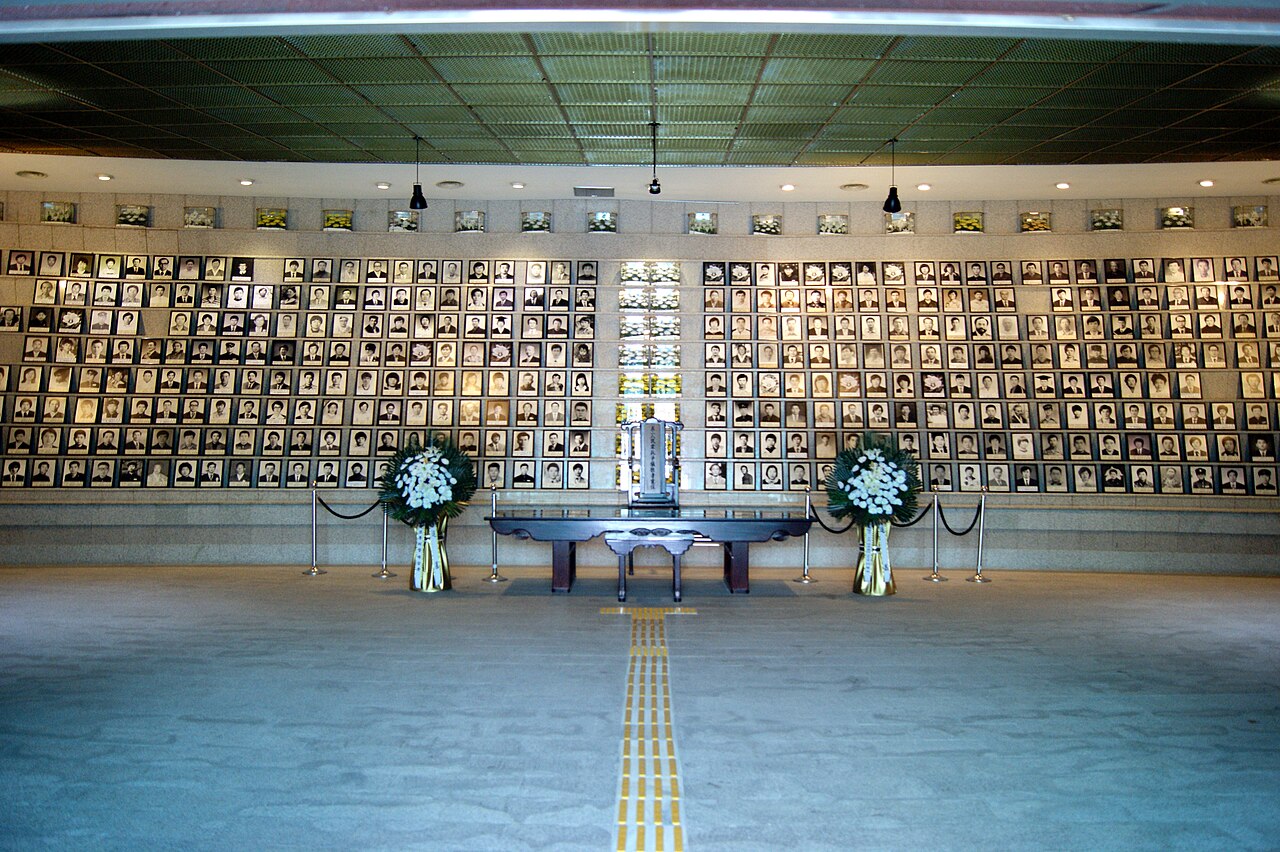
Outside of the lectures, as part of hands-on learning, the participants visited Seoul City Hall, the 5.18 Archives, the Environmental Corporation of Gwangju, and Gwangju City Hall. These field trips offered a firsthand look at Korea’s local-level human rights practices, from historical memory preservation to public transparency, environmental management, and civil participation. The move from Seoul to Gwangju, Korea’s internationally recognized human rights city, allowed participants to experience the city’s unique legacy and ongoing commitment to democratic values.
Across both cities, the participants demonstrated strong engagement in the program, raising questions, actively participating in discussions, and applying the facilitators’ feedback with diligence and creativity. Their final action plan presentations reflected not only improved technical knowledge but also a deepened sense of responsibility as agents of change capable of strengthening rights-based governance in their home countries.
To better understand how the program shaped their perspectives, I spoke with representatives from each of the five participating countries who presented their country team’s action plans at the end of the course.
Jana Milosavljevic (JM): What was the most meaningful change in your understanding of human rights and local governance after participating in this program?
Maharage Dishna Yasanthi Dharmasekara (Additional Secretary, Provincial Council and Local Government Division, Ministry of Public Administration, Provincial Councils and Local Government, Sri Lanka): It was realizing how closely human rights and local governance are connected in daily life. Before the training, I viewed human rights mainly as broad, high-level principles. After the program, I understood that local decisions on services, safety, education, healthcare, and complaint handling directly influence whether people actually experience those rights. I also learned that protecting human rights is not only the role of national institutions but also of local officers, political authorities, community leaders, and citizens. This shifted my view from seeing human rights as a legal concept to a practical, everyday responsibility.
JM: Which lecture, field trip, or activity had the greatest impact on you, and why?
Muhammad Naeem (Additional Secretary, Coordination Wing, Services and General Administration Department, Government of Punjab, Civil Secretariat, Pakistan): The field trip to Gwangju City Hall had the most powerful impact on me. The deputy mayor’s briefing beautifully illustrated how Gwangju transformed its historical struggle for democracy into a living, institutionalized model of human rights governance. The Democracy, Human Rights, and Peace Bureau showcased practical tools such as monitoring systems, education programs, and complaint-handling mechanisms as part of daily administration. It was inspiring to see how a local government can lead national change by strengthening community participation, civic dialogue, and accountability. This visit reaffirmed that human rights are most effective when they are institutionalized, visible, and rooted in shared public memory.
Mahym Saparova (Second Secretary, Asia- Pacific Countries Department, Ministry of Foreign Affairs of Turkmenistan): Overall, the field trips were the most impactful part of the program for me. They provided practical, real-world exposure and allowed us to interact directly with experts who work on human rights issues at the local level. Seeing how theoretical concepts are applied in actual institutions helped me understand their relevance and feasibility. Also, the lectures delivered by the international experts exceeded my expectations. They deepened my understanding of the history, philosophy, and core principles of human rights, especially the indivisibility and interdependence of rights, and helped me become more aware of current global and local human-rights challenges.
JM: What insights did you gain from collaborating with participants from other countries?
Md Al Yasa Rahman Tapader (Administrator, Local Government Division, Ministry of Local Government, Rural Development, and Cooperatives, Bangladesh): The insights I gained from collaborating with participants from other countries are understanding common issues involving human rights and the way they are working on them, how they approach human rights education, how different countries have different but enforceable human rights mechanisms, and the impact of climate change on human rights.
JM: After returning home, what are your next steps for advancing or implementing your action plan within your local government?
Kamalidin Nuramidin Uulu (Chief Specialist, Department of International Cooperation and Organizational Work, State Agency for Civil Service and Local Government Affairs under the Cabinet of Ministers of the Kyrgyz Republic): Since our action plan was related to the bullying of children in schools, our next step is to cooperate with the Ministry of Education of the Kyrgyz Republic. I have already had the opportunity to speak one-on-one with the Minister of Education of the Kyrgyz Republic, Ms. Dogdurkul Kendirbaeva. She said that we can contact the relevant department in the ministry regarding our action plan. After all, it is the ministry that deals directly with the issue of bullying in schools.
Muhammad Naeem: Upon returning home, my priority is to translate our action plan into concrete steps within the local government system. I will initiate consultations with the Human Rights and Minorities Affairs Department, District Human Rights Committees, and relevant stakeholders to launch capacity-building programs for Human Rights Defenders at the Union Council level. This includes drafting SOPs for documentation and referrals and developing standardized training modules. I also plan to establish a physical or virtual human rights library, starting with a dedicated human rights corner at the Quaid-i-Azam Library in Lahore. This space will also showcase materials on Gwangju’s evolution as a human rights city, serving as a bridge for continued learning and collaboration.
The third and final year of the 2024–2026 KOICA Fellowship Program will bring together working-level local government officials from the same five countries – Kyrgyzstan, Bangladesh, Sri Lanka, Pakistan, and Turkmenistan. The program will be tailored to participants’ positions and expertise, and once again, through lectures, field trips, and related activities, will focus on strengthening their understanding of human rights and supporting the development of practical action plans to improve human rights administration in their respective countries and institutions.
The Author
Jana Milosavljevic was born and raised in Serbia. She currently lives in Boseong, where she works as a freelance translator and interpreter. She enjoys exploring new places, learning about different cultures, and meeting new people. If you are up for a chat, she can talk to you in Serbian, English, Korean, Japanese, or German.
Cover Photo: The KOICA Fellowship Program participants: government officials from five Asian countries, courtesy of the Gwangju International Center.