


Bread, Roses, and Community: A Gwangju Bakery Rises Beyond Business
By Yousra Feriel Drioua
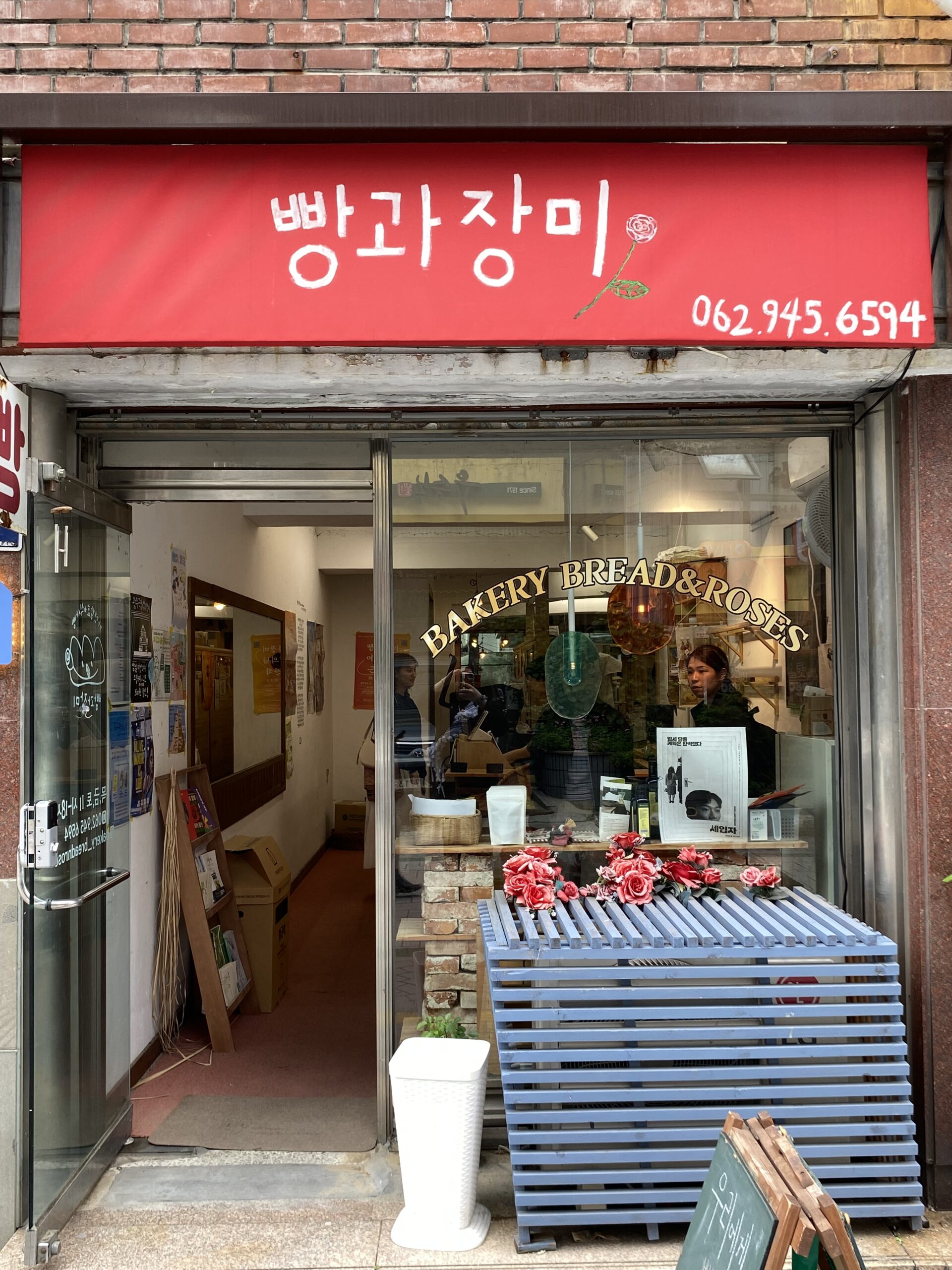
In a small Gwangju bakery, flour and activism ferment side by side. Bread and Roses is redefining what it means to be a local bakery. Aiming to balance ethical sourcing and community participation, the founders see the name “Bread and Roses” as a reflection of their mission to combine fair labor practices with a commitment to dignity. This bakery is a place where baking becomes a tool for social change.
Beyond Baking: A Space for Participation
Bread and Roses draws its name from the historic slogan born in the 1908 New York strike of women textile workers demanding not just fair wages, symbolized by bread, but also dignity and a life worth living, symbolized by roses. That rallying call still echoes inside this small bakery. True to its name, Bread and Roses extends its impact beyond baking. Every March 8, the bakery closes its doors to join a protest march, linking bread with the legacy of labor rights and feminist activism. From workshops on International Women’s Day to film screenings on feminism, ecology, and slow living, the bakery fosters a culture of dialogue and community-building.
“‘We want bread, and roses too!’ – We wanted to create a space where that slogan could be lived out,” said the owners. “There are days when the labor of making and selling bread is so exhausting, it feels like the roses disappear. But whenever customers visit wearing feminism or rainbow badges, it reminds us that people support the values we stand for. We feel proud. Every March 8, we prepare time to commemorate and celebrate International Women’s Day with solidarity events, from workshops and lectures to performances and street marches.” That blend of symbolism and action shapes not just the name, but the bakery’s atmosphere – one where feminist values, transparency, and social imagination are baked into its identity.
The bakery’s philosophy emphasizes that slow, mindful production and community-driven activities can coexist with a sustainable business model. “Because we talk about more than just bread; we talk about the roses too. We ended up organizing all sorts of cultural events,” the owners said. “We called it ‘Rose Time’, a moment to share and learn together. From tea parties and dumpling-making sessions to film screenings, lectures, play readings, and performances, we’ve tried it all. These days, after relocating to downtown, so many great events now take place regularly at nearby spaces like Gwangju Theater (광주극장), Sonyeonui Seo (소년의 서), This Is Not a Bookstore (이것은 서점이 아니다), and Han Georeum Store (한걸음가게). So now, Bread and Roses mostly goes big only on Women’s Day. Haha!”
A Commitment to Ethical Practices
Unlike conventional bakeries, Bread and Roses prioritizes local, transparent sourcing and slow fermentation. The team uses flour from farmers they know by name in Buan, naturally ferments each loaf, and avoids additives and animal products, staying true to their vision of responsible and sustainable baking. Seasonal produce from local farmers becomes jam, carrot salad, or even pizza toppings, deepening ties between the bakery and the agricultural community. But behind every rustic loaf is a labor-intensive routine.
“It takes two to three days for a single loaf of bread to be ready. Bread may be “slow” food, but making it means moving fast. I wake up at 5 a.m. and arrive at the bakery by 6. First, I feed the sourdough starter and shape the dough that was prepared the day before. Once the oven is preheated, I bake cookies and kkamppanyu (깜빠뉴, pain de compagne, “country bread”), then I work through the batches of dough that have completed secondary fermentation. By 10:30 a.m., we open for business. From that moment on, I’m already prepping dough for the next day, using the starter I fed that morning. I finish around 4 p.m.,” the owner said.
“It never feels slow, there’s just too much to do. The work is hard, especially in summer when I’m standing near a 270-degree oven. But when the dough rises just right, turning golden and filling the air with that heavenly, nutty aroma, I can’t help but think: ‘I’m a bread person through and through.’ The joy of a perfectly baked loaf and the pride of providing nourishing food keep me going.”
The owners have called the bakery a “space of resistance and community,” a sentiment that underscores their commitment to fostering meaningful connections among customers, neighbors, and activists. But creating such a space has not been without challenges. “I don’t even remember saying something that cool,” they laughed. “Sometimes I wonder if we’re really living up to that description. But I guess we used the word ‘resistance’ because we wanted to create a crack in the system, something not driven by profit or capitalist logic. And as for ‘community’, we don’t mean only intimate, tight-knit ties. We want a transparent, safe space where anyone can exist just as they are.”
“Running a space like this means constantly juggling what you want to do and what you have to do. Often, daily survival takes over. For me, rest is essential. When I’m drained mentally and physically, I take a break like it’s school vacation. I visit spaces I’ve long wanted to see and meet people I’ve been meaning to meet. Those moments help me dream again.”
As they continue to knead together activism and entrepreneurship, the owners envision new projects that strengthen both collective space and craft. They dream of expanding collaborations and experimenting with new ideas. “Honestly, continuing as we are now would already be enough,” they said. “But I do hope Bread and Roses becomes even more woven into people’s everyday lives. I imagine someone catching a movie at the theater next door, grabbing bread for the week from us, picking up a new book from the local bookstore, and getting refill detergent from Han Georeum. We’re thinking about ways to expand and collaborate more with these neighboring spaces.”
Looking Ahead
Running a bakery with a strong activist identity also means grappling with financial realities and sustainable operations. The owners remain mindful of how to practice slow, ethical food culture while keeping the business afloat. “It’s always tough balancing activism and business. I’m never quite sure if I’m doing it right. It feels like a high-wire act,” they admitted. “But trying to align our beliefs with our business seems to have brought us encouragement and support from others. I think that’s helped us keep going.” They added, “It’s also important to make money sustainably. I want to pay myself a fair salary, so I don’t feel shortchanged. Above all, our bread must taste good. We put a lot of effort into using high-quality ingredients and maintaining great flavor. That’s how we keep customers coming back.”
For the expat community and anyone curious about sustainable spaces in Korea, Bread and Roses offers more than just bread, it’s an invitation to participate, to connect, and to share in a vision of dignity and solidarity. “We’re only open Thursday through Saturday because we believe in a life with roses. Please keep that in mind if you plan to visit,” they said. “And make it a full experience, catch a film at the theater next door, too! We don’t make sweet bread here. We focus on wholesome, hearty loaves that can be a meal. If you’re missing the bread from back home, you might find something comforting here.”
In Gwangju, Bread and Roses is a testament to the idea that every bite can carry a message, and every small business can rise as a catalyst for community and change.
The Author
Yousra Feriel Drioua is a freelance journalist and media enthusiast from Algeria currently based in South Korea. A former GKS scholar, she holds an MA in media and communication, and writes on issues at the intersection of gender, media framing, sociopolitics, and civic society. In her free time, she enjoys being a barista!
Instagram: myyilgi
Cover Photo by Yousra Feriel Drioua.