



Gwangju City News – December 2025
Gwangju Proposes National Computing Center
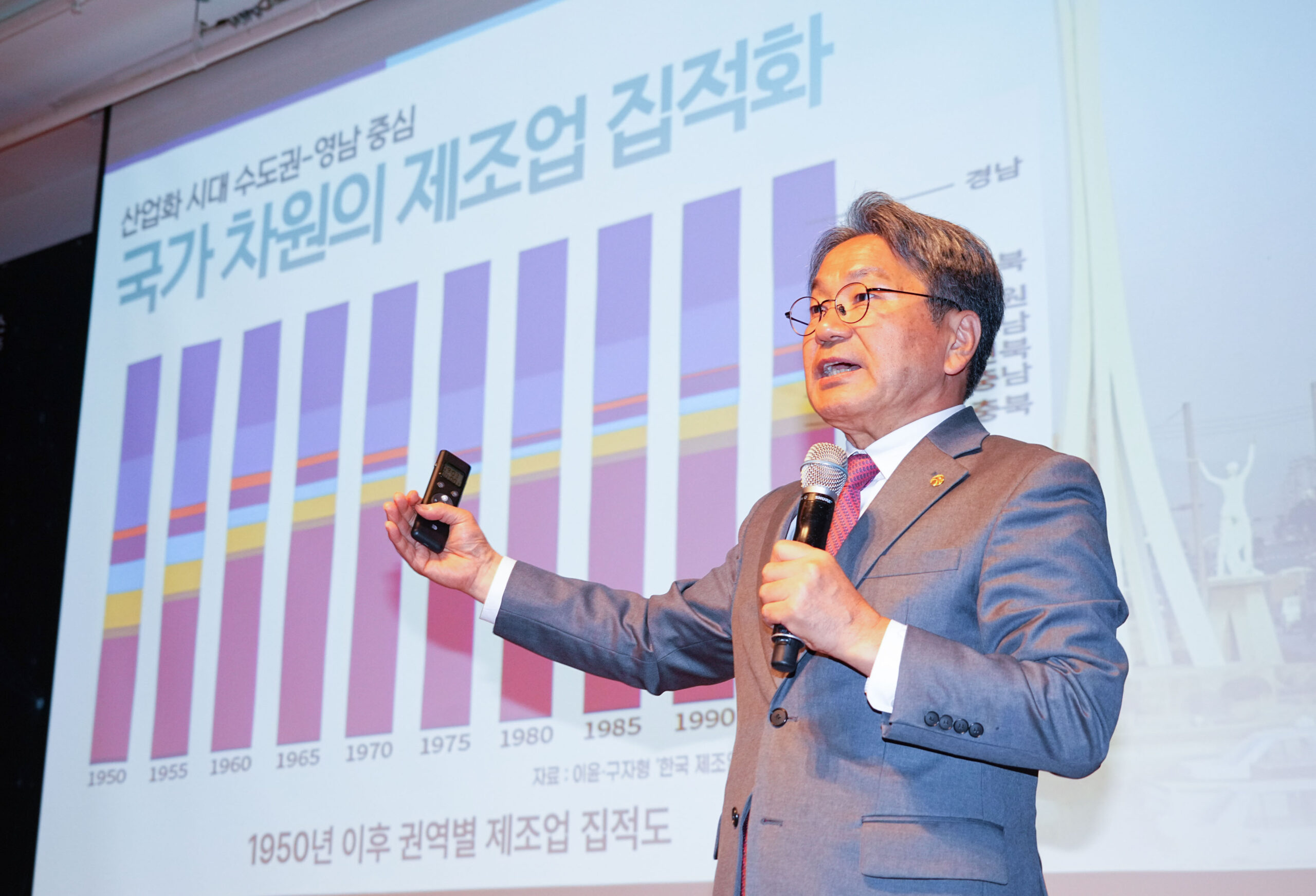
Gwangju Mayor Kang Gi-jung delivered a keynote speech titled “AI Model City Gwangju: Toward Korea’s Top 3 in AI” at the 10th Seoul Future Conference held at the Shilla Hotel in Seoul on November 5. In his keynote, Mayor Kang proposed the establishment of a national NPU (AI semiconductor) computing center during his keynote speech at the 2025 conference.
The mayor emphasized that building a dedicated NPU center is essential to foster Korea’s AI semiconductor ecosystem and advance the nation into the global top three in AI technology. Kang pledged to make Gwangju a leader in the domestic NPU market, highlighting the city’s experience with the National AI Data Center and partnerships with 25 fabless AI chip companies. Gwangju’s AI model city strategy includes four pillars: (a) establishing the national NPU computing center and (b) a national AI research institute in Gwangju, (c) developing an AI+mobility smart city, and (d) designating a mega-sandbox AI convergence complex.
Gwangju Companies Win Innovation Awards
Seven innovative companies in Gwangju have been recognized for their technological excellence at the Consumer Electronics Show (CES) 2026, earning one Best Innovation Award and six Innovation Awards. LBS Tech Co. won the Best Innovation Award in the new Travel and Tourism category for its AI-based urban mobility design system, receiving CES honors for the second consecutive year. GhostPass Co. also achieved a third straight win for its data-free identity and payment solution, Cityflow.
Other winners include innoDtech (digital health), inDJ (AI for autonomous vehicle safety), All The Time (AI-based women’s safety platform), MainSpace (3D interior design), and Deepscent (digital olfactory technology). The city government stated that these achievements highlight Gwangju’s growing global competitiveness in cutting-edge industries and pledged continued support for international marketing and innovation programs.
Gwangju Launches Pilot Program for Foreign Auto Parts Workers
Gwangju Metropolitan City will implement a pilot project to introduce foreign skilled workers into the automotive parts sector under the E7-3 employment visa. The program targets mold, forming, and welding specialists to help local auto parts companies address labor shortages and strengthen industrial competitiveness. Four regions – Gwangju, Gyeongbuk, Chungbuk, and Chungnam – were selected as pilot areas, with the project running from October 2025 to September 2027. In the first year, 40 of the 100 allocated workers will be placed in Gwangju, with second- year allocations adjusted based on results.
The E7-3 visa allows foreign general skilled workers to work in designated shortage industries, with eligibility for permanent residency after five years. Previously, the visa applied only to sectors like shipbuilding, aviation, and aquaculture, but auto parts manufacturing has been newly added due to growing labor demand in the field.
The Korea Automotive Technology Institute will manage the project. In September, Gwangju surveyed local companies, receiving applications from 16 firms for 122 workers. From October to November, skills assessments will be conducted in Vietnam and Indonesia, with 40 workers expected to start in Gwangju by the end of 2025.
Gwangju Sees Strong Birth Rate Recovery
Gwangju’s birth rate is rising sharply in 2025. In August, 572 babies were born – a 9.6% increase over last year – ranking first among metropolitan cities and second nationwide. From January to August, births totaled 4,328, up 6.1% from 2024, while marriages also rose 8.1%, supporting ongoing population growth.
Lee Young-dong, director of the Women and Family Bureau, credited the city’s family-friendly policies for creating an environment conducive to childbirth. Gwangju provides various supports, including newborn celebration cards, fertility treatment subsidies, late-night and moonlight children’s hospitals, and household care services for pregnant women and grandparents caring for their grandchildren.
Notably, Gwangju’s “10 a.m. Start for Elementary School Parents” program will expand nationwide next year under the Ministry of Employment and Labor’s “10 a.m. Start for Childcare” initiative.
“The Hyundai Gwangju” Mall Project on Track
The Gwangju Metropolitan City Urban Railway Construction Headquarters conducted a joint inspection with the Gwangju Disability Rights Advocacy Network to review temporary walkways near the Nam-gu Pureun-gil (Green Road) area of Metro Line 2. The inspection aimed to address public complaints about walking inconveniences caused by construction. Participants, including persons with disabilities and social workers, checked whether temporary facilities such as bus stops, crosswalks, and sidewalks were accessible to all users.
Key issues identified included difficulties for wheelchair users on removed sidewalk sections and missing tactile paving at construction boundaries. Director Oh Young-geol stated that feedback from the inspection will be reflected in future construction phases to create safer and more inclusive pedestrian environments.
Compiled by Charlene Lee.
Charlene Lee is the founder of Charlene English Institute. Having lived in many different countries, she loves to explore and experience diverse cultures. She hopes to contribute to making Gwangju a more vibrant city.
Cover Photo: Gwangju Mayor Kang Gi-jung delivers a keynote at Seoul Future Conference. (Gwangju City Hall)