

Gwangju City News – January 2026
One Year Anniversary of Illegal Martial Law
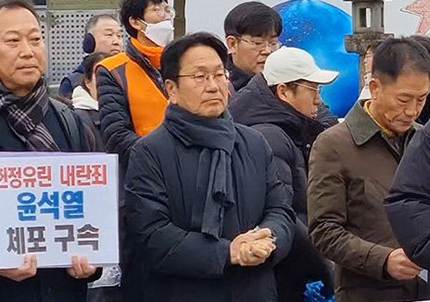
On December 3, South Korea marked one year since the attempted illegal martial law declared by former president Yoon Suk Yeol. President Lee Jae-myeong announced that the date will now be observed as “National Sovereignty Day,” while investigations and trials involving former senior officials continue.
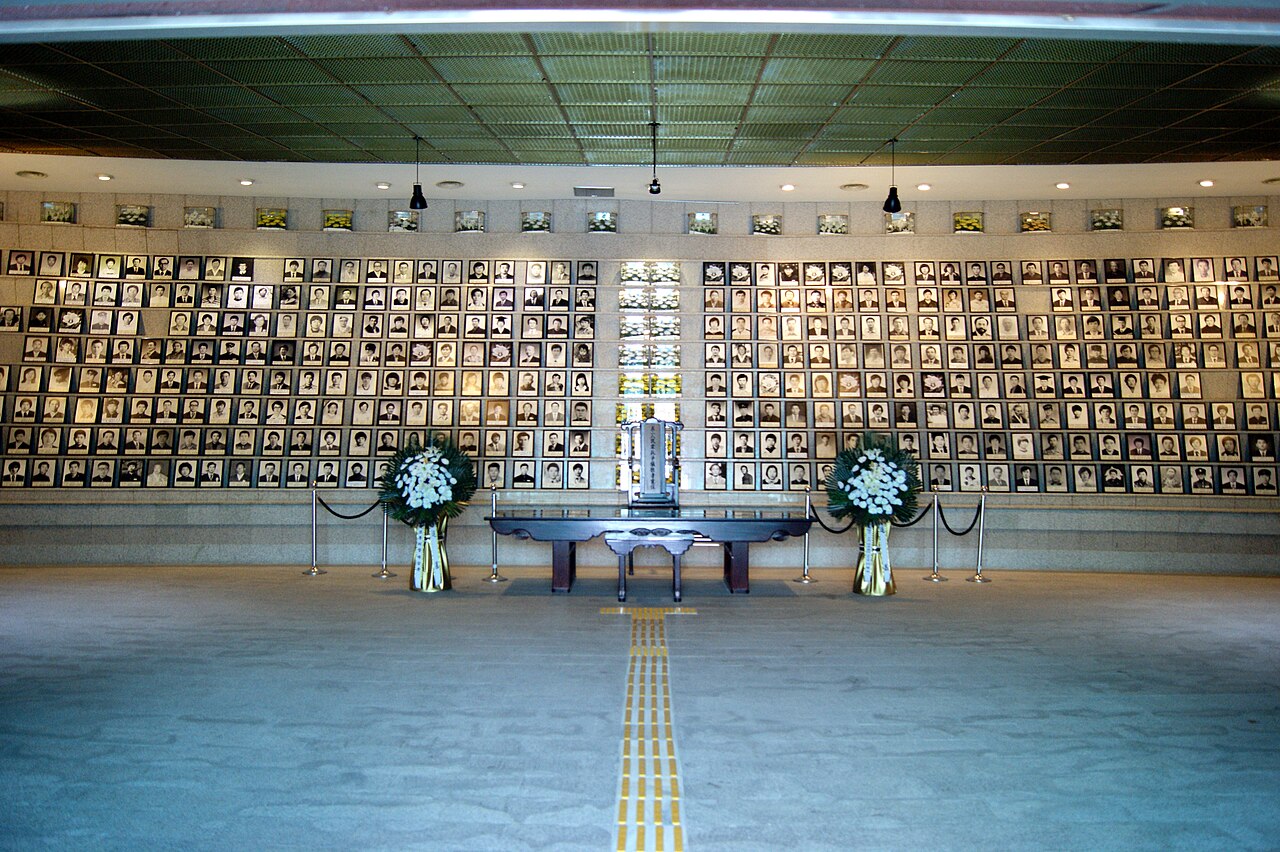
Gwangju played an active role in responding to the event at the time. By 00:30 on December 4, 2024, City Hall had opened an emergency response meeting to officially reject the order. Local civic groups and residents also joined demonstrations in Gwangju and Seoul, maintaining public pressure until Yoon was removed from office in April.
To commemorate the anniversary, the Mayor of Gwangju hosted the “Revolution of Light: Democracy Week” during the first half of December at City Hall. Activities in the city included a documentary screening of author Han Kang’s works at the Gwangju City Cinema and an exhibition at the Asia Culture Center highlighting the contributions of Nobel laureates Han Kang and former President Kim Dae-jung to democracy and human rights.
Academic Bullying Under Further Investigation
The investigation into the supervisors and co-researchers of the Chonnam National University graduate student who died by suicide in July has identified multiple forms of academic abuse. Recent findings show that personal and group messages from a professor and several supervisors included unreasonable expectations, inappropriate language, late-night communication, and personal requests unrelated to research duties.
Chonnam National University has since expanded its mental-health support efforts and encouraged students to seek assistance. The case has drawn broader attention to Korea’s ongoing mental-health challenges, particularly the intense academic and familial pressures faced by young people.
Six New Projects for the Asian Cultural Hub Initiative
On November 25, 2025, Gwangju City confirmed six new projects under its long-term plan to develop the city as an Asian Cultural Hub, bringing the total to 67 initiatives. The new projects include the establishment of an Asian Cultural Inclusion District, a K-Culture Content Tech Town, a startup support program for Asian content-tech companies, a webtoon creation community hub, an Asian art creator exchange platform, and an Asian sound-exchange platform.
Ongoing projects expected by 2027 continue to strengthen the city’s cultural infrastructure, including the construction of the new Gwangju Biennale Exhibition Hall, development of humanities walking trails, creation of an Asian character theme park, support for virtual content production, and improvements to the ACC Art Avenue.
The final plan was submitted to the Ministry of Culture, Sports, and Tourism at the end of November and is expected to receive approval by March 2026.
Budget Secured for KTX Honam Line Upgrade
Gwangju City announced that the 2026 national budget includes 10 billion won to upgrade power substations needed to increase the KTX Honam Line service. The funding aims to prepare the infrastructure required to expand operations of the KTX-Cheongnyong trains.
The budget allocation follows continued advocacy by Gwangju City, local lawmakers, and civic groups. The Ministry of Land, Infrastructure, and Transport and Korail also reviewed the need after a 2023 test run of the dual-set KTX- Cheongnyong showed a power overload at the Noryeong substation.
Once partial upgrades are completed by May 2026, dual-set KTX-Cheongnyong trains will be able to operate, increasing capacity to over 1,000 seats per train – about 300 more than current KTX-Sancheon dual-set operations. This is expected to ease chronic seat shortages for Gwangju travelers.
Additional substation upgrades along the Honam high-speed line will continue through 2028 to support long-term service expansion.
Updated Multilingual Living Guide for Foreign Residents
Gwangju City has released a new edition of the Gwangju Living Guide to support foreign residents, containing practical information on daily life and including visa procedures, healthcare, legal services, education, and local resources. The guide was distributed in October to 58 organizations, including the Gwangju International Residents Center (GIRC), district family centers, and foreigner-friendly hospitals. It is also available online as an e-book through the city website and at gwangjuguide.or.kr.
The guide is offered in 10 languages (Korean, English, Chinese, Vietnamese, Russian, Thai, Khmer, Mongolian, Indonesian, and Nepali), reflecting the growing diversity of Gwangju’s foreign population. This year’s edition expanded language coverage and added QR codes to improve accessibility.
Contents include information on registration and stay procedures, national health insurance, childcare and schooling, legal rights, Korean- language education, emergency contacts, and support services. Additional sections cover labor rights for foreign workers, waste-disposal rules, drug-safety guidelines, disaster-alert apps, and resources for international students.
City officials stated that the guide will continue to be updated to help foreign residents settle comfortably and access essential services in Gwangju.
Gwangju Secures Record National Budget
Gwangju Metropolitan city has secured a record- breaking 3.95 trillion won in national funding for the 2026 government budget. This budget is earmarked for intensive investment in advanced strategic industries such as AI, semiconductors, and future mobility, as well as fostering the startup ecosystem. Mayor Kang Gi-jung has declared 2026 as the foundational year for the emergence of a “Prosperous Gwangju,” emphasizing that the secured funds will serve as the bedrock for translating democratic values into growth opportunities.
Gwangju Sangsaeng Card Discount Sale Resumption Planned
The Gwangju Sangsaeng (Mutual Benefit) Card discount sales, which ended early on December 1 due to exhausted funds, are planned to resume on January 1, 2026, with a new budget secured for the new year. This remains a core policy for local economic recovery.
January 2026 marks a crucial period for Gwangju Metropolitan City, as it begins a major leap into future industries like AI and mobility, utilizing a large secured budget, and implementing substantial welfare and economic policies for its citizens.
Gwangju City to Send AI Mobility Satellite into Space
The Gwangju AI Mobility Satellite (GameSat), an artificial intelligence-based cube satellite being developed by Gwangju City, will head into space in 2027. Gwangju City announced on December 4 that GameSat was selected for the Nuriho 6th Launch Payload Satellite Competition supported by the Korea Aerospace Research Institute (KARI) and hosted by the Korea AeroSpace Administration (KASA).
GameSat is being developed through a collaborative system among industry, academia, research, and government, hosted by Gwangju City, with Chosun University in charge of its development, and with the participation of local innovation organizations. The satellite will be launched from the Naro Space Center in Goheung, Jeollanam-do, through the 6th launch of Nuriho, and is scheduled to enter a sun- synchronous orbit at an altitude of approximately 530 kilometers.
Gwangju City plans to utilize the core data collected from this satellite mission to develop environmental prediction and operation optimization models for next-generation AI mobility technologies. This is expected to strengthen the connection between the local AI and mobility industries and the aerospace industry, leading to synergistic effects.
Compiled by Luis Andrés González and Amy Park.
Luis Andrés González is a Mexican GKS scholar and master’s student in cultural anthropology at Chonnam National University. He is the founder of Erreizando, a digital magazine. Instagram: @luisin97 / @erreizando
Amy Park is a coordinator at Asia Legal Resource Center Korea. She is currently living and learning in Gwangju with her son.
Cover Photo: Gwangju Mayor Kang Gi-jung speaks at the “Gwangju Citizens’ Emergency Assembly” held at May 18 Democracy Square on December 4 of last year. (Gwangju City)