

Gwangju City News – May 2025
President of South Korea Impeached
At 11:22 a.m. on April 4, 2025, the Constitutional Court of Korea announced that President Yoon Suk Yeol was removed from office. Acting Chief Justice Moon Hyung-bae said, “President Yoon Suk Yeol is dismissed,” and explained that all eight judges agreed on the decision.
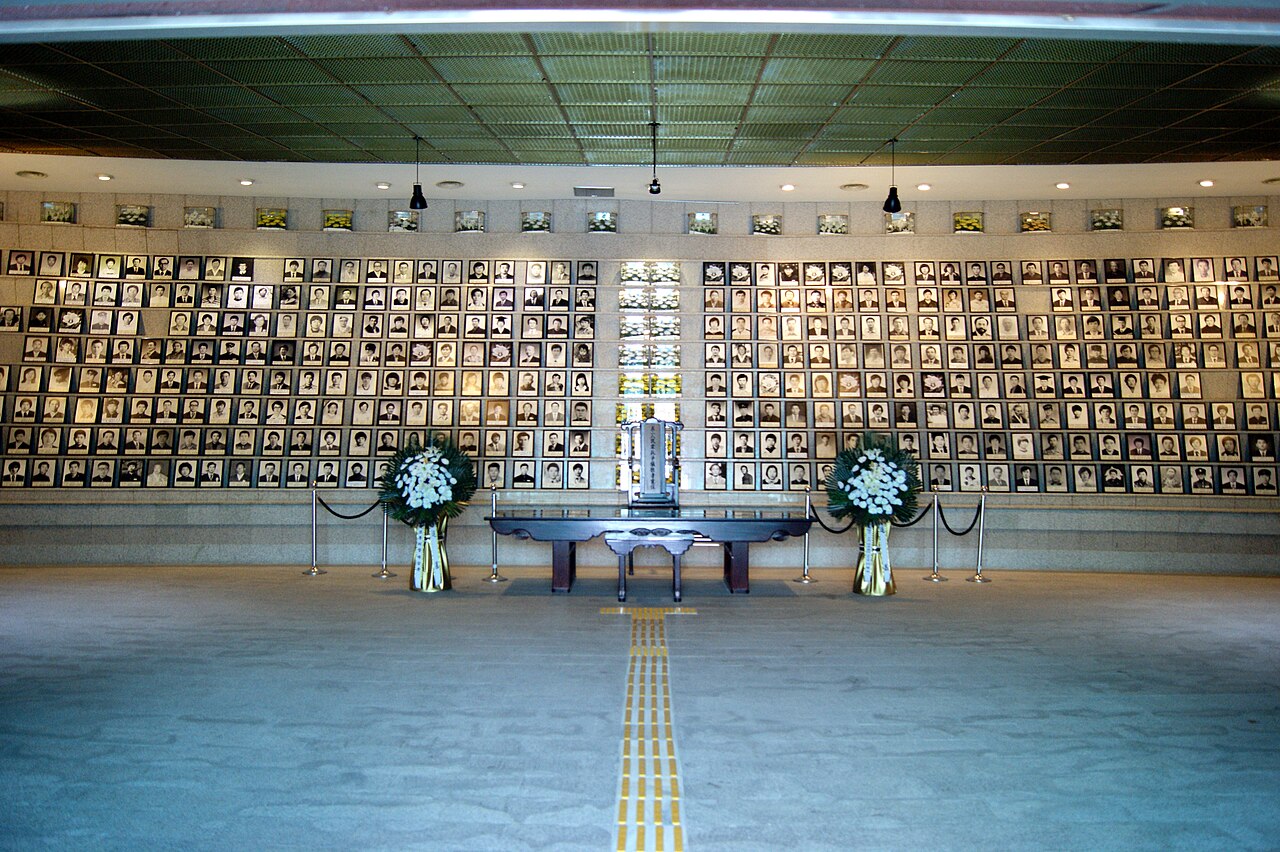
President Yoon was elected as the 20th president and started his term on May 10, 2022. During his time in office, he caused many problems. The biggest issue happened on December 3, 2024, when he declared martial law. This shocked many people in Gwangju, because it reminded them of what had happened in May 1980, when former President Chun Doo- hwan also declared martial law in Gwangju.
The National Assembly said that President Yoon’s actions were illegal and against the Korean Constitution, so they submitted an impeachment request on December 14, 2024. For about four months, there were many protests across the country. Some people supported the impeachment, but others did not. In Gwangju, a protest defending the legitimacy of martial law and opposing the impeachment was held in March 2025, leading to tension among local residents.
After long consideration, the Constitutional Court finally made their decision. All eight judges agreed to remove the president. Many people in Gwangju were happy about this, remembering the spirit of May 1980. This situation also reminded many people of the 2016 impeachment of former President Park Geun-hye. At that time, Korea showed the world how strong its democracy is through peaceful candlelight protests.
This recent decision also shows that democracy and justice are still alive in Korea, even when democracy is in danger in other parts of the world. Becauseofthisruling,thenextpresidentialelection will be held on June 3, 2025. Political parties are now getting ready to choose their presidential candidates and prepare for the election.
World Human Rights Cities Forum Opens in Gwangju
The World Human Rights Cities Forum (WHRCF) is an international event held every year in Gwangju since 2011. This forum was started to help cities become places where human rights are respected and protected.
Through the forum, Gwangju shares the spirit of the May 1980 pro-democracy movement with the world. At that time, even in the face of violent government action, the people of Gwangju stood firm and fought together against injustice. Now, Gwangju works to pass on this spirit as a shared human rights value with global citizens.
The forum has grown into a global space for human rights exchange. People from human rights cities, groups, and organizations come together to share ideas and work together. Their goal is to protect human rights in everyday life and make sure those rights are supported by official systems.
This year, the event will be held May 15–17 (Thu.– Sat.), at the Kim Daejung Convention Center.
The theme for this year is “Peace and Solidarity: Human Rights Cities Against War and Violence.”
In Gwangju, the month of May is very special. It is a time to remember the spirit of the people, the Spirit of May, and the beauty of spring. We look forward to feeling this spirit through many events, especially the World Human Rights Cities Forum.
Upcoming Gwangju “Together Day” Event
The “Together Day” event hosted by Gwangju Metropolitan City will be held on Saturday, May 24, from 11 a.m. to 6 p.m. at Gwangju City Hall. Together Day was made a national commemorative day in 2007 to encourage understanding and harmony among people of different races and cultures. It promotes the idea of living together in a multicultural society.
The event will be joined by the mayor of Gwangju, local politicians, foreign workers, international students, multicultural families, and local citizens. In 2024, the event featured cultural booths and food from 15 countries, including Canada, Ethiopia, and Romania. Visitors enjoyed global food experiences, cultural performances, and learned about cultural diversity.
This year as well, people from many countries will prepare booths where visitors can experience world cultures. There will also be support services for foreigners. The event is expected to be a global festival for both Korean and non-Korean residents living in Gwangju.
Wildfire in Gyeongsangbuk-do Finally Extinguished
The massive wildfire that began in Uiseong, Gyeongsangbuk-do, on March 22, 2025, and spread to four nearby cities and counties, has finally been put out after burning for 149 hours. This wildfire is expected to be recorded as the largest in South Korea’s history, with 24 people killed and damage covering 45,157 hectares of land. The fire started on March 22 at 11:24 a.m. in a mountain area of Anpyeong-myeon, Uiseong-gun, and spread to Yeongdeok, Andong, Cheongsong, and Yeongyang. As of March 28, the main fires in all areas were successfully extinguished.
The Korea Forest Service said that strong winds made it hard to control the fire. Wind speeds reached up to 27 meters per second, and the weather was hot and dry, which allowed the fire to spread quickly. Also, smoke mixed with fog made it difficult for firefighting helicopters to operate.
After the main fire was put out on March 28, cleanup and recovery work has been going on since the 30th. Many famous people and citizens in Korea are donating money to help the victims and support recovery efforts.
This wildfire reminds us that spring is the season to be very careful about fires. On March 29, the city of Gwangju held a joint campaign at Mudeungsan National Park to prevent large spring wildfires. Since many wildfires are caused by human mistakes, such as careless burning or illegal trash fires, Gwangju citizens are also asked to be very cautious.
9 of 10 International Students Want to Work in Korea
A recent survey shows that 9 out of 10 international students studying at Korean universities hope to find a job in Korea after graduation. On March 26, the Korea Federation of SMEs announced the results of a survey titled “Career Plans of International Students After Graduation,” conducted with 805 international students currently studying in Korea.
According to the survey, 86.5% of respondents said they want to get a job in Korea after graduating. Among students in associate degree programs, the number was even higher: 90.8% said they wish to stay and work in Korea.
The top reasons for wanting to work in Korea include the following: (a) wanting to continue living in Korea (35.2%), (b) higher salary compared to their home country (27.7%), and interest in working in a specific field (25.6%). To work in Korea after graduation, international students need to get an E-7 visa (special activity visa). However, 66.7% of the respondents said that getting the E-7 visa is very difficult.
Currently, the E-9 visa (non-professional employment) is not available to those on a student visa (D-2) or job-seeking visa (D-10). But if it were allowed, 58.8% of international students said they would be willing to take E-9 jobs, such as working in manufacturing or small businesses.
Lim Myung-ro, head of the labor policy division at the Korea Federation of SMEs, said, “Many international students are highly motivated to work in Korea, but because the E-7 visa is hard to get, their chances are limited. We need to carefully consider allowing international students to apply for the E-9 visa.”
Meanwhile, a proposed law to allow international students to apply for the E-9 visa – called the Partial Amendment to the Act on Employment of Foreign Workers – was submitted to the National Assembly in November 2024, but it is still under review.
Free City Bus and Subway Rides on May 18
To commemorate the May 18 Democratic Movement, all city bus and subway rides in Gwangju will be free for one day on Sunday, May 18. When using the Gwangju subway, tapping a transportation card at the gate will result in a 0 won fare. Those who do not use a card can receive a free ride pass at the customer service center ateach station. However, neighborhood buses and rural buses in Jeollanam-do are not included in this free service.
On this day, Bus No. 518, which goes to the May 18th National Cemetery, will run 30 more times than usual. These additional services and the free fare policy are expected to make it easier for citizens to visit historical sites related to the May 1980 movement.
To prepare for the May 18 Eve Festival and other events, the section of road from Geumnam-ro 1-ga to 3-ga (from May 18 Democracy Square to Geumnam-ro Park) will be closed until 3 a.m. on May 19. Due to the road closure, 19 city bus routes that usually pass in front of May 18 Democracy Square will make a detour at the Geumnam-ro 4-ga intersection.
Meanwhile, on April 7, a proposed amendment to the Gwangju Ordinance on Honoring the May 18 Spirit, led by Council Member Lee Myung-no, was passed by the City Council. As this year marks the 45th anniversary of the May 18 Democratic Movement, the amendment made it possible to provide free public transportation also on May 17, the day before the May 18 observances. As a result, Gwangju citizens will enjoy free city bus and subway rides for two days – May 17 and 18.
Compiled by Kim Jinyoung.