

Gwangju City News – November 2025
Gwangju Secures Gateway for Local AI Firms to Enter Chinese Market
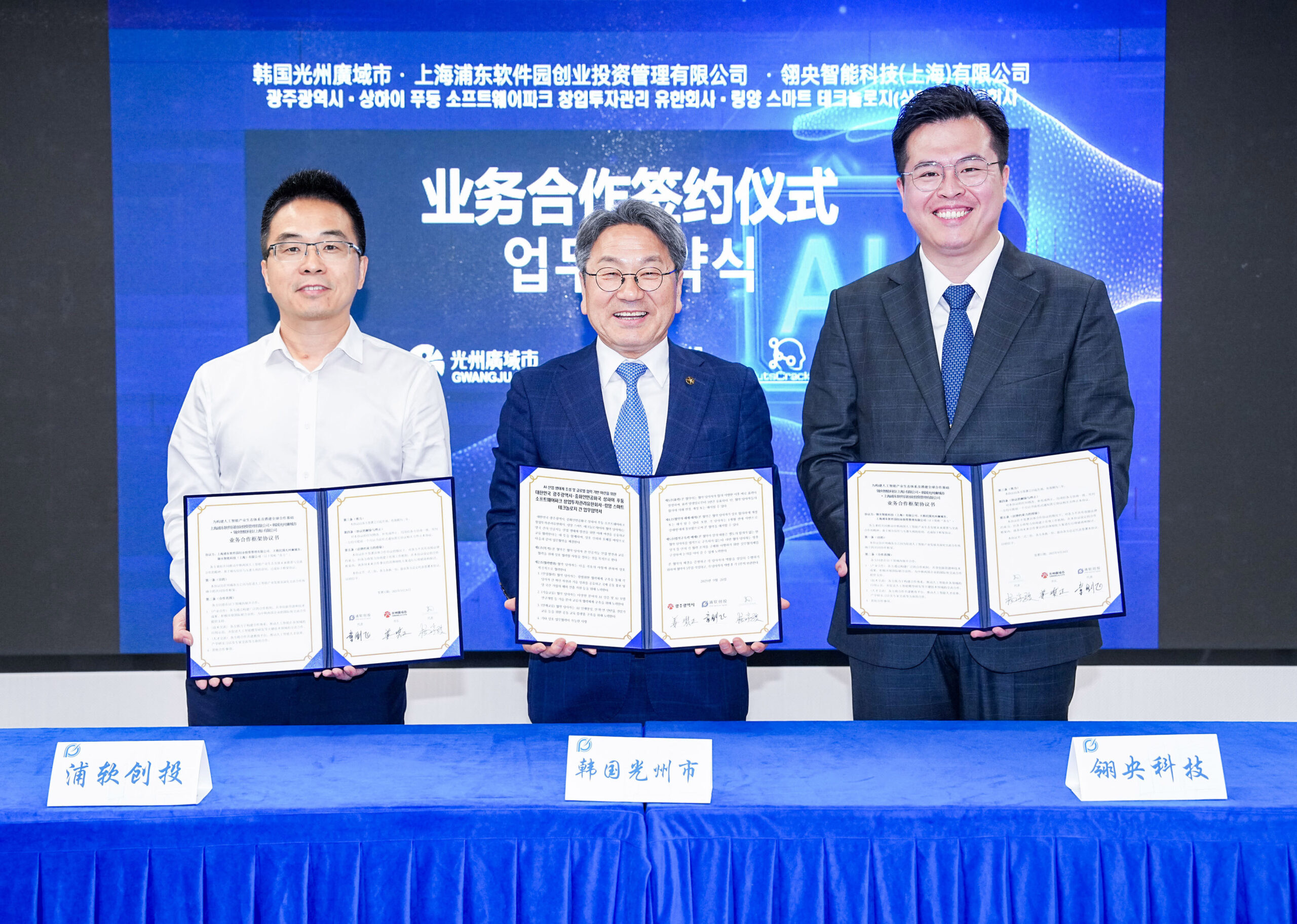
Gwangju has secured a foothold for local artificial intelligence companies seeking to expand into China. Mayor Kang Gi-jung signed an MOU with Pudong Software Park Venture Investment Management Co. and Lingyang Smart Technology in Shanghai’s Pudong Software Park. The agreement aims to build an AI industry ecosystem and a global cooperation network through collaboration in innovation, technology, and talent development.
Under the MOU, the parties will cooperate in sharing innovation resources, supporting overseas expansion, conducting AI research and testing, and fostering talent exchange programs. This partnership is expected to strengthen global competitiveness and open new opportunities for Gwangju-based AI companies in the Chinese market.
Gwangju Universities Selected for National “Glocal University Project”
Chonnam National University and the Chosun University affiliated Chosun Nursing College have been officially selected for the Ministry of Education’s Glocal University Project. The project aims to foster global-level regional universities that drive local growth through industry– academia collaboration and talent retention.
Over the next five years, Gwangju City will invest a total of 470 billion won – including 250 billion won in national funds and 220 billion won in city funds – to support education, R&D, youth employment, and graduate AI programs.
Chonnam National University will focus on AI research and innovation, while the Chosun Nursing College will develop a Well-Aging Valley linked to Gwangju’s four special zones. Mayor Kang Gi-jung said the selection is “a major opportunity for Gwangju’s youth and industries,” pledging strong support to create a city where young people choose to stay and grow.
Gwangju Trains Medical Interpreters in 10 Languages
Gwangju City held a completion ceremony for the 2025 Medical Interpretation Training Program, producing 16 new interpreters covering 10 language groups. This year’s languages include Vietnamese, Chinese, Russian, Taiwanese, Mongolian, and Khmer, with Belarusian, Malay, Uzbek, and newly added Ukrainian.
The program aims to help foreign residents overcome language barriers in healthcare. Interpreters assist patients throughout the entire medical process – from registration and consultation to testing and payment. The trainees completed 60 hours of training, including medical terminology, basic medicine, emergency response, simulations, and a written exam, to ensure professional and practical competence.
Medical interpretation services are available to all foreign residents in Gwangju through the Gwangju Migrant Health Center (062-956-3353).
Gwangju to Develop Seochang Scenic Observatory
Gwangju City officially opened the Seochang Scenic Observatory on October 1 along the Yeongsan River near the Seochang fields in the district of Seo-gu. The observatory, the first achievement of the Yeongsan River 100-ri Trail Y Project, was completed over three years with a total budget of 2.5 billion won.
The observatory offers sunset views over the river and expansive reed fields, while commemorating the historic Seochang port and providing ecological and cultural experiences.
City officials expect the observatory to become a popular destination for citizens and tourists, boosting the local economy and enhancing Gwangju’s urban brand.
“The Hyundai Gwangju” Mall Project on Track
Gwangju City announced that the ultra- large complex mall “The Hyundai Gwangju” is proceeding normally, independent of the nearby residential-commercial development project. Despite concerns after some developers abandoned their projects on the former Jeonbang–Ilshin Textile site, the city clarified that the mall is being independently managed by the Hyundai Department Store Group.
The mall will span 272,955 square meters of total floor space, with 108,900 square meters of retail space, six underground floors and eight above- ground floors, and 2,652 parking spaces. It will be Gwangju’s first large-scale private multi-use cultural and commercial facility, and is expected to boost local commerce and urban activity. City officials accelerated administrative procedures, completing what is normally a 19-month processes in 11 months, and emphasized that the mall will become a downtown landmark for citizens and tourists.
Compiled by Charlene Lee.
Charlene Lee is the founder of Charlene English Institute. Having lived in many different countries, she loves to explore and experience diverse cultures. She hopes to contribute to making Gwangju a more vibrant city.
Cover Photo: Mayor Kang Gi-jung signs an MOU in Shanghai to boost AI industry cooperation and global partnership. (Gwangju City Hall)