

Gwangju: On the Forefront of Justice
By Park Nahm-Sheik
Gwangju has consistently been on the vanguard of freedom, justice, and sovereignty for Korea. It has eloquently demonstrated time and again that freedom is anything but free. We may cite the May 18 Democratic Movement as a case in point. The citizen soldiers of Gwangju rose up on May 18, 1980, to keep their hometown and the rest of their homeland free forever. Had it not been for those daring souls, democracy in Korea may not have stood a chance of surviving, not to mention thriving. They could have been easily trampled to suffocation under the combat boots of, say, Chun Doo-hwan’s underlings.
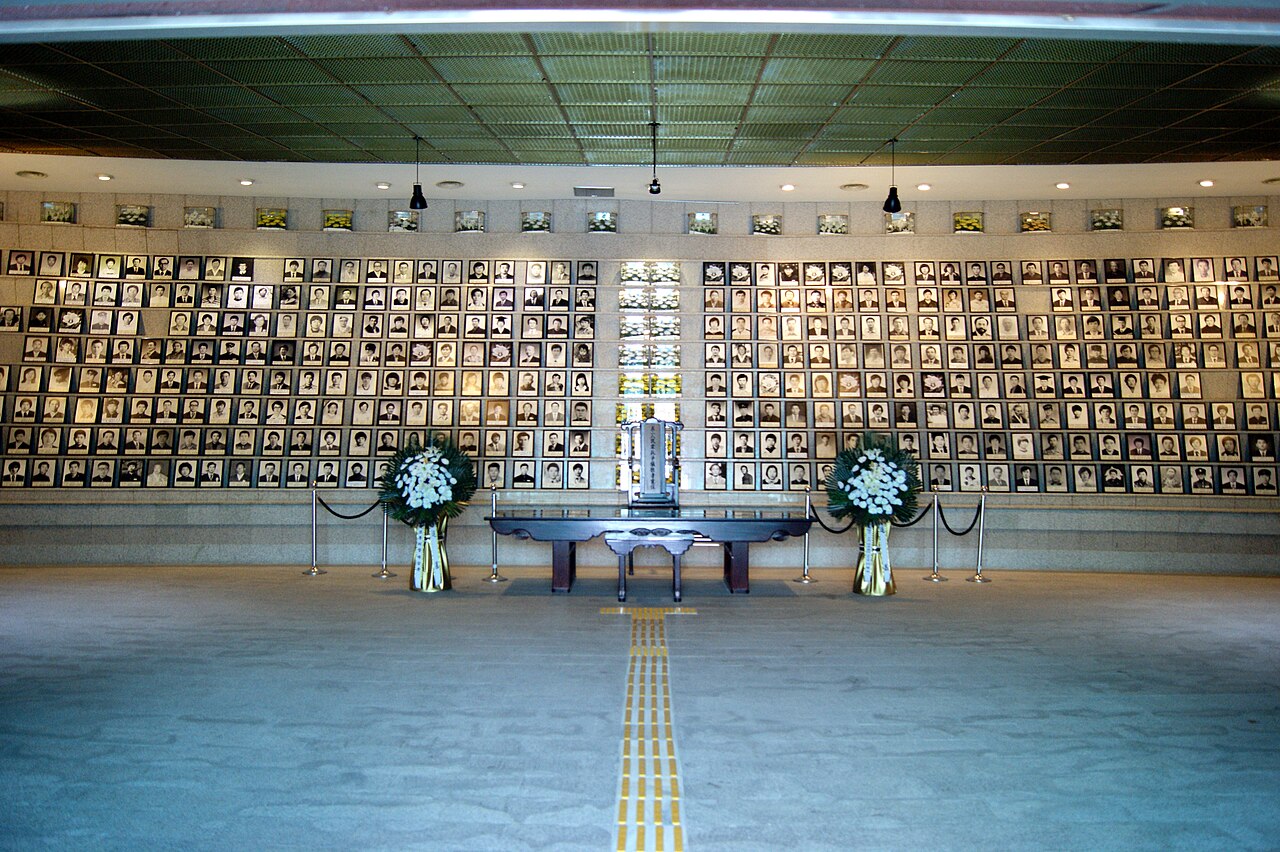
Indeed, the priceless lesson of the May 18 Movement is that there is no such thing as a free lunch. The heroes of the May 18 uprising made a triple demand that (a) martial law be lifted, (b) Kim Daejung be released, and (c) Chun Doo- hwan be held to account. The May 18 incident “officially” claimed 165 innocent civilian lives and resulted in an additional 65 citizens missing, all of whom are yet to be accounted for. Shall we dub this incident “Mayteenth,” after “Juneteenth” referencing the announced freedom of the last enslaved people of Texas in the United States in 1865?
By the way, Gwangju’s struggle for freedom, justice, and independence in Korea had its seeds sown in the late-1920s. It started out in the broader Gwangju-Jeonnam region in early November 1929. Gwangju’s fight against Japanese intervention in Korea’s internal affairs formally got under way around that time. It burst out on a massive scale as high schoolers from all over the city flooded onto the main streets of the city in flash mobs, protesting Japanese rule. The students marched all over, ready to fight to the last drop of their blood.
The demonstration was led by students from all over the Gwangju-Jeonnam region. They were mostly from Gwangju Public High School, the predecessor of the present-day Gwangju Jeil High School. It drew quite a few participants from Gwangju Normal School, Gwangju Sungil School, and Gwangju Agriculture School, however. Female students also contributed their share to this patriotic campaign from the very beginning. A majority of them were from Chonnam Girls High School and Gwangju Speer Girls High School. These students launched a strong united front, complying with a loud and clear rallying cry from all around.
Japan was then totally uncontrollable, picking Korea’s identity to tatters. The students just couldn’t stand by while their motherland was being violently vandalized by the brutes from the other side of the East Sea. What lit the fuse to this uprising was an incident involving harassment committed by Japanese male students on Korean students of the other gender when they arrived at Naju aboard a commuter train from Gwangju. A Japanese student, being impudent and fondling a girl student’s braided hair in public, was far and away out of line. In plain English, his action flew in the face of decency and the traditional norms of Korean society at that time.
“Gwangju’s struggle for freedom, justice, and independence in Korea had its seeds sown in the late-1920s.”
However you cut it, the issue was certainly a highly volatile one, quite liable to touch off a tidal wave of hatred against Japan. It took place on October 30, 1929, and made for the pivotal inflection with the situation already hurtling down to a destination of no return. Japanophobia in the country climaxed around November 3. Naturally, this date came to mark a major inflection point for contemporary Korea.
This is the backdrop against which the date was later set aside for the whole country to remember the 1929 historic student uprising against Japan. The Naju commuter train incident is permanently engraved into our collective memory. In a twist of the times, though, the status of November 3 as a national holiday was summarily nullified during the Park Chung-hee regime in the early 1960s.
Park Chung-hee and his staff apparently orchestrated the whole thing as if it was not that big of a deal. What could be more becoming them than offering themselves as warped minds behind such an awful affront to Korea’s national identity?! The wrongs those villains have mindlessly done to the country must be undone somehow or other before it is too late. To that end, we should try and place November 3 back where it belongs as a national holiday. And we must get it done at any cost. The sooner, the better. Time is of the essence.
Park Chung-hee and his underlings did their utmost to keep in check the stir-crazy hawkish students of those bygone days. Freedom-loving citizens ready to stand up and fight for democracy must have struck near phobic fear into the heart of every power-thirsty dictator like Park. He would never have knowingly let freedom fighters lay claim to an eye-catching stage and command serious popular attention. Likewise, Chun Doo- hwan must have been just as wary of students taking to the streets, especially in crowded public spaces.
Both Park Chung-hee and Chun Doo-hwan apparently bought their time in power by cowing people into submission with the threat of martial law constantly looming in the back of their minds. Should it have been at all possible, they would have chosen to forever mothball the slightest pro- democracy stirrings of any kind before they got on the cusp of bursting out into the open.
We might as well note that this November 1929 student uprising against Japan owed a great deal to grassroots civilian support in and around the city of Gwangju. On the 3rd of November in 1929, Gwangju did indeed stage a sui-generis resistance front against Japan. Led mostly by students, this street-to-street resistance spread over the whole city. People from all walks of life participated in the march against Japanese colonialism. “United, we stand; divided we fall” could have been a fitting rallying cry that would have suited those student freedom fighters of Gwangju to a T.
This outcry traveled far and wide, way beyond the city limits of Gwangju. It continued gaining ground, growing persistently louder and clearer until it eventually turned into a near global call to action. It got propagated abroad, not just into the Korean diaspora in neighboring countries like China and Russia. It also gained quite a bit of traction across ethnic Korean communities in Japan and the United States, snowballing into a de facto global phenomenon before long.
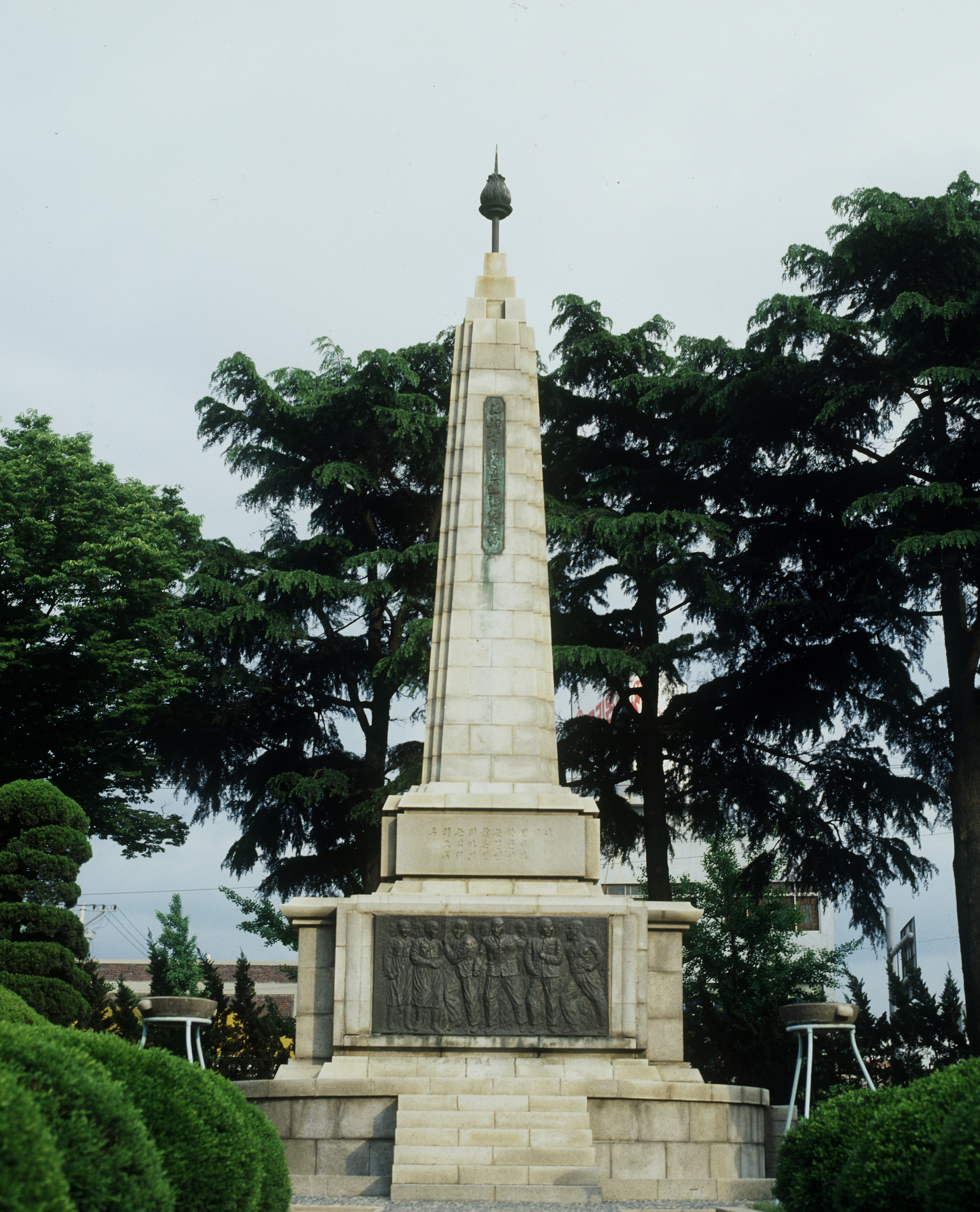
The Monument to the Gwangju Students Struggle Against Japanese Colonialism stands tall and proud to this day on the campus of Gwangju Jeil High school! We can go pay homage to the heroes of the movement any time we choose, simply by visiting this iconic monument in downtown Gwangju. It may be no coincidence that this pinnacle of a monument in the shape of an obelisk soars overhead straight into the Gwangju firmament with such solemnity and majesty.
Shall we close here with a round of three cheers for the courageous citizen warriors of Gwangju for what they have done on behalf of justice, freedom, and sovereignty for all of us? We shall all remain forever in debt to the brave citizen- student warriors of Gwangju. They did all of us proud. So very inexplicably proud!
The Author
Park Nahm-Sheik is a native of Gwangju. After graduating from Chonnam National University, he went on to receive a master’s degree at the University of Hawaii and a PhD (applied linguistics) at Georgetown University, both in the U.S. Upon completing an illustrious career at Seoul National University, Prof. Park served as president of the International Graduate School of English.
Cover Photo: The Gwangju Student Independence Movement Commemorative Obelisk. (KOGL)