

Rememberance Day and Korea
By Michael Attard
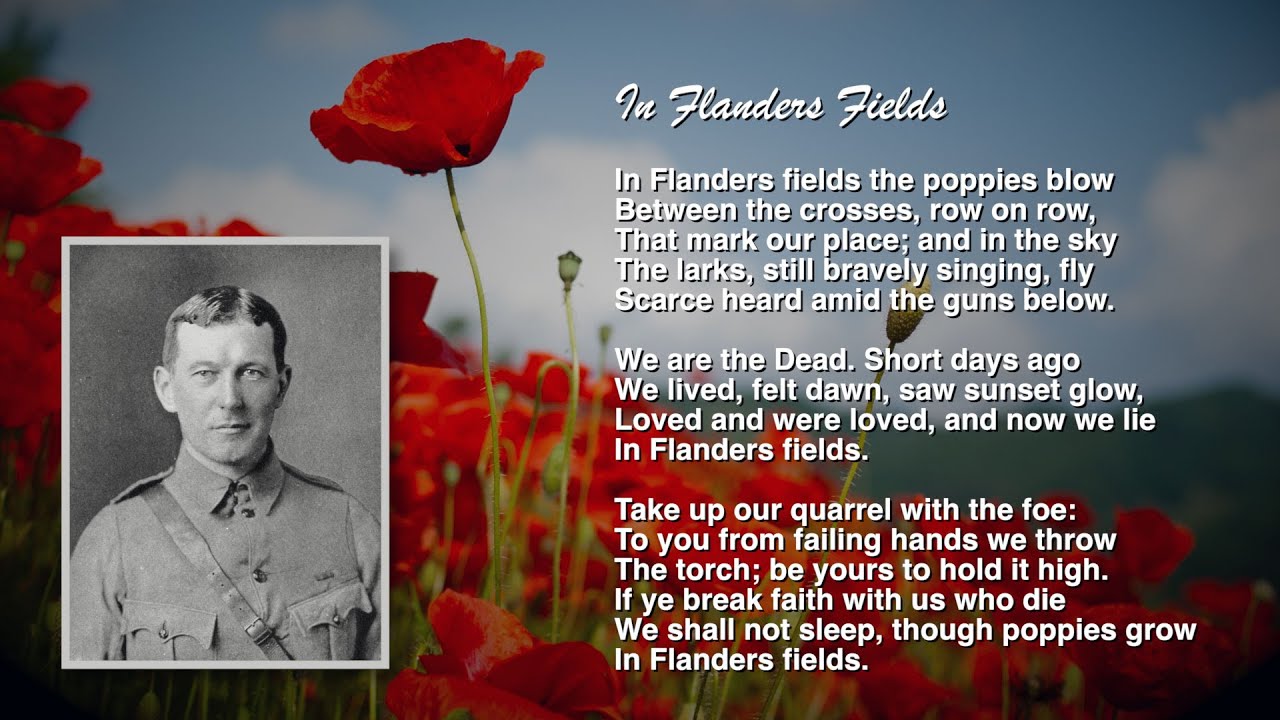
As a Canadian, I learned early in life about how Remembrance Day marks the end of World War One. It was on the 11th hour of the 11th day of the 11th month, in 1918, that World War One came to an end. Canadians served during the war, and probably the most famous Canadian from that time is John McCrae. McCrae was a doctor and a poet. Ironically, as the artillery shells churned up the soil, they encouraged the proliferation and growth of the dormant poppy seeds. This led McCrae to write the poem “In Flanders Fields.”
The poem is told from the perspective of a fallen soldier. Subsequently, since 1921 it has become a tradition in British Commonwealth nations to wear a poppy on November 11.
I have wondered about how World War One affected and is understood in Asia, particularly Korea. So, I did some research and was surprised to learn that the First World War did have an effect upon Korea. Since 1910, Korea had been annexed by Japan. Thus, Korea did not directly participate in the war, but the results of Japanese involvement would have implications for Korea.
Japan, at that time, was allied with Britain, France, Russia, and others against Germany. During the war, Japan was able to seize German possessions in China and the Pacific. Japan’s strengthened international standing enabled it to subjugate Korea more easily. Europe paid little attention to Korea. Furthermore, the European colonial powers were weakened by the war, rendering them less influential in Asia.
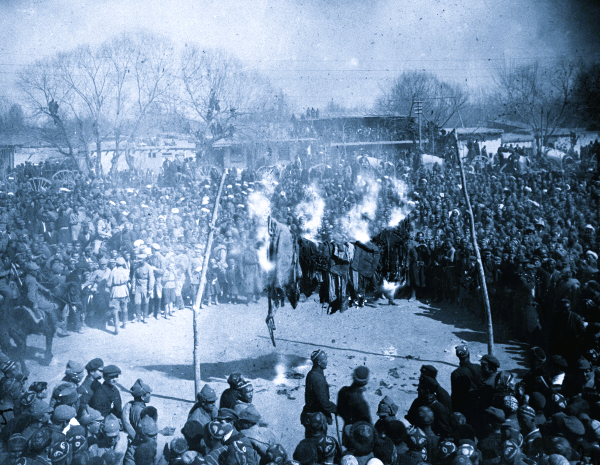
The Koreans were well aware of how their position was actually worse after the Allied victory in Europe. There was some hope when U.S. President Woodrow Wilson declared that all peoples should have the right of national self- determination. It could be argued that this gave some impetus to what became Korea’s March 1st Movement. This date marked a major turning point in modern Korean history.
In conclusion, World War One in Europe did not directly involve Korea, and strengthened Japan, which ultimately delayed Korean independence. On the other hand, Koreans were exposed to global ideas concerning self-determination, seeding Korea’s future independence struggles.
The Author
Michael Attard is a Canadian citizen but has lived in Gwangju for over twenty years. He has taught English as a second language in academies and within the public school system. He is officially retired and spends time reading, writing, hiking, and spending time with friends.
Cover photograph by Roblox-Photo.