

Inside the Gwangju News: Publisher and GIC Director – Dr. Shin Gyonggu
Dr. Shin Gyonggu is the perennial publisher of the Gwangju News, but that is merely one of his myriad tasks. He has headed the Gwangju International Center (GIC) since its in-ception in 1999, when the center consisted of just him and one staffer at a desk in the cor-ner of another’s office. Since then, the GIC has expanded in size and programs, and has recently begun operating a second center: the Gwangju International Residents Center (GIRC). Dr. Shin is known widely in the Gwangju community by both Korean and expat residents, but there is much about him that they may not know. Through the following interview, we delve more deeply into the works and ways of Dr. Shin Gyonggu. — Ed.
Gwangju News (GN): Thank you for making the time for this interview; I know how busy you are. To begin the interview, could you tell us about your early years? I don’t believe you grew up in Gwangju.
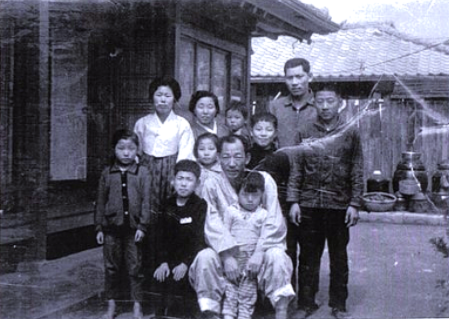
Dr. Shin: I was born in Seoul on a freezing night in early 1948. That is why my name includes the syllable “Gyong” which is from the Chinese character for “capital city” (京). I do not know when, but my parents moved to Jincheon in Chungbuk Province soon after my birth. Jincheon was recorded as my birthplace. I was brought up in a poor rural village. Some aspects of my young life many people do not realize existed at that time in Korea: I wore straw shoes. I experienced eating pine tree bark. I liked ssuk-beomul (mugwort rice cakes), which were made with rice flour mixed with boiled mugwort leaves and eaten due to the extreme lack of food.
I walked about an hour to my elementary school every day. I used to love the clouds that covered the burning sun in summer. I loved the thick snow-covered fields because it allowed me to run to school over the frozen morning snow before the day allowed it to melt.
My parents wanted me to work at home instead of entering middle school. However, I was allowed to entered middle school with an entrance fee waiver, as I had ranked first on the entrance exam. I still remember my exam number: 281.
I entered the agricultural high school in town since my mother wanted me to be under her supervision. It was the most difficult time in my life. I was physically weak, but I continued to do my studies whenever possible in the classroom and on the so-called “practice farmland,” where the students were exploited as free labor. I was beaten severely whenever my homeroom teacher found excuses to punish me, since I did not pay attention to the agriculture subjects. I collapsed several times due to malnutrition and consider it a miracle that I survived.
My work helped me to get a full scholarship from a small university funded and managed by a Presbyterian mission foundation. My student peers used to make fun at me: “How is it that an agriculture high school graduate entered the English Department?” I enjoyed the gentle and harmonious environment. Most students used honorific speech to each other, whether younger or older. I still vividly remember the harmony produced by all the students at the weekly chapel service. My health was very poor, but I began to slowly get stronger from then on, and still now. My current health is the best in my whole life. My participation on the student council back then was an invaluable experience for me to understand the group dynamics of society.
GN: You grew up in Chungbuk Province. What was it that brought you to Gwangju to put down your roots here?
Dr. Shin: After college graduation, I came to the Gwangju Airbase as a second lieutenant in the ROK Air Force in 1971. My job was to teach English to student pilots. This assignment changed the course of my entire life. I was lucky to meet and marry a music teacher here. I finished my MA degree at Chonnam National University. I was given a son. Now, I consider Gwangju as my second hometown, and more important than my first.
GN: You also studied in the United States. How would you characterize your time there?
Dr. Shin: I applied to enter the University of Texas for their doctoral degree program in 1979. I chose UT because its tuition was the lowest at about 200 dollars a semester. The living cost was also low. While studying there, I was invited to teach at Chonnam National University in 1981. The military government at the time planned to drastically increase university student population as a way to garner public support for the government. As a result, the need for college professors was exploding.
I was reluctant to come back to Korea, since I had not finished my intended degree. But I was strongly advised to accept the invitation immediately when the position became available. I came back in 1981, and I finished my doctoral degree at Jeonbuk National University in 1985. The topic of my dissertation was linear phrase structural grammar, which I still believe to be the correct theory. We process sentences from left to right in a linear way, whether in English or in Korea, or whether the word order is SVO [subject–verb–object] or SOV. I recently found that LLMs process information in a linear way.
GN: When I first met you, you were a young professor who was to go on to have a long and very successful career at Chonnam National University [CNU]. What do you consider to be your most notable or most satisfying accomplishments there as a professor and as an administrator?
Dr. Shin: I will list not one but three. In 1984, I began to publish the Chonnam Tribune, the university’s English magazine, with computer editing. Student editors of other universities invited the Tribune’s student editor to their schools for them to learn about the process. I am sure this was the first computer-based editing among all Korean magazines and newspapers.
I started a self-supporting English language program at the university in 1991. The number of staff increased from three to 40, including 25 instructors, international and Korean. The budget for the CNU Language Center exploded from 30 million won in 1991 to more than 1 billion in 1996, when I left the center. I wanted to provide language skills for my students who were suffering from regional discrimination. Many graduates told me that they succeeded in getting jobs thanks to their English proficiency developed through the CNU Language Center. Most other Korean universities, however, quickly followed suit.
In 2008, I was invited to work as the first dean of the International Affairs Office. I accepted the post on the condition that I would serve in the position for at least four years. I knew that I could not achieve any significant result in a one- or two-year term, which is common in most Korean universities. I started a freshman English camp in January and February. Through English, I wanted to raise the students’ consciousness of the world, including democracy, human rights, the environment, social responsibility, resistance to conformity, financial management, and family life. I was very happy that their language skills improved significantly while dealing with these social issues. They also developed very close friendships in the camp. The camp continued till 2017.
I also developed the International Summer School in 2009 with four professors and ten students from international partner universities. I invited more than 10 professors and 80 students from overseas in 2012.
In the degree programs, there were 450 international students when I started in 2008, and that increased to more than 1,000 in 2012. More than half of them were graduate students. Also, when I started, the one- to two-semester exchange program had 13 inbound international exchange students and 23 outbound Korean students in fall semester 2008, and that was expected to expand to 130 inbound and 150 outbound exchange students for the 2013 spring semester when I finished my duties in December 2012.
The face of the campus was quite uniform until 2010, since most of the international students were from China. But it began to look more international in August 2011 with diverse international students from all over the world. Nothing would have happened if I had served in the position for only one or two years, which is a common practice in Korean government universities. I retired two months after completing my tenure as dean.
GN: And while you were still a professor at Chonnam, you were appointed as the director of the newly established Gwangju International Center, the GIC. How did that come about?
Dr. Shin: It was, in fact, an appointment, since there was no established system at the time. The City of Gwangju asked Kwangju Citizens Solidarity, one of the most active citizen groups in the 1990s, to establish the center, with the promise that they would provide financial support. Solidarity failed to find anyone with English language skills. I made the grand mistake of accepting the recommendation to be the director. I expected that others would come after me, as that was customary on campus. The city gave us 30 million won, which was substantial support. But the money was only for projects, not for salary. My coordinator managed to use only 20 million won of the budget, so our support was reduced to 20 million for the next year! I began to struggle with time management and deficit management. The yearly deficit was mostly 20 million until 2010 and even more until 2016. I never asked anybody including the city government for help, and I found nobody willing to succeed me as the GIC director.
GN: What was the mission of the GIC back in 1999 when it was first established?
Dr. Shin: It was a broad mission: The GIC aimed to promote international exchanges in culture and business while promoting the spirit of Gwangju. We did not have the budget or human resources to do so. We did not get engaged in international exchange of culture or business. We soon removed those two missions.
GN: And here it is, 2026. How has the mission of the GIC changed or expanded in that span of a quarter century?
Dr. Shin: The GIC has changed its mission and goals according to the needs of the community and within its financial capability and the human resources available. We simplified the mission to “promoting an inclusive community in Gwangju,” which is supported by three GIC teams: the International Team, the External Support Team, and the International Residents Team. The International Team has three coordinators promoting exchange projects with Gwangju’s partner cities. The External Support Team, with four coordinators, has managed the World Human Rights Cities Forum each year. We are proud that the Forum has been co-hosted by UNESCO and the UN Human Rights High Commissioner’s Office (OHCHR) since 2020. The team is also engaged in the training project for local government officials of the cities in the Asia-Pacific region with the support of and funding by KOICA. The International Residents Team was newly created from the International Team in 2024 to support international residents through the Gwangju International Residents Center (GIRC). It has a separate office about 12 kilometers away from the GIC, which is located in downtown. The GIRC is fully financed by the local and central governments.
The GIC is a civic organization, independent of the city government. It has grown mainly with the support of citizen members and membership fees. Most of the projects have been managed by volunteer members and funded with membership fees. Many of the projects, however, have recently begun to be dependent on funding by City Hall, especially since the Covid 19 pandemic. And since the pandemic, the number of fee-paying members continues to decrease. The number of members before the pandemic peaked at 13,000 one year, but it is now less than 8,000. The membership contribution peaked at 140 million, but it also decreased to 80 million last year. City government-funded projects now account for 80 percent of our operating budget. The GIC began with only one full-time coordinator. Now, as of the end of 2025, it has 16 full-time paid staff members.
GN: What accomplishments of the GIC are you most proud of?
Dr. Shin: The most important achievement of the GIC is the fact that it has been an important and unique channel for international and local residents to connect with each other. Many international residents have told me that they felt secure living in Gwangju, since they knew that the GIC was available if they needed help, even though they don’t visit the GIC office regularly. However, its influence has diminished with the changes in society. More platforms and channels are emerging, both on- and off-line. Diverse forms of communities are being created without needing GIC support. We are now discussing a new direction of the GIC.
I would like to mention the following projects that have contributed most significantly to the development of the GIC. However, many of them are now less active or inactive:
- The Gwangju News, as the first English monthly in Korea for the general public, in 2001.
- The GIC Saturday Talk, which used to attract around 50 to 100 attendees to its meetings. I feel disappointed that it couldn’t be revived after the Covid 19 pandemic.
- Korean classes, which started for the first time in Gwangju, in 2000. They are now losing popularity due to the free classes available at the GIRC and due to more courses being offered by other organizations, including universities.
- The GIC Tour, led by Warren Parson, attracted many international residents. It was discontinued after it lost its tour guide due to his relocation to Daegu.
- Gwangju International Community Day, which started in 1995. It is one of the first international community festivals in Korea, but a budget cut terminated it in May 2025.
GN: One of the projects of the GIC that you just mentioned is the Gwangju News, which you are the publisher of. In your assessment, how well has it done in contributing to the community?
Dr. Shin: The Gwangju News has been quite instrumentalinchannelinginternationalresidents from being outsiders into active, supportive members of the community. It has served as an open window to the city for information-seeking international residents, especially those new to Gwangju and Korea. And through its operations, an English language database has been created on Gwangju and South Jeolla Province.
Local residents have told me how proud they have felt to see the Gwangju News available on the bookstand at the airport. Due to the Gwangju News’s popularity, other major cities have begun publishing their own English magazine.
Print media is no longer as popular as it was in the 2000s, due to the proliferation of English language social media and internet information. However, I feel that there is still an important role for print media, such as the Gwangju News, in our daily lives. I am disappointed that City Hall decided to eliminate funding for our magazine in 2025. My hope is that as the financial situation of the city improves, we will again be able to provide the public with a print version of the Gwangju News, as well as the digital version that is continually available. Anyone can access the magazine at Gwangju News Online and as a flipbook on the Issuu website by searching “Gwangju News.” Years and years of back issues are also available at both sites. With its online availability, the Gwangju News is not only an important asset to Gwangju and Korea residents but to those anywhere in the world who are interested in Gwangju-related, Korea-related, and even the international topics that the publication covers.
GN: You seem to quite frequently be out of the country on business. Could you share with us some of the projects that pull you away from the GIC office?
Dr. Shin: I have been invited to give presentations for UN OHCHR, UNESCO, and in countries like Indonesia, Mongolia, Mexico, Brazil, Austria, France, Spain, Italy, Sweden, Mozambique, and South Africa, mostly to represent the City of Gwangju as a human rights city. I have also given online presentations even more often. I have sometimes been asked to lead a group of city officials to cities or to international organizations to promote partnerships with Gwangju. Some trips are supported. For some others, I pay when I consider the meetings important for international networking. I often travel with my wife when the trip is not funded by the city government.
GN: I know how busy you are, but I will ask anyway: What do you do in any free time that you might have? I do know that you are a member of the GIC Citizen Choir…
Dr. Shin: I enjoy singing with the GIC Citizen Choir, which meets from 10:00 to 12:00 every Saturday. It offers an annual concert in October. I also sing with my wife at home, separately and as a duet, inviting a pianist twice a week. Every Saturday afternoon at the GIC, I join the Toastmasters meetings. And I enjoy sitting in on the Gwangju News’s monthly editorial meetings, though the writing projects I accept from the editor-in-chief are at times burdensome. I regret that I cannot always complete these projects on time. I have been busy with management of our two centers, attendings meetings, and keeping up with email correspondence with our international network. From time to time, I have to work through the night. I often feel overwhelmed by all these obligations, but I also consider it my privilege to be so busy at my age, which was 78 in February.
GN: What might your bucket list include?
Dr. Shin: I’ve never had a personal bucket list. I simply enjoy all job-related challenges. If I were to tell you what I would like to accomplish, this would be that list:
- I would like to make the most of the GIC’s capability in providing bright opportunities for the people in Gwangju, local and international, especially for young people. You will see the result of my plan for this in a couple years.
- I also would like to procure enough budget to again produce a print version of the Gwangju News.
- I want to find more opportunities for the GIC Citizen Choir to perform internationally and
to invite choir groups from partner cities to sing with us in Gwangju.
GN: You retired from your university position 13 years ago. When are you planning to retire from your work at the GIC?
Dr. Shin: I said that I don’t have a bucket list. Nor do I have the plan to retire. I will continue to work as long as my health allows me to. I was extremely weak when I was young. However, I now feel healthier each year than I did the year before. It is a waste of my personal resources, or even a crime, for me to stop working for our community before my health decides to stop me.
GN: What benefits do you feel you have received to compensate for your sacrifices in time and in monetary resources?
Dr. Shin: I am a migrant to Gwangju from another part of Korea. I have no relatives or school alumni here. I feel limitlessly grateful that I was given the opportunity to marry here, to teach here, and to serve the community here. I feel indebted to the many people who participated at the 1980 Gwangju Uprising and to the activists who carried out the long march toward democracy in Korea’s 20th century. I am trying to pay back my debt to the community with whatever little I have to offer.
GN: In wrapping up this interview, do you have any final words for our readership?
Dr. Shin: Yes, I would like our readers to use this magazine, the Gwangju News, as a channel for participation in addition to being a reader: to be a writer, to use it for personal career development, to organize a Gwangju News reading club, to use the GIC and Gwangju News as a means to become an active member of the community, and to use the GIC as a platform for creativity.
GN: Well, I would like to thank you, Dr. Shin, for this extensive interview that you have provided for us, for your guidance as publisher of the Gwangju News, for your long-term direction of the GIC, and for your selfless service to the community.
Interviewed by David Shaffer.
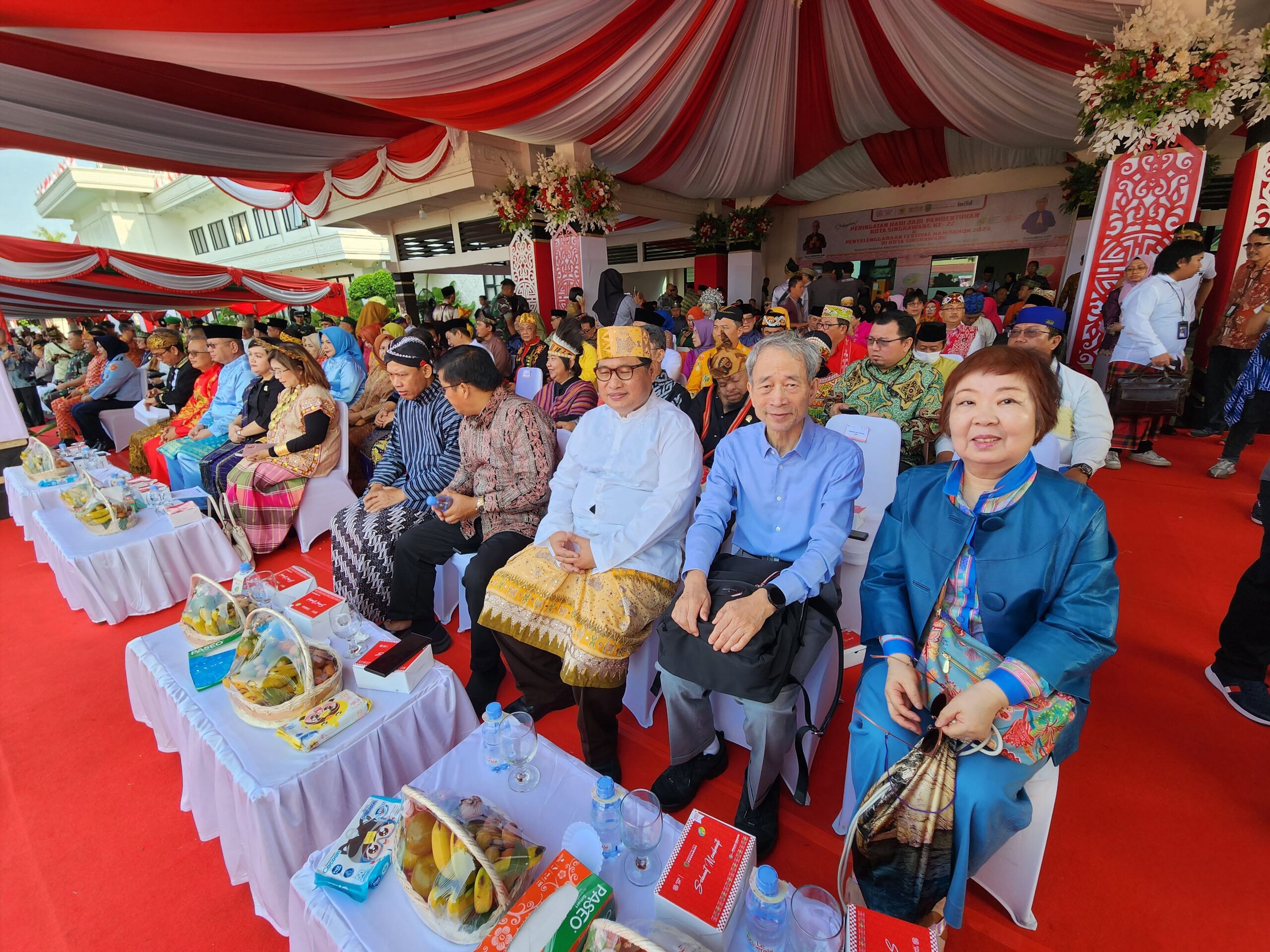
Cover Photo: Dr. Shin was the only international speaker at the 2023 Human Rights Festival of Indonesia, courtesy of Shin Gyonggu.