



Study, Graduate, Confused: A Real Portrait of Today’s Academia
By A. Ayuningsih
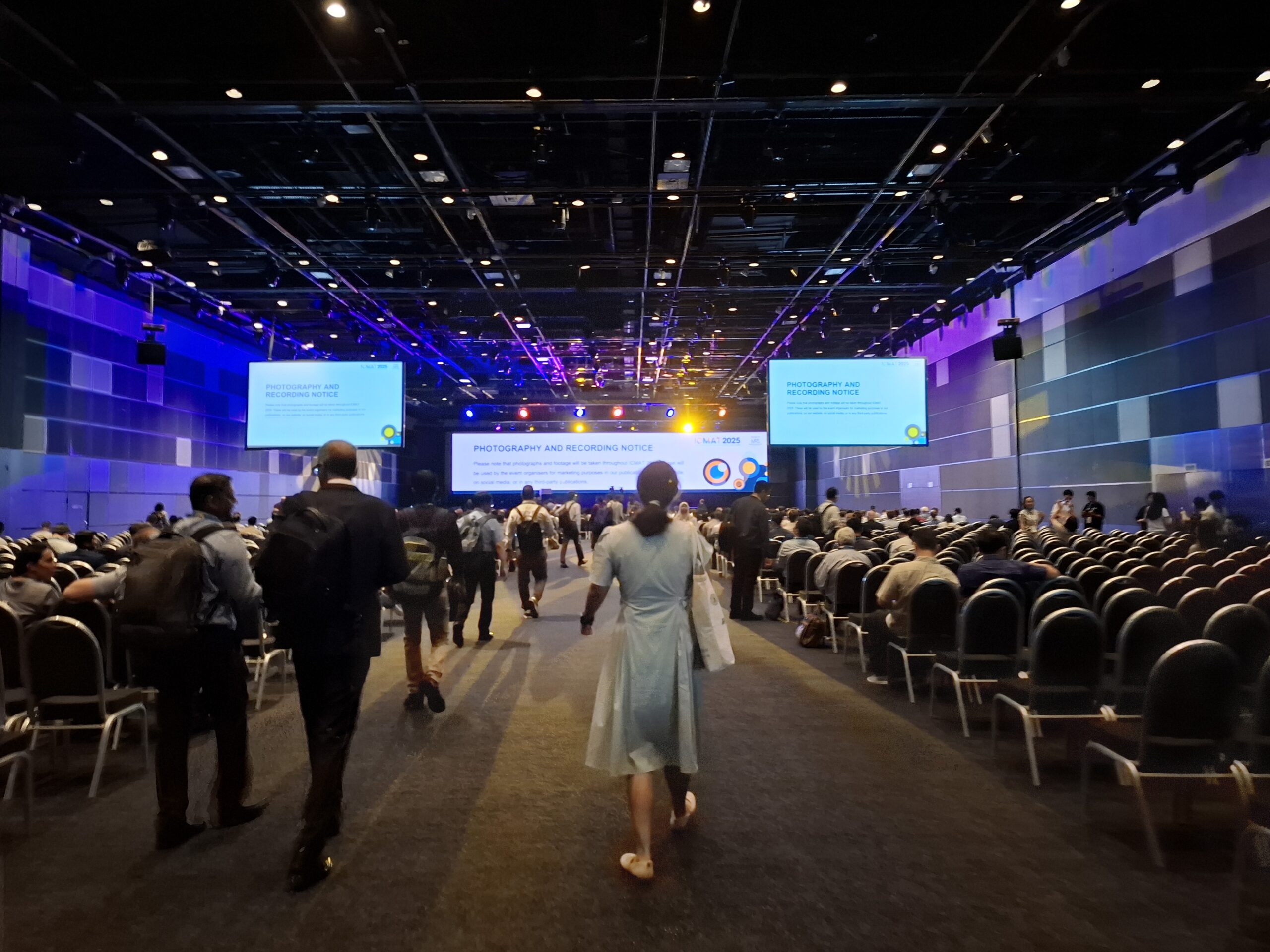
Not long ago, I found myself sitting in a large conference hall in South Korea, surrounded by academic posters and PowerPoint slides packed with technical jargon. It was the kind of event that appeared impressive from the outside: featuring big names, serious panels, and formal attire. But as I listened, I couldn’t help but ask myself: What exactly are we doing here?
I came to Korea as a master’s degree student, with full intention and excitement to learn. I didn’t come just for a degree, I came for something more profound: growth, clarity, meaning. But after months of study and moments like that conference, a quiet question keeps tugging at me: What is this all really for?
That question got louder after I read a statistic that stunned me. According to a Korean newspaper report, 77 percent of young Koreans categorized as “economically inactive” said they had no plans to find a job. That’s in a country with one of the highest rates of higher education participation in the world. It made me stop. What’s going wrong when a society invests so heavily in education, but its young people still feel stuck or directionless?
“Are we still learning? Or are we just surviving in a system that keeps moving, whether we know where it’s going or not?”
I know that studying to get a job is a shallow reason. We’ve heard that critique before. However, honestly, higher education feels like a performance these days. A series of checkboxes: degrees, certificates, publications. A kind of illusion of progress – on paper, everything looks impressive. But underneath, many of us feel hollow, even lost. We’re busy, constantly. We are rarely asked to slow down and think deeply. We’re trained to solve complex problems, but not encouraged to ask, “Why are we solving them? Who is this all for?”
“In the end, the goal isn’t just to collect degrees. It’s to understand, in some meaningful way, why we showed up to learn in the first place.”
I’ve asked my fellow grad students, “What are we doing with this research?” or “What comes after your master’s or PhD?” Most pause, give a nervous laugh, and say something like, “Well… I’ll probably do a PhD, then maybe a postdoc, maybe become a professor or go into research.” It’s a script many of us repeat, but fewer of us understand. It’s a loop that feels safe, but also strangely empty.
Don’t get me wrong; higher education can be powerful. Academic titles can represent hard work and deep thinking. Becoming a “doctor” is still a badge of honor in many places. But when all of that becomes more about status, output, and rankings, and less about meaning, growth, or responsibility, something vital gets lost. So, I’ve been wondering, “Are we still learning? Or are we just surviving in a system that keeps moving, whether we know where it’s going or not?”
Some might call this questioning naïve, maybe even privileged. But I think the opposite is true. The fact that so many students are burning out, so many graduates feel disoriented, and so many researchers are disillusioned, that’s not a personal problem. It’s a structural one. Perhaps it’s time we reconsider not just what we learn, but how and why we know it in the first place.
What would it look like if universities made more room for reflection instead of just assessment? What if classes carved out space for conversations about values, not just content? What if faculty weren’t just seen as experts, but also as mentors who ask tough questions and create space for uncertainty? We don’t need less knowledge; we need more curiosity, humility, and honesty in how we pursue it.
Education shouldn’t just be a race to the next title or publication. It should be a place where we learn to connect knowledge with purpose, to think clearly and feel deeply, to develop skills and integrity. We need to stop assuming that students will magically find meaning along the way. If the university doesn’t help us ask who we are and what we stand for, then what is it doing?
Higher education may not be broken, but it does seem adrift. It keeps pushing ahead, yet the direction feels increasingly uncertain. Perhaps that’s precisely why now, more than ever, we need to pause and ask the kinds of questions that don’t come with neat, immediate answers. Not just “What is your thesis about?” but rather “Who are you becoming through the process of doing it?”
Because in the end, the goal isn’t just to collect degrees. It’s to understand, in some meaningful way, why we showed up to learn in the first place.
The Author
A. Ayuningsih is a graduate student seeking to express the concerns she observes in her surroundings. She hopes that her words may raise awareness and offer a meaningful contribution to the broader community and society in which she lives.
Cover Photo by A. Ayuningsih.