

Sorok-do: Island of Agony
By Park Nahm-Sheik
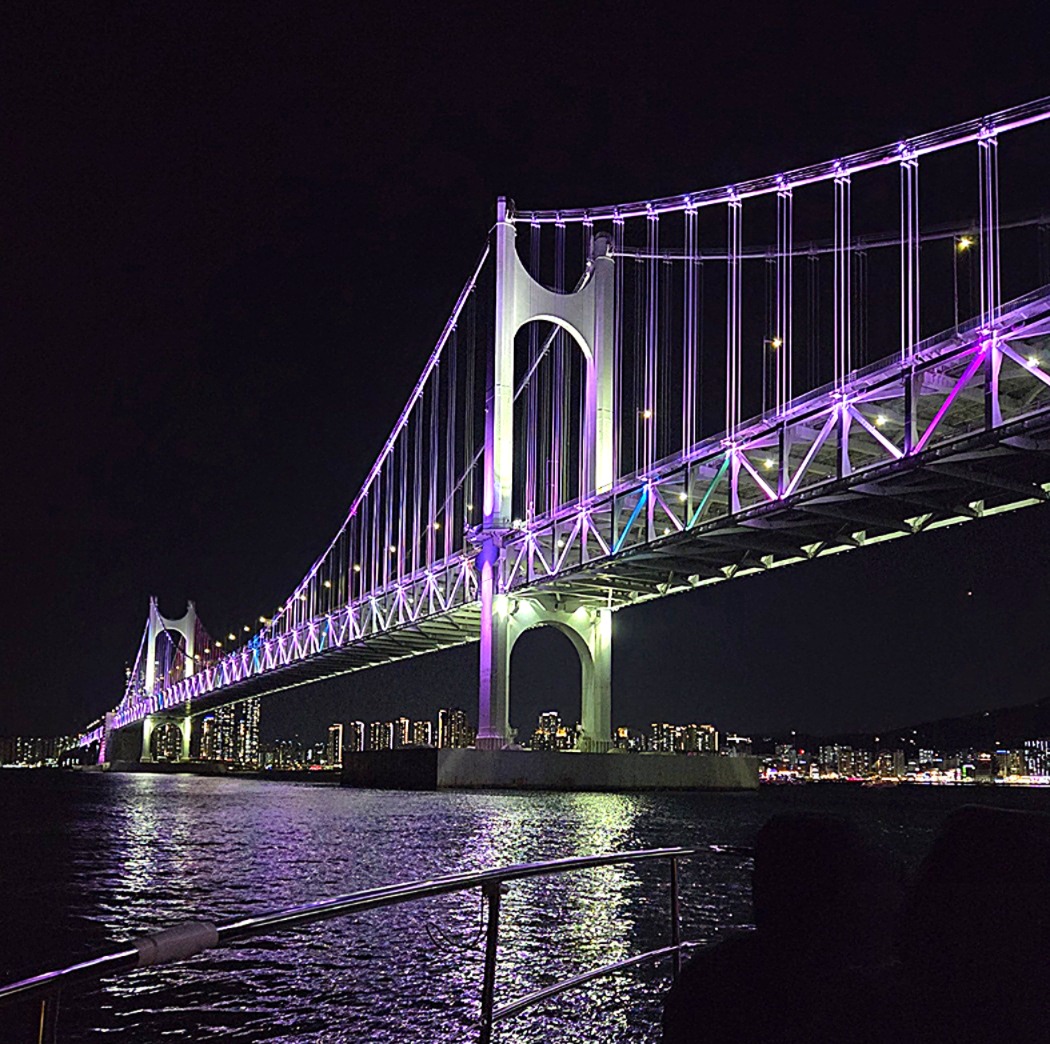
This article is meant to be a sad trip down our collective memory lane. Covering an area of close to five square kilometers, Sorok-do is a moderate-sized island in Goheung County on the southwestern extremity of the Korean Peninsula. So-rok-do means “little-deer- island.” It is a mere five minutes by ferry from the port of Nokdong in Goheung County. Since 2007, however, it’s been readily accessible by land via the 1,116-meter-long Sorok Bridge.
Around the closing years of the Korean Empire (1897–1910), American Protestant missionaries started their incursion into Korea. Their activities centered around major cities like Pyeongyang, Seoul, Daegu, and Busan. Among other things, they set up modern secondary schools, playing a major role in modernizing the educational system in the country. However, one remote location receiving missionary assistance was a facility set up on Sorok-do for people with Hansen’s disease (aka leprosy) by the Japanese colonial government in 1916.
Topping the challenges of creating a Hansen’s disease colony in this out-of-the-way area of the country was the relocation of the locality’s native population to somewhere else nearby. The resulting movement of the legions of villagers posed a heavy financial burden for everybody involved, to say nothing of it being extremely inconvenient and painful. Further, many of the practices newly put into effect in the local colony were by no means fair, just, or equitable. For one thing, enforced sequestering and sterilization of young adults was far from politically correct or justifiable or humane. The truth is that the Japanese administration of Sorok-do did not hesitate to force abortions or implement starvation measures at any time they saw fit.
Throughout the more than three decades of Japanese colonial government of Korea, Sorok- do residents were even deprived of their most fundamental rights as Korean citizens. Sorrowful though it surely is, this unwholesome tradition could not be thoroughly uprooted until long into the post-colonial period.
The National Sorokdo Hospital for Hansen’s Patients was inaugurated on July 1, 1960 with Army Colonel Jo Chang-won as superintendent. With elite credentials from Seoul National University, he had the education and authority to shepherd Sorokdo National Hospital through a slate of institutional reforms in such things as the following:
- The removal of barbed-wire fencing that had been in place between staff and patient housing
- Putting up or displaying public notices around the public squares of the island proclaiming that Hansen’s disease was basically curable and was neither contagious nor infectious
- Abolition of on-site sterilization procedures of any kind
The hospital superintendent dreamed of building a paradise on earth in this earthly abode for people with Hansen’s disease. He had visions of developing the nearby islet of Oma-do into a sort of planetary paradise of a leprosy colony. He had plans to transform this island into a horn of plenty for the Sorok-do community to turn to. Maybe he was a little too much of an idealist, but a dream ofttimes comes with the priceless potential of bringing us within reach of the delightful taste of something wondrous. In the current context, let’s remind ourselves that the novelist Lee Cheong-jun’s Your Paradise (당신들의 천국) is one such hugely well-received work written in such dreams.
Down the road that followed, Sorok-do’s cause got plenty of assists for all the roadblocks it had to encounter and overcome. In 1984, no less a personage than Pope John Paul II sought out the island and blessed it as the most alienated and dismal location in the whole of Korea. The historic visit by His Holiness served to integrate the hitherto segregated docks and vessels in Sorok-do, marking an end to the stigma of discrimination.
Pop star Na Hoon-a came to grace the Sorok- do community with a hugely resonant concert performance titled “Na Hoon-a and Spring in Sorok-do” in May of 1997. On that occasion, he made a gift of 50 wheelchairs to Sorok-do residents with Hansen’s disease. Cho Yong-pil, another luminary in the pop music firmament, followed in Na’s footsteps and gave an unforgettable concert at Uchongak town center on Sorok-do. It is significant in that this performance was a collaboration with the London Philharmonic Orchestra for this town-hall type concert.
Speaking of service to the welfare of Sorok-do in abject need, Sisters Marianne Stoeger and Maria Pissarek top the list. Both were Austrian by birth and Catholic by faith. Beginning in 1962, they both spent many a decade on Sorok-do amidst their charges with Hansen’s disease. More than anyone else, these two Catholic nuns did everything in their power to improve the quality of life for all those sequestered with Hansen’s disease on the island. Indeed, they preceded Doctors Without Borders (Medecins Sans Frontieres) by almost half a century. The two sisters were far ahead of the curve, also preceding Nurses Without Borders by several decades.
Sorok-do may be compared to the Kalaupapa Peninsula in Molokai, Hawaii, which also used to be a settlement for Hansen’s patients from both the Hawaiian Islands and the continental U.S.A. Speaking of dedicated service from outsiders, while Sorokdo was afforded legendary support from Sisters Marianne Stoeger and Maria Pissarek, Kalaupapa had Belgium-born Father Damien as its main support.
Today, the Sorok-do leper colony of thousands is virtually gone. The old medical facilities have been transformed into a museum but still depict the horrid conditions that patients were once subjected to. The Hansen’s Disease Museum is part of the Sorokdo National Hospital, which specializes in treatment for Hansen’s disease patients, promotes the welfare and quality of life of its patients, and carries out research in Hansen’s disease. The agony that Sorok-do once epitomized has been relegated to the annals of history.
The Author
Park Nahm-Sheik is a native of Gwangju. After graduating from Chonnam National University, he went on to receive a master’s degree at the University of Hawaii and a PhD (applied linguistics) at Georgetown University, both in the U.S. Upon completing an illustrious career at Seoul National University, Prof. Park served as president of the International Graduate School of English.
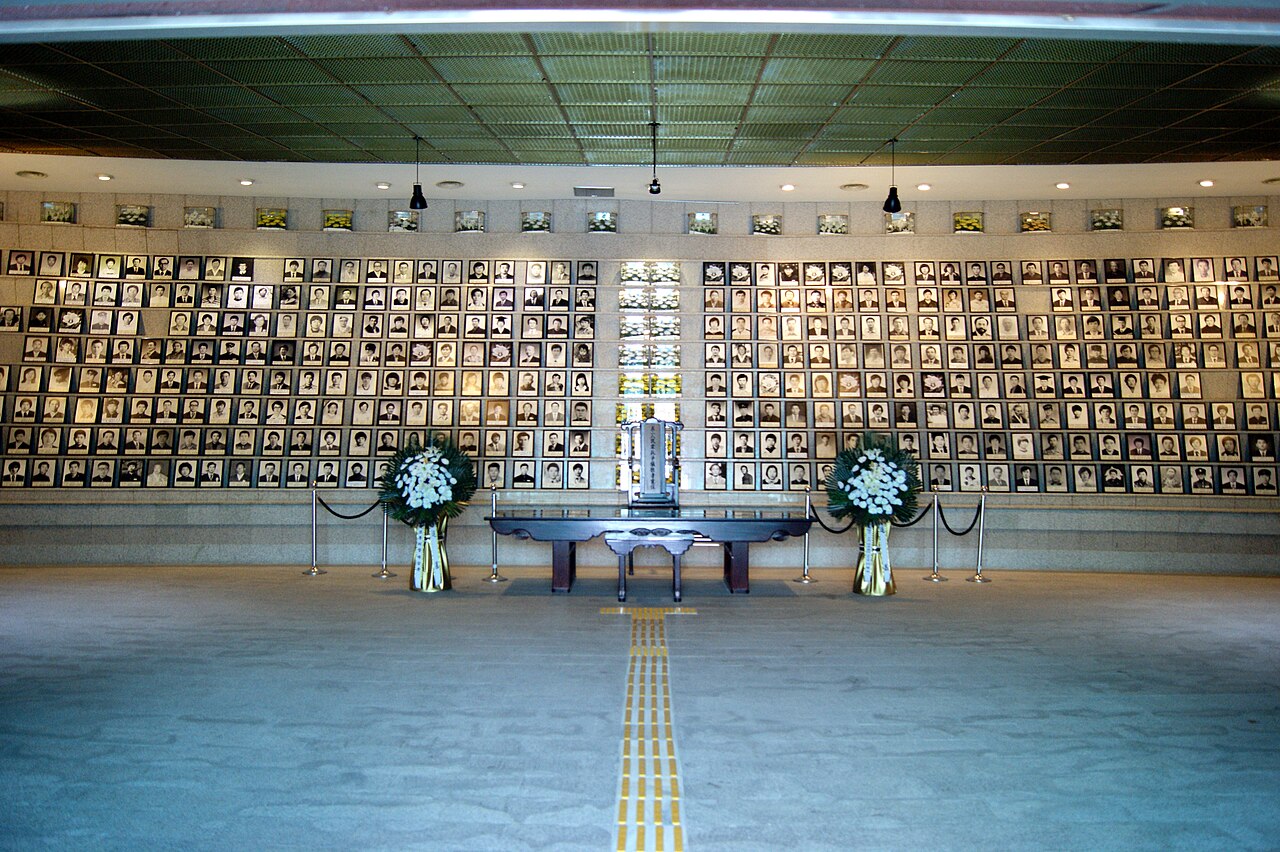
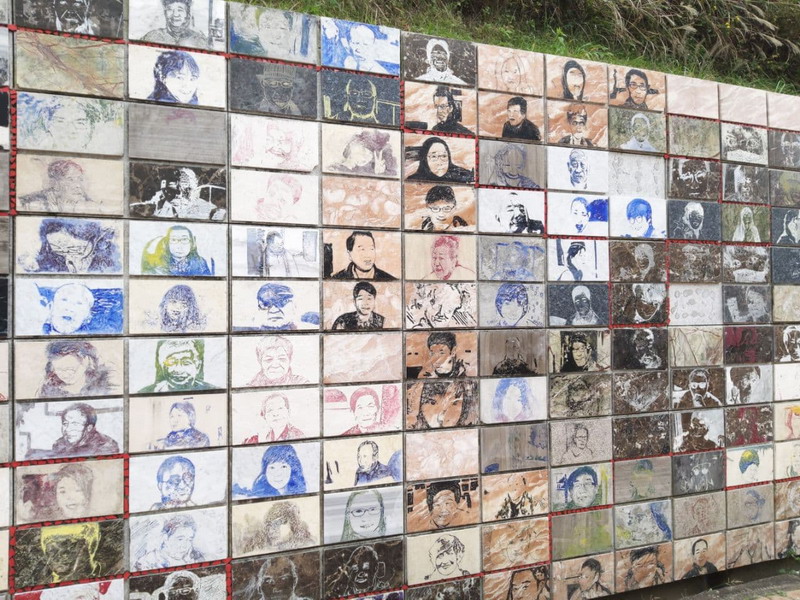
Cover Photo: The wall of former patients. (Melline Galani)