



Growing Together in Diversity: A Kindergarten with 80% Foreign Students
By Saqib Sharif
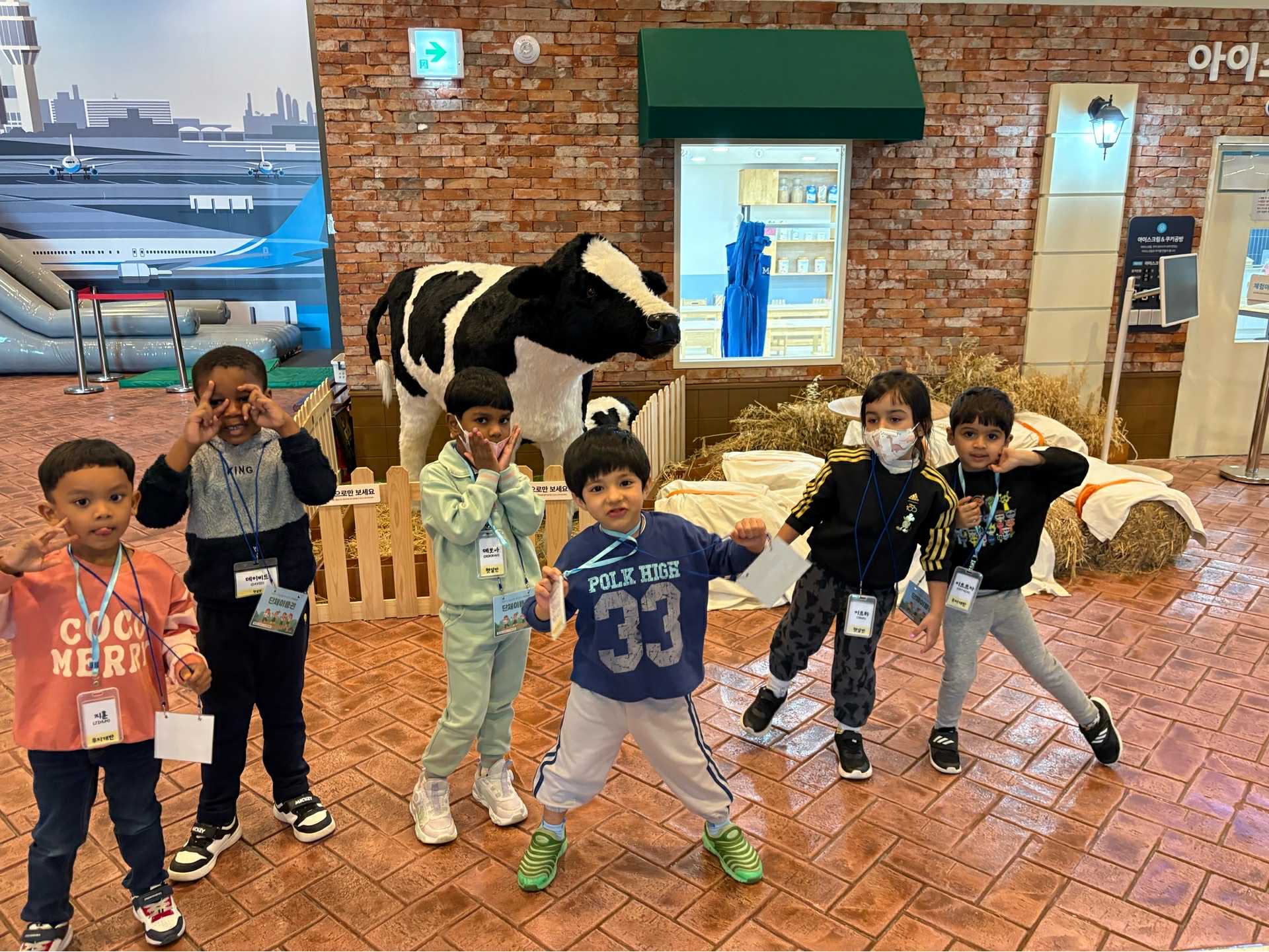
Yes, you read that right – nearly 80 percent of the children at Munheung Elementary School’s kindergarten in Gwangju are from foreign families. This small government-run kindergarten near Chonnam National University has quietly become one of the most multicultural learning spaces in Korea.
When I first came to Korea in 2016, many of my Korean lab mates had never heard of countries like Pakistan, India, or Bangladesh – nations that together make up more than two billion people, nearly 20 percent of the world’s population. Concepts such as halal food or vegan dietary restrictions were unfamiliar to most, and I still remember my professor kindly gifting me a beautiful bottle of wine for Seollal (Lunar New Year), unaware that Muslims do not consume alcohol.
But times are changing – and nowhere is that change more visible than in classrooms like those at Munheung Elementary School. Ask a third- or fourth-grade student here about Pakistan, India, or Bangladesh, and you might be surprised by what they know. Many of them can describe the festivals, foods, and traditions of these countries with enthusiasm and curiosity.
That’s the real impact of diversity. In schools like Munheung, where almost every class includes children from abroad, cultural understanding isn’t just taught – it’s lived, shared, and celebrated every single day.
To better understand what makes this unique learning environment thrive, we spoke with Lim Sa-rang, a teacher who has been working at the kindergarten for three years.
A Dynamic and Diverse Environment
Currently, the kindergarten has 15 students, 12 of which are international children. Teacher Lim describes the atmosphere as “dynamic and full of energy,” shaped by the diversity of the students. “Language barriers sometimes create challenges,” she explained, “but both teachers and children work hard to express their thoughts and feelings, and to resolve misunderstandings together.”
Challenges and Joys of Multicultural Education
One of the biggest challenges, Lim noted, is communication, especially when children first arrive without any knowledge of Korean. “It can be frustrating when they can’t express simple needs like wanting water, using the bathroom, or saying they don’t feel well,” she said. To help, teachers carefully observe each child’s behavior and emotions. But there are also rich rewards: “We get to experience so many cultures, greetings, traditional clothing, festivals, and food from different countries. It’s fascinating and truly joyful,” she added.
Bridging Language Gaps
Communication between teachers and parents, both Korean and foreign, is handled mainly through KakaoTalk messages and translation apps, ensuring that all families can stay connected. In the classroom, teachers use simple English, translation tools, and visual aids to support understanding. Sometimes, children who have already learned Korean help their peers who are still learning.
Learning Through Culture and Play
The kindergarten also offers several special multicultural programs. Three times a week, a Korean language instructor visits to teach the foreign children the Korean language and culture through one-on-one sessions. Children also engage in global play activities – learning traditional games from around the world, and exploring various national flags, flowers, and cultural symbols during lessons themed “The World and Our Country.”
Linked with Chonnam National University
Because of its proximity to Chonnam National University, many of the kindergarten’s students are children of university faculty members and international students. “Some families come through referrals,” Lim said, noting that the school’s reputation for diversity and inclusion attracts families from across the academic community.
Growing Up in a Global Classroom
Lim believes this environment offers invaluable lessons for young learners. “In this global age, the greatest benefit is that children can naturally experience different cultures by meeting peers from many countries. They learn to understand, respect, and be considerate of one another.”
The Reward of Growth and Connection
For Lim, the most fulfilling part of her job is witnessing her students’ growth – especially when language barriers fade away. “Three years ago, a three-year-old foreign child joined who couldn’t speak a word of Korean. Now, at seven, he speaks fluently, almost like a native speaker,” she shared with a smile. “Watching that transformation, I felt the same pride and happiness a parent feels when their child speaks for the first time.”
As the children of Munheung Elementary School’s kindergarten learn and laugh together, the school continues to stand as a beautiful example of how diversity, empathy, and education can come together to build a more connected world – starting right here in Gwangju.
The Author
Saqib Sharif is a robotics engineer with a PhD in mechanical engineering, specializing in the design of smart healthcare devices and microrobots. With a strong background in medical technology and innovation, he is passionate about creating solutions that enhance smart healthcare. Dr. Sharif has been living in Gwangju for the past ten years. Currently, he serves as a senior researcher at Shinsung Tech Pvt. Ltd., Gwangju.
Cover Photo: Munheung kindergarten students on a field trip – the spirit of diversity, the joy of friendship. (Saqib Sharif)