
Teaching on Both Sides of the Pacific: Two Educators’ Perspectives
By Murdock O’ Mooney and Kuamah Lee
Travel writer Paul Theroux once told The Atlantic in an interview, “My advice to any young person who wants to write is ‘Leave home.’” In 2008, I had just graduated from college and, taking Paul’s advice, I left home. I went to teach for EPIK (English Program in Korea) and seventeen years later, I’m still teaching. I’ve been lucky enough to experience working in a variety of secondary schools and universities, in both South Korea and the United States. So has my wife, Kuamah Lee. Here are some of our experiences and perspectives about teaching on both sides of the Pacific.
What stands out to me the most about my early years teaching in Korea are the people. By this, I mean the characters. There was the famous English teacher at Uncheon High School who carried a two-meter-long “love stick,” or disciplinary tool, and who had memorized every word to an entire Hemingway novel. Or my co- teacher, Ms. Ji, who drove a little green Matiz that never left second gear – even on the highway – and the perpetually drunk, but loving, Mr. Chu. “My name means ‘alcohol’ in Chinese,” he used to tell me between shots of soju. He got a DWI [driving while intoxicated citation] while I was working with him, and his wife had to drive him to work. None of this seemed to affect his standing at the school, however.
With these people, I went on overnight camping trips, hiked mountains, and went to countless teacher dinners. My co-teachers showed me grace and hospitality like I’d never known before. Later on, I met less endearing co-teachers who didn’t see the novelty of having a foreigner in their English classes. To them, I was a burden, not a bridge to the Western world.
Then there were the foreigners of various pedigree and interests, such as the young man taking a year abroad before graduate school at Columbia University, the non-degree holding Canadian who did shady English dealings but spoke perfect Korean, and the young party bro from New Zealand who got drunk and arrested his first night in town – all unique but united in situation and happenstance.
Later, when I worked at universities in Korea, I saw a darker, more sinister side of foreigners with nice salaries and positions. Some of them would look down on Korea and brag about how easy their jobs were. Maybe they were depressed, or missed home. Whatever the reason, I disliked these people and thought of them as charlatans. But for every charlatan, there existed a devoted foreign instructor who did their best and was happy and productive. These were the people who inspired me, and with whom I associated.
My time teaching in the United States – where law and policy reign supreme – has been much less eventful, I’m afraid, although I still love the job. I wish I could say that it’s been endlessly exciting, but the truth reveals that American school boards and politicians are at constant odds over the direction of education. Our contracts change every year (usually for the better), there are banned books, inclusion classes, AI in the college classroom, and a myriad of other disruptors. But no place is perfect.
My wife Kuamah also lives and works here. She is originally from Seoul and taught in Korea for 10 years, including in Gwangju, before moving to Albuquerque. “I had a difficult time finding full-time positions in South Korea,” she said. “All of my jobs were one-year contracts.” She once worked at Baekun High School in Uiwang City for three years, and loved it, but couldn’t be hired for a fourth year because of her temporary worker status. “That was unfair,” she told me with a hint of sadness in her eyes.
Kuamah now has a New Mexico teaching license and feels there is much more opportunity for full-time employment here. Even though she is currently a substitute teacher, she works a lot and has many long-term appointments, including with Down syndrome kids. I’ve seen them run up to her, give her hugs, and yell her name exuberantly, “Ms. Lee!”
When asked about salaries, she said there is no comparison. “Of course, they are much higher here,” she said, “but things are also more expensive.” Overall, Kuamah finds teaching in the USA more stimulating and interesting than Korea. “In Korea, I had to teach a set curriculum, but here I have more freedom with my lessons and approach,” she told me. “It’s nice.” She notes that in America, an applicant’s character takes precedence over the reputation of their alma mater, which is another advantage over teaching in Korea, she feels.
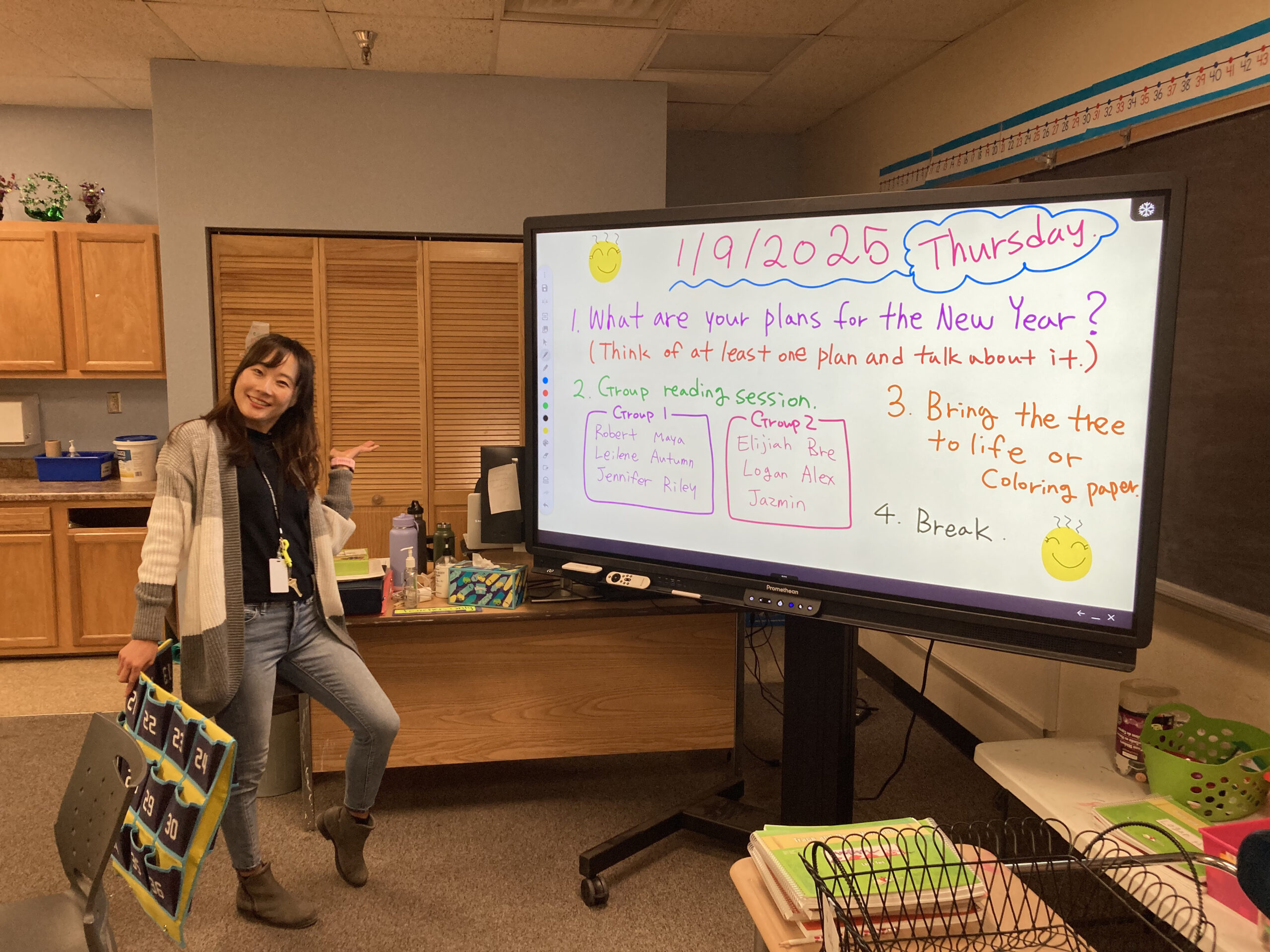
Kuamah and I currently work at La Cueva High School in Albuquerque, which is recognized nationally and ranked sixth in New Mexico in 2024. But before that, I worked at Rio Grande High School, which is considered the worst high school in Albuquerque. I saw bloody fights, kids overdosing on drugs, and someone shot out the windows of the principal’s office one wild weekend. The disparity of schools in America is disheartening, which isn’t something I saw so much in Korea.
In conclusion, and as Nelson Mandela once said, “Education is the most powerful weapon which you can use to change the world.” If you’re a teacher, no matter which side of the Pacific you are on, and no matter what you teach, wield your weapon wisely, bless your efforts, and godspeed. The world needs you now more than ever, keep making connections and bringing people together, and keep fighting the good fight.
Sources
- Introducing Nelson Mandela. (2019). Nelson Mandela: The Official Exhibition Learning Resources. https:// mandelaexhibition.com/wp-content/uploads/2019/02/ Mandela_EDU_Introducing-Mandela_power_point_ FINAL.pdf
- Potts, R. (2011, May 17). Paul Theroux on blogging, travel writing, and “Three Cups of Tea.” The Atlantic. https:// www.theatlantic.com/entertainment/archive/2011/05/ paul-theroux-on-blogging-travel-writing-and-three- cups-of-tea/238955/
- 2025 Best Public High Schools in New Mexico. (2025, November 8). Niche. https://www.niche.com/k12/ search/best-public-high-schools/s/new-mexico/
The Authors
Murdock O’Mooney is an educator and writer based in Albuquerque, New Mexico, USA. He lived in Gwangju, and worked at Chosun University, from 2015 to 2022. He’s interested in geopolitics, education, and trying to help build a more just world.
Kuamah Lee is an educator based in Albuquerque, New Mexico, USA. Originally from Anyang, South Korea, she now calls “The Land of Enchantment” home. She’s been an educator for 15 years, and she loves nature, running, good food, and good company.
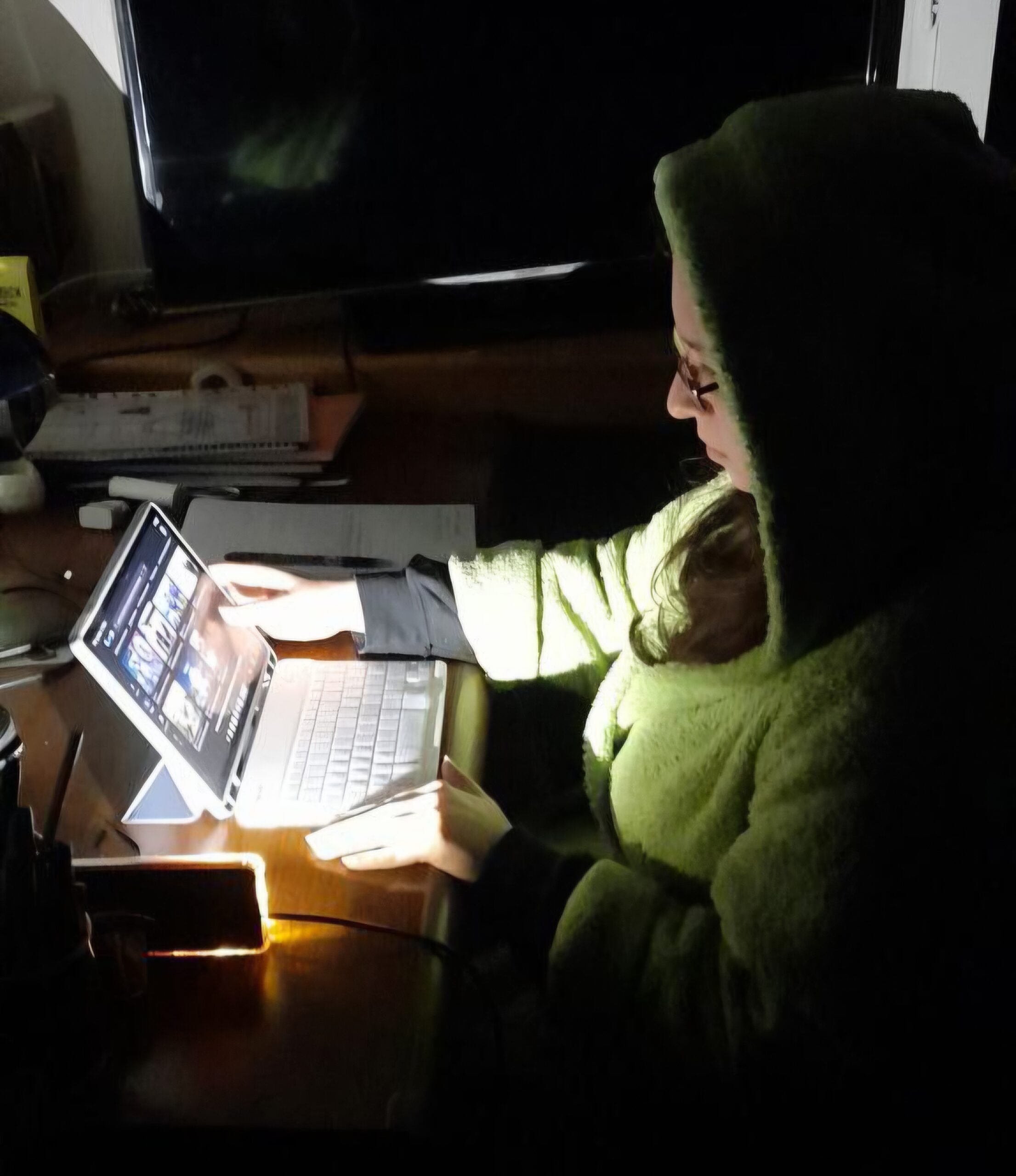
Cover Photo: Kuamah in La Cueva High School, New Mexico, USA, courtesy of Murdock O’Mooney.