



The Same Roof but Different Roles: How Korean Teachers and American Teachers Experience Korean Academies Differently
By Yuri Kim and Madeline Miller
You can see countless academies, especially for math and English, while you are living in South Korea. According to the Korean Education Statistics Service, there are about 3,500 academies registered with the Gwangju Metropolitan Office of Education! If we were to include private tutoring services, the number would be even higher.
Why We’re Writing
Maddy was an ESL instructor at a couple of language academies in Gwangju from 2015 to 2021, and Yuri worked at a math academy from 2013 to 2016. We each – separately – moved to Minnesota, and signed up for a language exchange program through the University of Minnesota. Yuri’s hobby recently has been English, and Maddy is still hopeful that she can learn some Korean. Lo and behold, we were both surprised to find, our language partner used to live in Gwangju! As we swapped stories at the first meeting, we each found it interesting that the other used to be a teacher. I (Maddy) think most native-speaker ESL instructors in Gwangju might relate to the feeling of difference: There are expectations placed on us that are different from those placed on Korean teachers. I remember clearly the tears some Korean co-teachers had after parent interactions, in particular, that left the co-teachers feeling defeated. Thus, we’ll focus on and lead with Yuri’s stories.
Yuri Writes
I majored in statistics at Chonnam National University. Since my department’s name was “Department of Mathematics and Statistics,” it was easy for me to find part-time work as a math tutor. I started tutoring as soon as I entered university to earn some pocket money. Fortunately, I was good at teaching math, so I continued tutoring throughout my college years and also did some volunteer tutoring programs. These experiences eventually led me to work as a math instructor. Like any other job, this one had both pros and cons.
One of the biggest benefits of this job was the energy I gained from students. After I quit this job, I realized how much energy I had received from my students. They were teenagers and always full of energy. Even though math classes could be tiring for them, they somehow managed to find more energy to play pranks. I had to calm them down as their instructor, but I often laughed with them. The fun mood in class often helped the students concentrate better, but to be honest, they were so funny that I couldn’t hold back my laughter. That’s how I was able to recharge my own energy through them.
Another benefit of this job was having free time during the day. I didn’t have to wake up early in the morning because my work started around 3 p.m. I could relax in the morning with coffee while my family was in a hurry. Since my working hours were different from most people’s, it was easy to visit the bank or hospital during the day. I didn’t need to take time off to run errands since those places were open during my free hours. I could also go to the gym before it got crowded. With the right mindset, I was able to use my time efficiently and make each day fulfilling.
“I used to joke, ‘We’ll end up spending all the money we earned at the hospital.’”
However, this job also had some downsides. One major downside was the unhealthy routine. I worked until 10 p.m., so I couldn’t really enjoy any nightlife. After work, I went home to rest or prepare for the next classes, and I often stayed up late. As a result, I developed an unhealthy sleep pattern. This was a chronic issue that affected not only me but also my coworkers. My coworkers and I used to joke, “We’ll end up spending all the money we earned at the hospital.” Not only did we have an unhealthy daily routine, but we suffered from stress, sore throats from speaking, and got physically tired from standing for long hours while teaching.
Another challenging part of the job was the emotional labor. Most students were kind, but there were a few students who had bad manners.
One disrespectful student often acted like he was our boss, saying things like “You’re getting paid because of me,” and disrupting the class. All of the instructors were having a hard time because of that student, so the academy director gave the student a strong warning. However, they were not removed from the academy. At the time, I felt hurt and became doubtful about my job. I didn’t really have to be doing private tutoring with this student, but I felt stress because the boss didn’t clarify whether we could cancel the lessons.
In addition, I had to regularly contact parents to update them on their child’s performance and behavior. If a student had good grades, the consultations were brief. However, sometimes, even when I tried my best, students’ test results didn’t meet parents’ expectations. I had to explain why the grades were low and how I planned to improve them. Even worse were the calls with parents who were considering having their children quit the academy. Even though I worked hard, those conversations left me feeling like I had done something wrong.
Although this wasn’t a big problem, I often had to calm students down when they came in excited from their English classes. For example, on Halloween, English academies held a party for the students because they wanted to share American culture. In contrast, math academies never held a Halloween party. Students wanted to continue the party mood in math academies, so every instructor, including me, tried to cut off the playful mood. At times, I wanted to jump in and have fun with them, but as a math instructor, I knew I had to stay professional.
Honestly, although there were some good parts, I experienced more downsides than benefits. However, the moments I laughed with students remain deeply in my memory. One of my goals was to help students avoid becoming a su-po-ja (수포자; from 수학 포기 자), a student who gives up on math. Even though math is difficult and boring, I always tried to make it more approachable. I felt a strong sense of responsibility knowing that I could influence someone’s path in life. At the same time, I was also shaped by my students, and through these experiences, I grew into a more thoughtful and mature adult.
Maddy Writes
Like Yuri, one of my major joys in teaching was relationship-building with my students. I think, though, it looks quite different for a foreign teacher than it does for a Korean teacher. One of the main ways in which I was able to connect with students and build a relationship was through playing during class time, from board games for practicing vocabulary to leaving the classroom for map-drawing activities to practice prepositions, to watching “extra-curricular” content that actually snuck learning objectives in through the back door. This is one of the expectations of a foreign teacher, I think, in that parents and educators alike realize that “fun” learning is more effective than “boring” learning. Since the Korean education system seems to struggle in operationalizing this, many administrators defer to native speakers to do it for them, for better or worse. Watching my students improve over time – regardless of how “fun” the lesson was – was immensely rewarding. In part, this was due to seeing that my pedagogy was effective; in part, this was because of the gratitude from students.
In our conversations, Yuri and I talked about gender and age as a factor of (dis)respect in my classrooms, most especially with adult students. I had two key interactions with older Korean males that left me feeling angry and offended – both because of my apparent “ignorance” as a young female foreigner. Yuri reminded me that this is something Korean teachers also face, not only foreigner teachers. Another struggle we both faced was having to talk all day making us tired. Thankfully, I could get away with making students do more of the talking (conversation classes) or, in fact, all of the talking (debate classes in which I was a judge). I could design lessons to help mitigate the exhaustion, while Yuri didn’t have quite as much freedom in her classroom.
In chatting together during our language exchange, where Yuri practices English and I practice Korean, we also talked about vacation, in two forms: first, teaching vacation classes when our students may not have been attending regular academic sessions at their schools, and second, being able to take time off from work for our own vacations. As a native-speaker teacher, I found teaching vacation classes simultaneously a change of pace I was grateful for and also an annoyance in that my working hours usually changed during the vacation period. Yuri mentioned that the workload could be as much as double during vacation periods, something I am forever grateful was not the case for me.
We also talked about vacation as our own time off from work; both of us mentioned feeling frustrated that we could not choose when to take vacation, though I would have to admit that the native speaker generally has a greater amount of flexibility and more time off granted than the Korean teacher. In Yuri’s experience, the only time off afforded for math teachers was on days the hagwon was closed. In my experience, I got to have five consecutive working days off, but not necessarily of my own choosing.
Another difference is employment status. Generally speaking, Korean teachers are hired as independent contractors at an academy; most native-speaker ESL instructors, on the other hand, are E2 visa holders, which means academies are legally obligated to enroll the teachers in sadae- boheom (사대보험) – the four major insurances (health, unemployment, worker’s comp, and social security/pension). Employers working with independent contractors are not required to provide these for the employee; Korean teachers generally are expected to take care of enrollment on their own. Something Yuri was not aware of: Some employers prefer new teachers, because teachers with experience will expect the graded salary that comes with EPIK’s raise structure. A new teacher is cheaper to employ and will ask fewer questions than a seasoned one.
All in all, we both learned a lot from our teaching experiences, both good and bad. Maddy would like to stay in education, while Yuri found the job to be too taxing and burdensome. Both of us miss Gwangju, though, and loved the students as individuals, even if not necessarily the academy teacher life.
The Authors
Yuri Kim was born in Gwangju, where she spent most of her life. She worked as a math tutor and instructor for eight years, and later as administrative staff at the Gwangju Institute of Science and Technology (GIST) for five years. She is taking ESL classes in Minnesota as she prepares for the next step in her life.
Madeline “Maddy” Miller lived in Gwangju from 2015 to 2021 as an English teacher and Korean language student. She is now studying medical interpreters and migrant health as part of her doctoral program at the University of Minnesota.
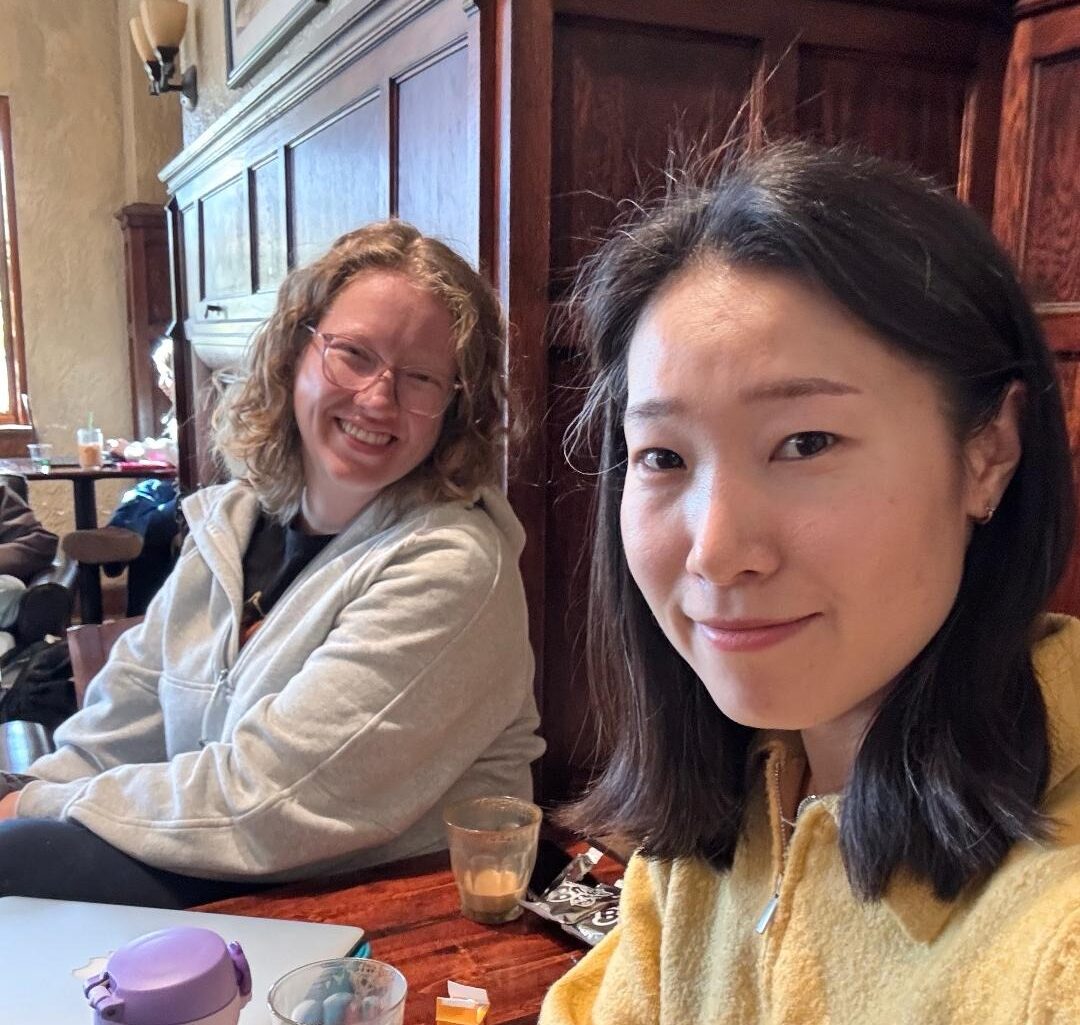
Cover Photo: Maddy and Yuri’s language exchange meeting, courtesy of Madeline Miller.