
Unique Alternative Education: Meet Dalkum Art School
By Yousra Feriel Drioua ||
In a country where education is often defined by numbers, Dalkkum Art School in Seoul operates on a different premise. Founded in 2018 in Seoul’s Gangbuk District, Dalkkum Art School (달꿈예술학교) is a non-accredited alternative school that accepts only one student at a time. The model was not designed to be radical for its own sake. It emerged, instead, from a question its founder, Ryu Han-seung (류한승), could not let go of: What happens to that one child who falls completely outside the system?
South Korea is no stranger to alternative education. By the time Dalkkum was established, more than 500 alternative schools already existed across the country. Yet many of them, Ryu observed, had begun to resemble the system they were meant to challenge, replicating schedules, evaluations, and institutional priorities shaped by exams and efficiency.
Dalkkum’s starting point was different. The school was not created because someone wanted to build a school, but because its founder encountered a single student, pushed out of public education, isolated by rules designed to preserve the group rather than protect the individual. “In systems designed to maintain groups, evaluation is formed by the majority,” Ryu conveyed. “In such a structure, the weight of ‘one person’ becomes too unnoticed, and losing one rarely becomes an issue.”
Choosing to Remain Outside the System
Dalkkum operates as a non-accredited school by choice. In South Korea, accredited alternative schools receive government recognition and funding but must meet standardized requirements, class size, curriculum structure, and reporting. Dalkkum says this would compromise its core principle: absolute flexibility around one student’s needs.
Remaining outside the system comes with costs. Students do not automatically receive formal academic credentials, and the school receives no public funding. Instead, Dalkkum supports students individually through alternative pathways such as equivalency exams, portfolio-based learning, or gradual re-entry into education or training when possible. Despite these constraints, the school has seen tangible outcomes. Among its graduates are students who were once told their ambitions were unrealistic: One is now working as a musical theatre performer; another is studying nursing; another, still in elementary school, is pursuing environmental work focused on endangered species. For Dalkkum, these outcomes are not framed as success stories in the conventional sense but as evidence that being seen as “one” can change a trajectory.
Education as Daily Companionship
Education at Dalkkum is free. This, too, is deliberate. Ryu describes it as a way to dismantle transactional thinking, especially for students already shaped by competition. Funding comes from modest café profits, private donations, and a rotating network of volunteer teachers who share the school’s philosophy.
The model is fragile. When volunteers leave, activity slows. When no student is present, the school waits. Yet Dalkkum has survived precisely because of this vulnerability, sustained by people drawn to the idea that one person is worth building a school around. Ryu also resists being described as a principal or sole teacher. “What matters most,” he says, “is not teaching but eating together, walking home together, being present in ordinary moments.” He compares his role to leveling in coffee brewing: the quiet but essential step that ensures balance.
Rather than positioning himself above students, Ryu aims to stand beside them. In a system where “normality” is often treated as the baseline, Dalkkum treats ordinary daily life as something worth restoring. “The specialness of being ‘ordinary,’” he reflects, “is equal to the absolute value of one life.”
The Art and Community Philosophy
Art is central to Dalkkum but not in the way most art schools define it. Here, art is a tool, but it’s one that carries profound meaning. It is non-directive and non-verbal, allowing interpretation without instruction. “We don’t call those things art,” the founder says. “We call people art.” True art, he explains, is dynamic, formed between people.
In this environment, healing happens quietly. Without being directed or taught, people pass through the space – children and elders, disabled and non-disabled, volunteers, baristas, neighbors, even animals wandering by – and change occurs without announcement.
At the entrance of Dalkkum Art School is a café; Café Koum is open to anyone. This was intentional. In South Korea, cafés are ubiquitous, but also deeply social: places where people linger, talk, and cross paths. Dalkkum’s café is designed as the opposite of a purpose-driven institutional space. There is no separate entrance for students and staff, no visual barrier between school and neighborhood. Children, elderly residents, volunteers, baristas, guests, and even passersby move through the same narrow space. Classes, when not in session, give way to community programs. The school does not occupy space permanently; it circulates it.
After years of operating on the margins, the founder says what he has learned is simple: gratitude. Not for recognition or praise, but for the courage of those who walked through the door when they had nowhere else to go.
Institutions, Ryu reflects, are always slower than human reality. Systems follow life; they rarely lead it. For now, Dalkkum chooses not to fight the system directly, but to protect its founding principle, “the dignity of one existence,” and trust that, eventually, the system will catch up.
The Author
Yousra Feriel Drioua is a freelance writer and activist with an MA in media communication and journalism. She’s an Algerian citizen residing in South Korea and aspires to be someone of benefit to society. In her free time, she’s a barista! Instagram: @myyigli
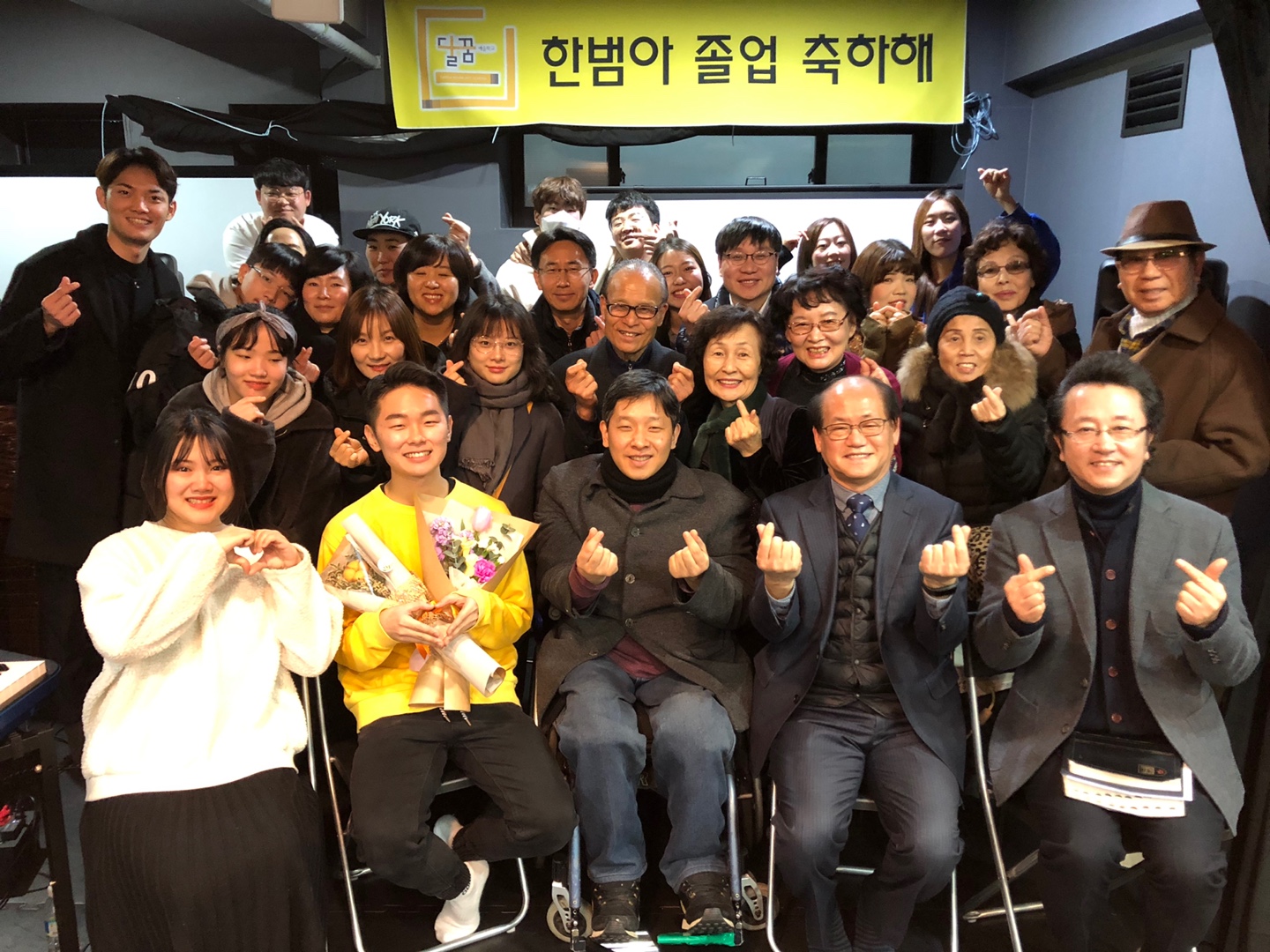
Cover Photo: Graduation ceremony, courtesy of Dalkkum Art School.