

A Journey to Bogil Island
By Dhivyaa S. P.
Island Explorer here, reporting on an expedition to the one of Jeollanam-do’s southern islands.
On a rainy day, me and my team of volunteers took a ferry from the port of Hwaheung-po in Wando to our destination island. We boarded the ferry for a 50-minute ride across the water to Bogil Island (보길도).
On board, the ferry had a large room where travelers could stretch out with small neck pillows, perfect for a quick nap. The top deck felt more like an observatory, with tables on an open- air deck where you could watch the coastline drift by.
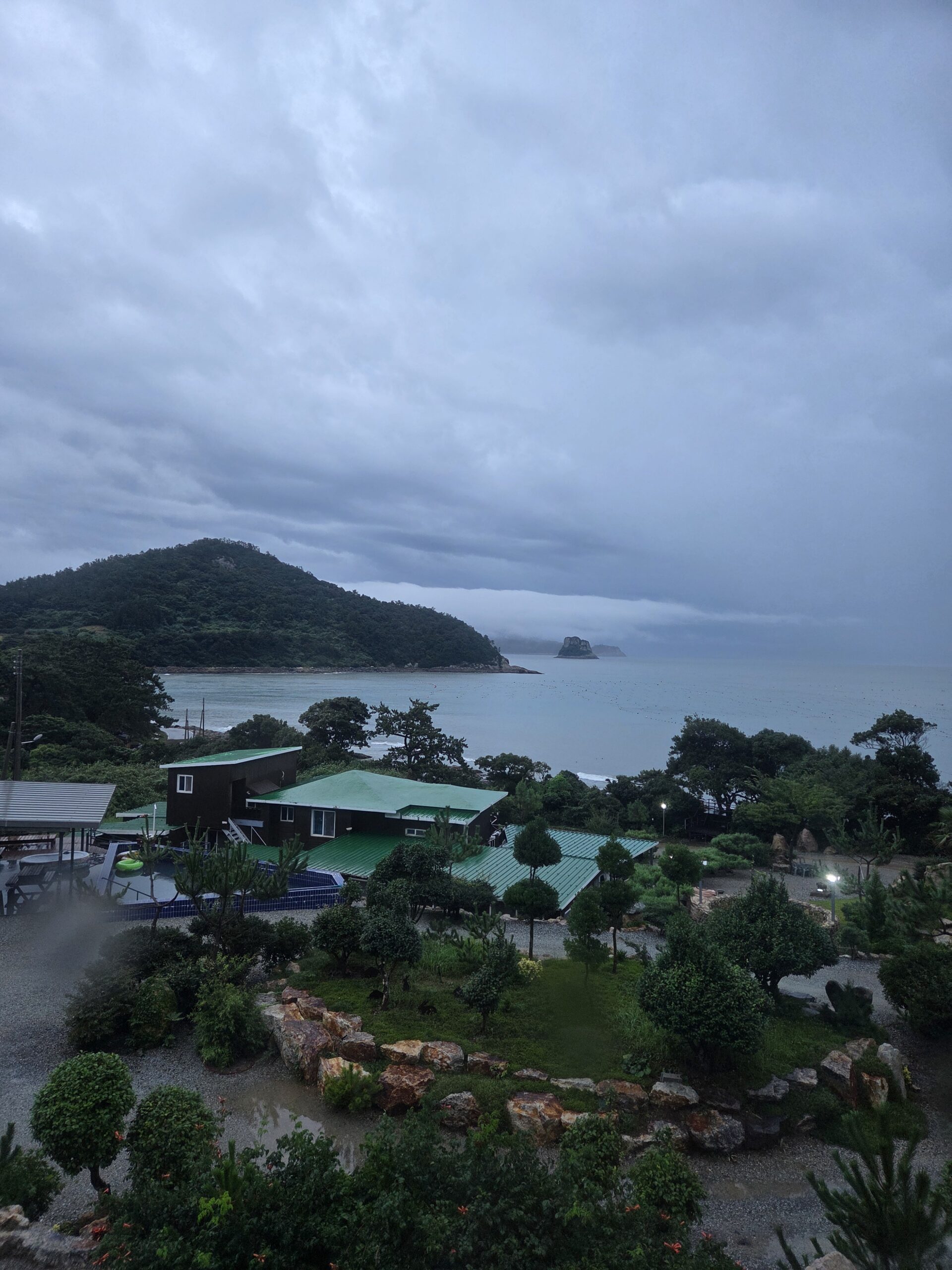
By the time we docked, the bus that had traveled with us on the ferry was waiting to take us to our accommodation, a seaside pension famous for its sunsets. Of course, with Korea’s monsoon in full swing, all we could see were misty skies and fog-wrapped mountains. Still, from the top floor, the view of the sea and surrounding cliffs was breathtaking in its own moody way.
Our main purpose was cultural exchange with the local school children. At the community center, we played traditional and international games, cleaned the beach together, and even held an “international snacks” competition. As the camp went on, we also prepared dances and songs for a friendly performance night. It was lively, chaotic, and full of laughter.
Bogil Island has its own twist on tradition. On our first evening, we sampled makgeolli highballs (Instagram: @bogilsea_brewery). Unlike mass- produced versions, theirs is brewed simply with rice and pure spring water. While makgeolli isn’t my favorite, my teammates swore it tasted fresher than anything from the mainland.
The next morning, we woke before dawn to visit an abalone farm. Riding a small boat across the sea, we caught the sunrise. My very first time to watch daybreak from the water. It felt like a dream my younger self once had – now suddenly real.
At the farm, a local guide showed us how to remove abalones from their nests. Coming from a vegetarian family, it was strange and uncomfortable for me, but I tried. The abalone wriggled in my hand, and I let out a startled scream while my friends laughed. Eventually, I managed to cut one free – with a little help from my teammate.
On the way back, our guide offered to take a few of us around the island by boat. I jumped at the chance. It was early, the sea breeze still cold but exhilarating. We passed abalone farms and waved at fishermen whenever we spotted one. As an MBTI I person, if those people were next to me, I wouldn’t even have made eye contact with them. But this was more fun than I thought.
The guide pointed out hidden caves and rock formations shaped like animals. Just as we were snapping photos, the sky opened up and rain poured down. With no roof, we huddled behind the wheelhouse, laughing and shouting as the sea drenched us. At the time, it felt endless, but looking back, all I remember is the joy of that silly, soaking ride.
Back on land, we joined a cooking class where local chefs taught us how to make abalone dishes – stir-fried with butter, in ramyeon, and in savory pajeon. For someone who isn’t much of a cook, even chopping vegetables the right way was a challenge, but it was fun to learn.
Later, we visited the Yun Seondo Garden (which includes the pavilion Seyeon-jeong), one of Korea’s most celebrated traditional gardens. Designed by Yun Seondo, a Joseon-era scholar and poet, it blended nature and architecture in perfect harmony. We dipped our feet into the cool stream where poets once wrote, and ended up splashing around with the children.
The next day, our team joined in a beach- cleaning activity at Tongni Beach. Most of the trash was styrofoam, something I hadn’t realized before. The villagers cheered us on with vitamin C drinks, and our camp organizers surprised us with ice cream. Time was short, so we couldn’t enjoy the beach as much as we wanted, but it felt good to leave it cleaner than when we arrived.
Everywhere we went, the islanders welcomed us warmly. They were patient with my clumsy Korean, eager to share their home, and generous with their stories. The air felt cleaner, the sea calmer, and the pace of life slower.
Bogil isn’t just an island. It’s a pause button. A place where a ferry ride delivers you into a world of fresh air, foggy mountains, and memories you’ll keep long after you leave.
The Author
Dhivyaa S. P. believes that every action, no matter how small, contributes to the bigger picture of change. Now beginning chapter three of her academic life, she steps into her PhD journey with curiosity and resolve, knowing that each page she turns brings her closer to shaping new knowledge for the world.
Cover photograph by Dhivyaa S. P.