


Springtime Splendor: Cherry Blossoms and Heritage – Where History Meets Beauty, April 2025
By Neha Bisht
Spring in South Korea is a season of renewal and celebration as the landscape transforms into a breathtaking display of cherry blossoms. The fleeting beauty of these delicate pink and white petals attracts visitors from near and far, eager to witness nature’s spectacle. Among the many cherry blossom festivals held across the country, the Yeongam Wang In Cherry Blossom Culture Festival stands out for its unique blend of history, culture, and natural beauty.
Who Was Wang In?
Wang In was a renowned scholar of the Baekje Kingdom, an ancient Korean kingdom that existed from 18 BCE to 660 CE. When he was invited to Japan by the Japanese Emperor Ojin, Wang In took with him the knowledge of Confucianism, Chinese characters, pottery, blacksmiths, weavers, and the “Thousand Character Classic” (Cheonjamun) during the 4th century. His contributions played a crucial role in shaping Japan’s early education and cultural development. The festival is held annually to commemorate his legacy and his impact on cultural exchange between Korea and Japan.
Why Is the Festival Celebrated Annually?
The Yeongam Wang In Cherry Blossom Culture Festival is a vibrant tribute to Wangin In, celebrating not only his scholarly contributions but also the rich cultural ties between Korea and Japan. Hosted in Yeongam County, South Jeolla Province, the festival is set against the stunning backdrop of cherry blossoms in full bloom. It serves as a platform for cultural performances, historical exhibitions, and traditional activities that highlight the region’s heritage.
To honor Wang In’s achievements and his vision of an open world, his descendants and visitors gather at his historical site in Mt. Wolchul National Park, Wang In’s birthplace and one of the most picturesque locations in southern Korea. In April, when 40 kilometers of cherry blossoms reach full bloom, the festival comes alive with numerous cultural programs reflecting the local heritage.
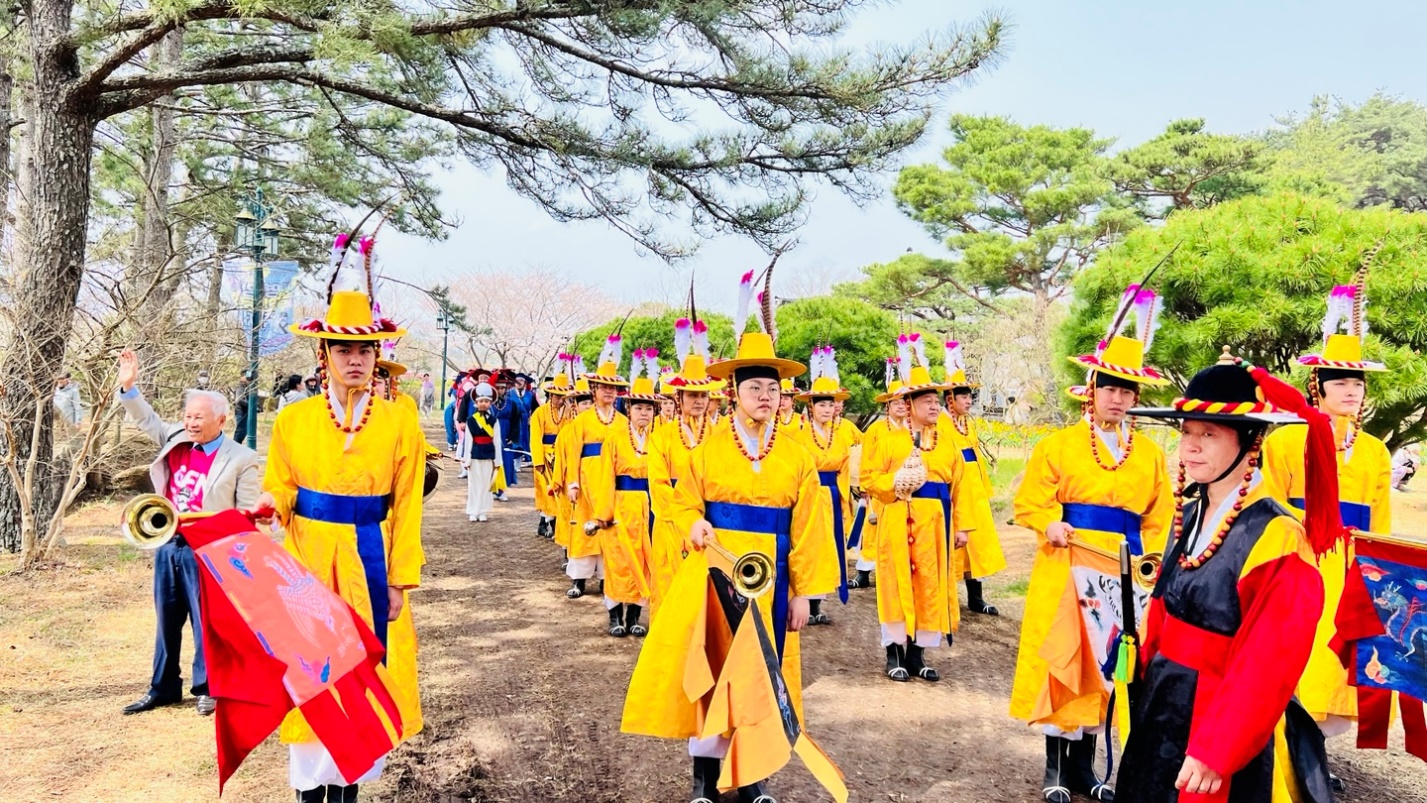
The festival’s grand opening parade, themed “Welcome, Wang In,” marks the beginning of the celebrations. Other key events include the Light of Wang In, Road of Culture ceremony, the Korea–Japan Win-Win project featuring Wang In Cheonjamun rice cakes, and the unveiling of the symbolic Cheonin Cheonjamun sculpture. Visitors can also enjoy traditional cultural experiences in Gurim Village, explore the Yeongam ceramic culture exhibition, and shop for local specialties at Gichandeul shopping mall.
For a more immersive experience, visitors can participate in Sangdaepo raft riding, Dopoje tug-of-war, and the Jeongdong-jeongho Festival or enjoy performances of traditional folk plays, Jangbujil songs, and Mt. Yeoseok Ssangpae Nongak (farmers’ band music). The Baekje costume studio, the thrilling “Challenge! 250 Stairs” activity, the Student Wang In Contest, and a local food festival further enrich the celebration.
My Experience at the Festival
Upon arriving at the festival grounds, I was greeted by a mesmerizing sea of cherry blossoms. The petals, gently carried by the spring breeze, created a picturesque scene that felt like something out of a dream. The festival was bustling with locals and tourists, all eager to immerse themselves in the festivities.
One of the most captivating moments was the historical reenactment of Wang In’s journey to Japan. Performers dressed in traditional Baekje attire brought history to life with an engaging play that narrated his contributions. This was followed by traditional Korean music and dance performances, which further enhanced the lively and celebratory atmosphere. Alongside the locals, my friends and I enthusiastically joined the traditional parade, dancing, enjoying the rhythmic music, and capturing beautiful moments in our cameras.
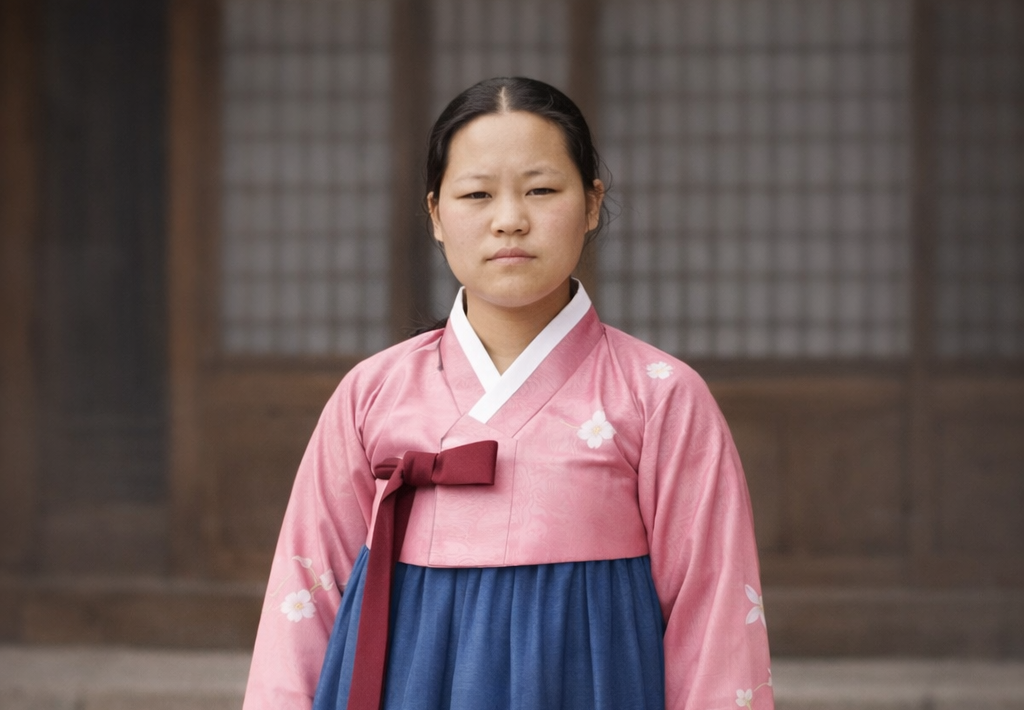
Another highlight of the festival was the cultural experience zones, offering a hands-on opportunity to explore Korean heritage sites. Visitors could try their hand at calligraphy, traditional games, crafts, pottery, painting, and elegant traditional Korean attire. The festival was also a paradise for food lovers, with numerous stalls selling local specialties and regional products. The aroma of freshly made delicacies filled the air, making it impossible to resist tasting the delicious offerings.
For entertainment, a variety of performances and shows were held at the event ground, while local musicians played traditional and contemporary songs, drawing in crowds who joyfully danced along. A particularly memorable moment for me was participating in ganggangsullae, a traditional Korean dance. My friends and I eagerly joined in, moving to the rhythm alongside the locals. The experience was exhilarating, and it deepened my sense of connection to Korean culture. Being a part of the dance made me feel truly welcomed and included in the festivities.
A visit to the Wang In Historical Site was another essential part of the festival. Believed to be Wang In’s birthplace, the site provided invaluable insights into his legacy. Walking through its well- preserved grounds, I gained a deeper appreciation for Korea’s rich history and its profound influence on neighboring cultures.
Additionally, every year, the Gwangju Global Network (GGN, formerly GFN) organizes a special tour for foreigners to take part in the Yeongam Wang In Cultural Festival, aiming to promote cultural exchange. The tour is fully supported by GGN, and participants engage in various festival activities as part of an exciting competition. The team that completes all assigned tasks is announced as the winner and receives amazing prizes. Participating in the GGN race allowed me to meet many local and international people, providing a wonderful opportunity to exchange cultural insights and make new friends. Engaging in festivals like this connects me socially with people from all around the world, enriching my understanding of different cultures.
Every year, I eagerly return to this festival, captivated by its charm and beauty. I love capturing these moments through my camera and cherishing the memories. Exploring Korean traditions and experiencing the warmth of local hospitality makes me feel truly connected to this culture. The welcoming atmosphere of the festival always makes me feel at home, even when I am miles away from my own.
More than just a celebration of spring, the Yeongam Wang In Culture Festival is a tribute to history, tradition, and cultural exchange. The combination of breathtaking cherry blossoms, vibrant performances, and engaging historical experiences makes this festival a truly unforgettable event. Participating in cultural activities, joining the GGN race, and meeting people from different backgrounds have deepened my appreciation for Korean heritage and strengthened my connections with both locals and fellow visitors.
For anyone visiting South Korea in spring, this festival is a must-visit, especially for history enthusiasts and nature lovers. Not only does it offer a chance to witness stunning cherry blossoms, it also provides an opportunity to immerse oneself in Korea’s rich cultural heritage. My trip to Yeongam was truly magical, and I look forward to returning, reliving these incredible moments and making new memories in the years to come.
Photograph by Neha Bisht.
The Author
A native of India, Neha Bisht is pursuing her PhD research at Chonnam National University’s School of Materials Science and Engineering. She loves to meet new people and make new friends. Neha endeavors to contribute to the wellbeing of society in whatever way she can. @philla_korea