



The Asian Art Garden: Where Culture Meets Nature in Gwangju
By Saqib Sharif
A New Cultural Landmark Transforms Korea’s Art City
In the heart of Gwangju, South Korea’s renowned cultural capital, a remarkable transformation has taken place. What was once a beloved but aging amusement park has been reborn as the Asian Art Garden, a stunning 56,200-square-meter cultural oasis that seamlessly blends art, nature, and community life. Opening its gates in September 2024, this ambitious project represents more than just urban renewal – it’s a bold vision for how cities can integrate culture and nature to create meaningful public spaces.
From Nostalgic Past to Artistic Future
The story of the Asian Art Garden begins with the Jungoe Neighborhood Park, established in 1981 as the Honam region’s first amusement park. For over four decades, families flocked to its rides and attractions, especially during cherry blossom season when the park transformed into a pink wonderland. However, by the 2020s, the aging facilities had outlived their prime, presenting Gwangju city officials with an opportunity to re- imagine this beloved space.
Rather than simply renovating the old attractions, the city embarked on an ambitious 19-billion- won (approximately 14.3 million USD) project that would completely transform the park into something unprecedented in Korea – a comprehensive art garden that celebrated Asian culture while providing modern recreational facilities for all ages.
Three Interconnected Spaces
The Asian Art Garden is thoughtfully divided into three interconnected zones, each offering unique experiences while maintaining thematic coherence throughout the space:
The Cultural Garden: A Living Gallery
At the heart of the complex lies the Cultural Garden, designed around Asian landscape themes that pay homage to the continent’s rich horticultural traditions. This expansive area features five distinct garden environments: the Cultural Yard with its sweeping lawns, perfect for gatherings and events; the Grass Garden, showcasing ornamental grasses that dance in the wind; the Dry Garden, inspired by zen philosophy; the Shade Garden, offering respite under carefully selected canopies; and the Rock Garden, which demonstrates the art of stone placement.
“This isn’t merely a children’s play area – it’s an innovative space where environmental education meets creative play.”
The garden’s botanical richness is staggering – over 12,000 trees and 26,000 wildflowers have been carefully planted throughout, creating a living tapestry that changes with the seasons.
Three rest pavilions and a 21-meter-long grandstand provide visitors with comfortable vantage points to appreciate both the natural beauty and integrated art installations, while thoughtfully placed restrooms ensure convenience without disrupting the aesthetic flow.
The Ecological Art Playground: Where Imagination Takes Flight
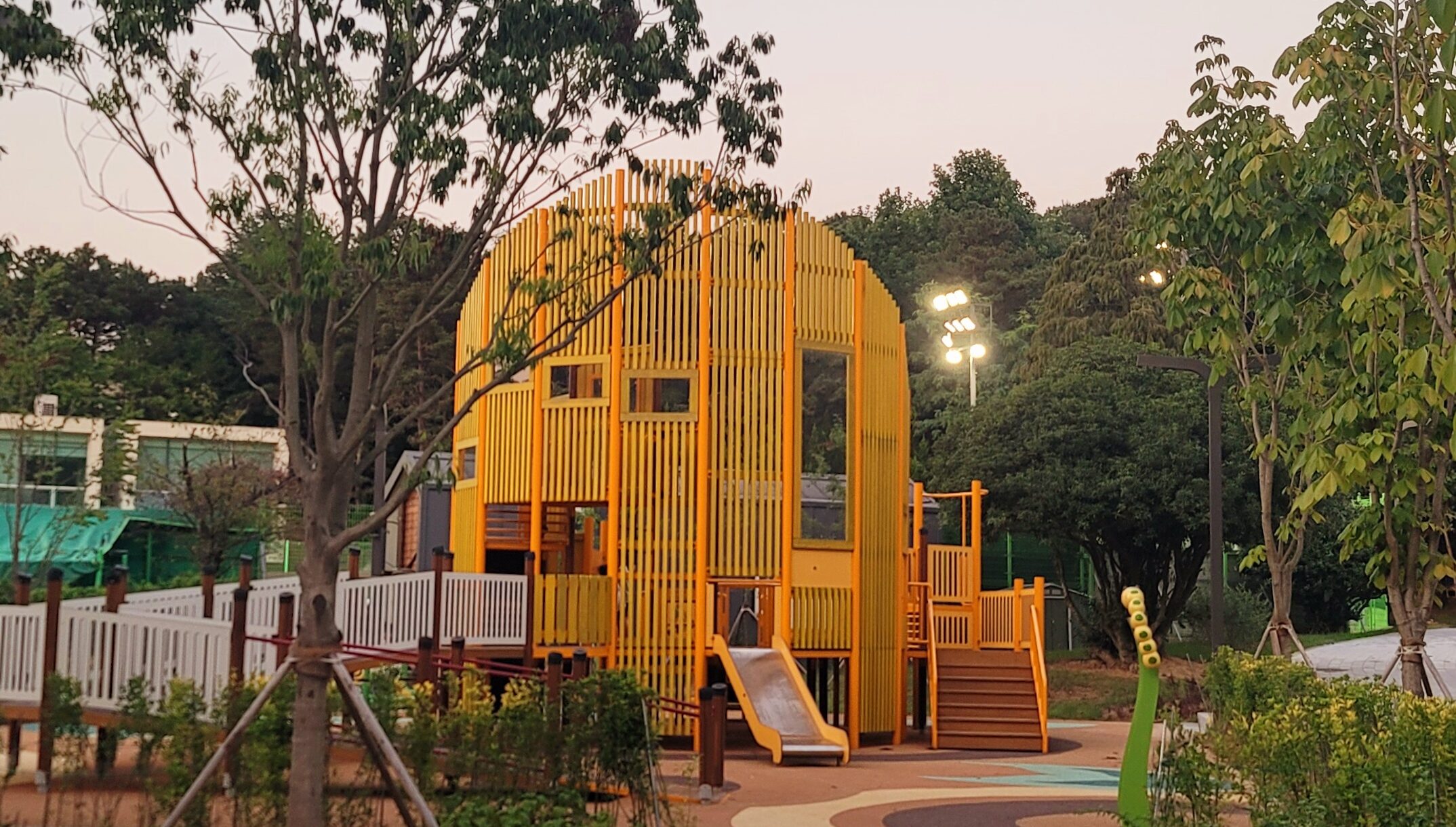
Recognizing that great public spaces must serve all generations, the designers created the Ecological Art Playground to replace the former amusement park rides. This isn’t merely a children’s play area it’s an innovative space where environmental education meets creative play.
The centerpiece is a spectacular nine-meter-tall adventure play structure that challenges young visitors while remaining safely accessible. A salamander-themed water play area celebrates local wildlife while providing cooling relief during Korea’s hot summers. Zip lines add excitement and adventure, while traditional swings offer timeless pleasure. Throughout the playground, art installations spark curiosity and conversation, creating an environment that stimulates all five senses while encouraging imaginative play.
The Sky Bridge: Connecting Culture and Community
Perhaps the most impressive engineering feat of the entire project is the Sky Bridge – a 347-meter aerial walkway that soars 20 meters above the landscape. This isn’t just a pedestrian convenience; it’s a destination in itself, offering breathtaking panoramic views of Gwangju and connecting the previously separated Gwangju Arts Center with the Gwangju Museum of Art.
The bridge features a remarkable accessibility innovation: a 20-meter elevator that allows visitors of all mobility levels to easily access the walkway. From there, visitors can stroll to the mountain’s summit, experiencing the garden from an entirely new perspective while enjoying one of the best views in the city. This commitment to universal design ensures that the garden truly serves all members of the community.
A Model for Cultural Tourism
The Asian Art Garden represents more than just a successful urban renewal project – it’s positioning Gwangju as a leading destination for cultural tourism in Asia. Kim Jun-ki, director of the Gwangju Museum of Art, envisions the space as a comprehensive cultural landmark where “exhibition, performance, recreation, and play” converge to create experiences that cannot be found elsewhere.
The garden’s integration with existing cultural institutions creates a powerful synergy. Visitors can easily move between the Gwangju Museum of Art, the Gwangju Biennale Hall, and the Arts Center, creating full-day cultural experiences that combine indoor exhibitions with outdoor artistic engagement. This holistic approach to cultural programming sets a new standard for how cities can leverage their cultural assets.
Sustainable Design and Environmental Stewardship
The project’s commitment to environmental sustainability is evident throughout its design. Rather than completely clearing the existing landscape, designers worked with the natural topography and preserved significant stands of trees wherever possible. The diverse garden environments demonstrate different approaches to sustainable landscaping, from drought- resistant dry gardens to native plant communities that support local wildlife. The integration of water features, including the salamander play area and various fountains, incorporates rainwater management systems that help mitigate urban flooding while creating beautiful focal points.
Community Impact and Future Vision
The Asian Art Garden’s opening has already begun transforming the surrounding neighborhood. Local businesses are reporting increased foot traffic, and the enhanced cultural infrastructure is attracting new art galleries and creative enterprises to the area. The garden serves as a catalyst for broader cultural district development, potentially rivaling Seoul’s Hongdae or Insadong districts.
Looking forward, the garden is designed to accommodate future expansions and programming. Temporary exhibition spaces can host rotating art installations, while the large lawn areas can accommodate festivals, concerts, and community gatherings. The flexible design ensures that the space will continue evolving to meet changing community needs.
A New Chapter for Gwangju
The Asian Art Garden represents Gwangju’s evolution from a regional cultural center to an internationally recognized destination for art and culture. By investing in high-quality public space that honors both artistic excellence and environmental sustainability, the city has created something truly special – a place where families can play, artists can create, and communities can gather in an environment that celebrates the best of Asian culture.
For visitors planning to experience this remarkable new destination, the garden offers something for everyone: Art lovers will appreciate the seamless integration of installations with natural beauty, families will find endless entertainment in the playground facilities, and nature enthusiasts will discover new inspiration in the diverse garden environments. Most importantly, the Asian Art Garden demonstrates how thoughtful urban planning can create spaces that enhance both individual well-being and community connection.
As other cities around the world grapple with aging infrastructure and the need for more green space, Gwangju’s Asian Art Garden offers a compelling model for how cultural investment and environmental stewardship can work together to create places that truly enrich urban life. It stands as a testament to the power of visionary thinking and the importance of creating beautiful, accessible public spaces for all to enjoy.
Sources
Bae, K. (2024, September 6). 광주시, 예술·자연 공존 ‘아시아 예술정원’ 7일 개장 (Art and nature coexistence in Gwangju: Asian Art Garden opens on the 7th). Landscape Times. http://latimes.kr/ news/articleView.html?idxno=52397
Lee, H. (2024, September 7). 광주 중외공원에 ‘아시아 예술정원’ 개장 (Asian Art Garden opens in Gwangju’s Jungoe Park). KBC News. https://news. ikbc.co.kr/article/view/kbc202409070026
Pro Yeol-log. (2025, May 13). 운암동 가족 나들이 하늘다리 산책로와 아시아 예술정원 (Unam- dong family outing Sky Bridge trail and Asian Art Garden). Naver Blog. https://blog.naver.com/ yeol_log/223863937867
The Author
Saqib Sharif is a Pakistani national. He earned his PhD at Chonnam National University in February 2024. Currently, he serves as a senior researcher at Shinsung Tech in Gwangju.
Cover Photo by Saqib Sharif.