


5·18: More Than Just a Number
By Julienne Mei Magbanua
It was in high school when I saw the movie A Taxi Driver. It was about a taxi driver who drove a German reporter to Gwangju to reveal what was happening in the city amidst the uprising against continued military rule. I became curious about it, and when I applied to be an exchange student, I selected Chonnam National University as my host university because it is located in Gwangju. Later on, I found out that the university itself played a significant role in the uprising. Students of this university were the ones who initiated this movement.
I arrived in Gwangju on August 28, 2024. As my buddy and I were heading to the dorm, I saw a mural of the Gwangju Uprising on one of the walls on campus. It felt surreal to finally see it in person. “Do you know o-il-pal?” my buddy asked. I was confused about what that meant but then realized that those were the numbers five, one, and eight (5.18 / May 18), for the date of the Gwangju Uprising. Little did I know that I would hear these words quite often throughout my stay in Gwangju, and that this number holds greater significance than one might think.
I was enrolled in a course titled “May 18 Democratic Movement and Other Protests Around the World.” This class gave us a wider understanding of the Gwangju Uprising by starting with early Korean history so that we could better grasp the decision of the people of Gwangju to push through with the protests against martial law in 1980, despite other cities backing down. South Korea’s history of colonization and extensive military rule played a key role in Gwangju citizens’ desire for democratization. Even with the violent force from the military’s special forces, Gwangju citizens fought as much as their breath would allow in order to secure what they had long desired – true freedom.
I had the opportunity to visit some sites that would help me better internalize what happened during this movement. Professor Kim Young-Im of UNESCO KONA invited me to join a tour to commemorate the selection of Han Kang, South Korea’s first Nobel Prize in Literature winner.
Her works feature the country’s traumatic political history and one of her greatly celebrated works is Human Acts. On the tour, we went to different sites of the May 18 Movement. One of the locations that really left a painful mark was the former site of the 505 Security Forces, where protesters used to be held captive. We went inside and down to the basement where interrogations used to be conducted. There was a waiting room that seemed like a death sentence in itself. It was cold and dark. The rays of sunlight barely passed through the little window – somewhat like a symbol of hope that was growing dim. Thin were the walls. A person who got caught and imprisoned back in the day would have heard the cries of those who were being severely beaten and tortured. It would have been terrifying to know that you’re going to be next. The tour guide also mentioned that some prisoners would be told to run lapses with sand in their mouths until they passed out. It was truly a brutal time and nothing could justify the violence that took place during that period of military dictatorship. Standing in that room gave me a glimpse of the horrors of the past and made me appreciate even more the works of the people who are keeping the memory of the democratic struggle alive.
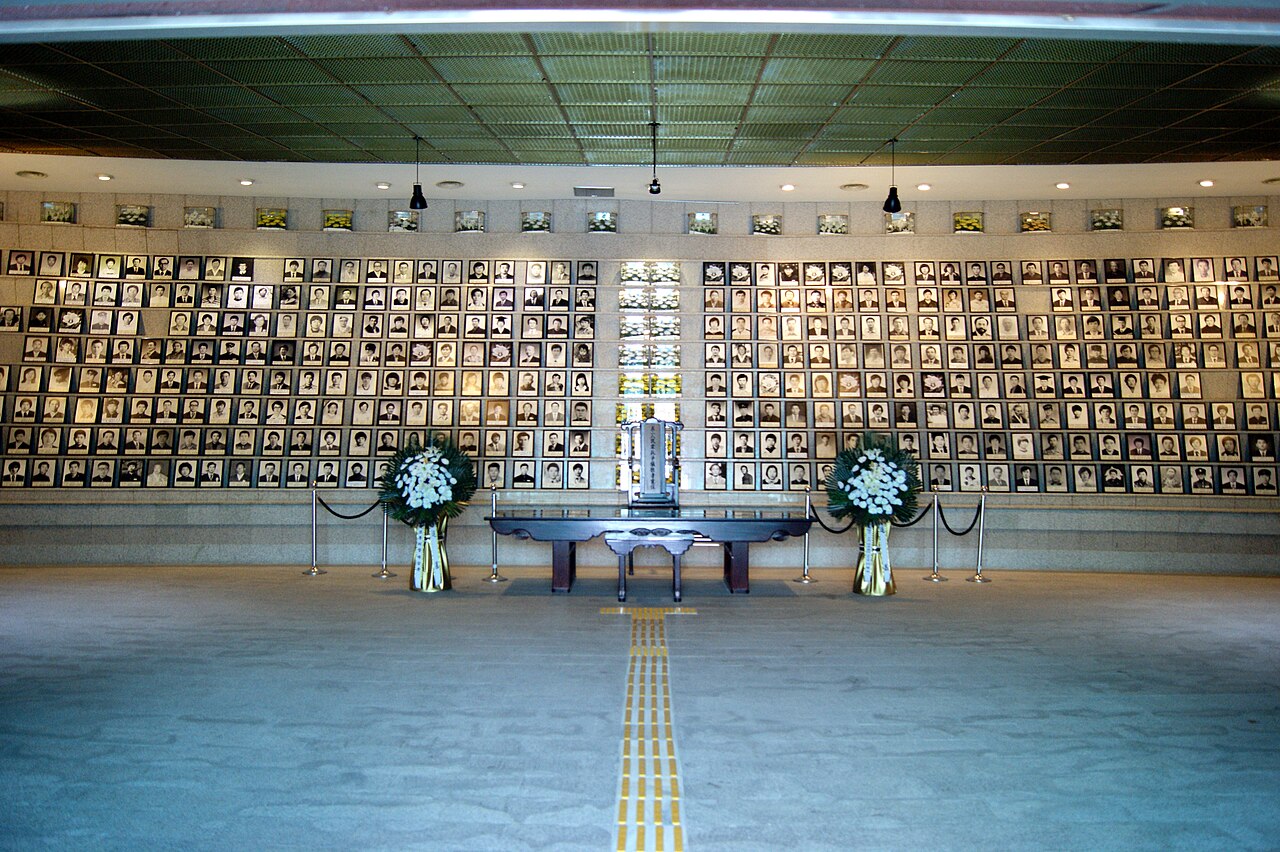
Through the initiative of the May 18 Institute of Chonnam National University in partnership with Gwangju Metropolitan City, I was able to visit the May 18th National Cemetery and pay my respects to those who gave their lives in the fight for democracy.
I will never forget one interaction I had with a lady who lived through the time of the uprising. When she found out that I was greatly interested in the Gwangju Uprising, she said that she was touched that a foreigner like me would delve into learning more about their painful history. She said that the event is very precious to the people of Gwangju and that someone from a different country wanting to know more about it made her immensely grateful. Everyone I met in Gwangju, upon learning that I was doing research on the said movement, always greeted me with such warmth and enthusiasm, and were willing to go to lengths to help me find more resources. They want the story to continue to spread so that it will not be forgotten.
To remember means to place great value on the sacrifice of the people who fought for justice and democracy. To remember means to let their legacy live on. To remember means to protect what was once denied. To remember means to prevent history from repeating itself.
On December 3, 2024, news of martial law came out. It was unexpected. I thought to myself that it was such an interesting time to be in South Korea, specifically in Gwangju, and even more specifically at Chonnam National University. I remember professors saying things like “In 2024, really?” The last time martial law was declared, or at least extended, was back in May 1980, just hours before the Gwangju Uprising erupted. They couldn’t believe that such a thing was happening again. One of my professors even decided to cancel class just to be safe. Martial law is quite a sensitive topic and the fairly recent declaration triggered a memory of the “national trauma.” The people of South Korea have learned from their past and are keeping the memory of the Gwangju Uprising alive in their hearts and in their daily lives. The recent impeachment of the president who threatened the people with martial law signifies that the country’s democratic framework is working effectively and that the legacy of the democratic movement persists.
Power is with the people – not just a select few.
It never fails to amaze me that what started as a student movement sparked an outcry that changed South Korean politics and people’s perception of power and leadership. However, it cannot be denied that there are still some who refuse to believe the truth of the Gwangju Uprising and choose to defend the brutality that took place. Even so, as someone once told me, the fact that people continue to have different opinions on the uprising means that it remains relevant in South Korean society today.
After spending months in South Korea, I couldn’t help but feel deeply connected to the people of Gwangju. They stood firm in their belief and catalyzed positive change in the country. Time has passed by and remnants of the Gwangju Uprising are left – in the form of books, buildings, and the number 5·18.
5.18 is more than just a date – more than just a number.
More than just a number.
Exhibit at the Jeonil Building 245.
As South Korea navigates the uncertainty of the current political situation, may the people always remember what was fought for and why it was fought for. May the people always remember 5.18 and the heaviness it holds. May the legacy of the Gwangju Uprising live on!
Photograph by Julienne Mei Magbanua.
The Author
Julienne Mei Magbanua was an exchange student at Chonnam National University majoring in political science. She is a Christian and her main goal is to reflect God’s light to the world in everything that she does. One of the ways in which she shares this is through music. As a singer-songwriter, she aims to bring hope to her listeners through the music she creates. Instagram: @_teresa.music