


Uldolmok and Admiral Yi Sunsin
By Park Nahm-Sheik
Uldolmok (울돌목) is a wild whirlpool of a strait off the coast of Haenam on the southwestern tip of the Korean Peninsula. To be more precise, it is in the vicinity of Ttangkkeut-maeul (땅끝마을) in the township of Songji. Parenthetically, Ttangkkeut-maeul also goes by the Sino-Korean designation of Tomal (토말), both meaning “land’s end village.” Ul, dol, and mok of “Uldolmok,” respectivelymean “crying/wailing,” “swirling/whirling,” and “bottleneck,” which together denote a “challenging passageway.” Uldolmok is often known as Myeongnyang (명량), which happens to be its Sino-Korean rendering. These two words thus are two of a kind, so to speak. I personally prefer “Uldolmok” to “Myeongnyang” for the simple reason that the former is of pure Korean heritage, as opposed to the pedantic Sino-Korean tone of the latter.
Back to our main topic here, Uldolmok is where Admiral Yi Sunsin scored the greatest naval victory of his illustrious career back in 1589 C.E. Quite significantly, Uldolmok happens to rank up there with Trafalgar of the British Isles as one of the most renowned sites of naval warfare in human history. Yi Sunsin’s rout of the Japanese invaders is genuinely on a par with Horatio Nelson’s wiping out of the invading Napoleonic armada. This is why Yi Sunsin is sometimes referred to as “the Horatio Nelson of the Orient.” To be fair, however, it should be the other way around, should it not? For Yi Sunsin’s feat preceded Nelson’s by around two centuries. Their dates speak for themselves: 1545–1598 for Yi Sunsin vs. 1758–1805 for Horatio Nelson.
By the way, it may be suggested here that “Uldolmok” should take the place of “Myeongnyang” in public discourse in this country. The Sino-Korean designation “Myeongnyang” sounds way too groveling or bootlicking toward the cultural legacy of China, doesn’t it? That is, unless you believe that China really is Korea’s big brother. Be that as it may, Uldolmok was the scene of Yi Sunsin’s most memorable triumph. Wave upon wave of battle-hardened Japanese invaders attempted to overpower Korean positions all along the southern coast of the country, including the vicinity of Uldolmok. Yi Sunsin had under his command a mere dozen jerry-built seacraft. Despite a distinct disadvantage in number and size of battleships, he ended up overwhelmingly routing the invading Japanese fleets time and again. How such operations succeeded is simply beyond belief. It is, indeed, utterly beyond description.
There is also the movie Myeongnyang (English title: The Admiral: Roaring Currents), based on this storied naval engagement at Uldolmok (aka Myeongnyang). On the lips of die-hard movie fans, this has become one of the most talked-about domestic films of all time. It deserves to be the highest grossing Korean movie of all time that it has eventually ended up being. A genuine blockbuster GOAT movie, as it were. Let’s keep in mind here that Yi Sunsin had under his command a flimsy fleet of a bare dozen vessels pitted against the Japanese juggernaut of 300-plus dreadnoughts. Believe it or not, this movie hauled in 127.9 billion Korean won, making it the greatest box-office hit of all time in Korea. Indeed, this does have a lot to say about Yi Sunsin as the most revered hero of the nation.
Despite the dubious seaworthiness of his fleet, however, Yi Sunsin was able to thoroughly outwit and rout the Japanese invaders. He literally handed them a sea burial, which only served them right. Yi Sunsin was able to deploy the wrath of Uldolmok to send the vile foes from Japan on a one-way descent to a permanent resting place on the sea floor. Anyway, the wild currents of the Uldolmok strait did not turn a blind eye to the plight the country was in vis-à-vis the invaders from across the East Sea. Evidently, even Heaven didn’t look the other way when the country was in the direst of straits.
In the face of Uldolmok, the Japanese must have found themselves at their wits’ end. The sheer power of Uldolmok must have sufficed to scare the life out of them. For all their bravado, they must have been so frightened as to want to turn tail and seek sanctuary somewhere nearby. They must have prayed for an immediate cessation of hostilities.
Of course, “Uldolmok” and “Myeongnyang” refer to one and the same place. And they may often be regarded as two of a kind. As far as I am concerned, however, “Uldolmok” is much nearer and dearer to my heart and soul than is “Myeongnyang.” While we are at it, let’s note that Uldolmok is in the vicinity of Ttangkkeut (or Tomal). Needless to say, I prefer Ttangkkeut” to Tomal” for exactly the same reason that I prefer “Uldolmok” to “Myeongnyang.”
The Author
Park Nahm-Sheik is a native of Gwangju. After graduating from Chonnam National University, he went on to receive a master’s degree at the University of Hawaii and a PhD (applied linguistics) at Georgetown University, both in the U.S. Upon completing an illustrious career at Seoul National University, Prof. Park served as president of the International Graduate School of English.
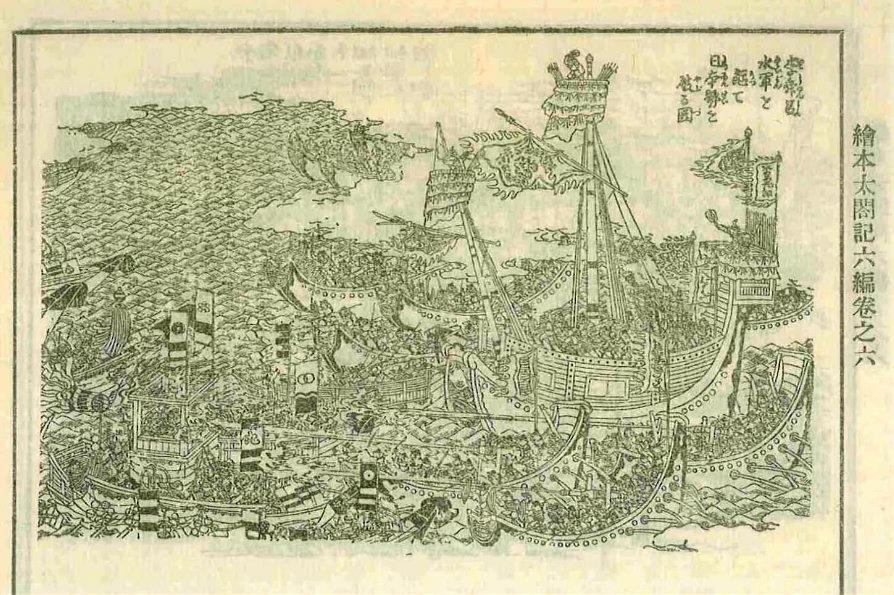
Cover Photo: Joseon Era depiction of the Battle of Myeongnyang.