

Gwangbok-jeol: 80 Years of Liberation – Our Journey Continues
By Park Yeonju
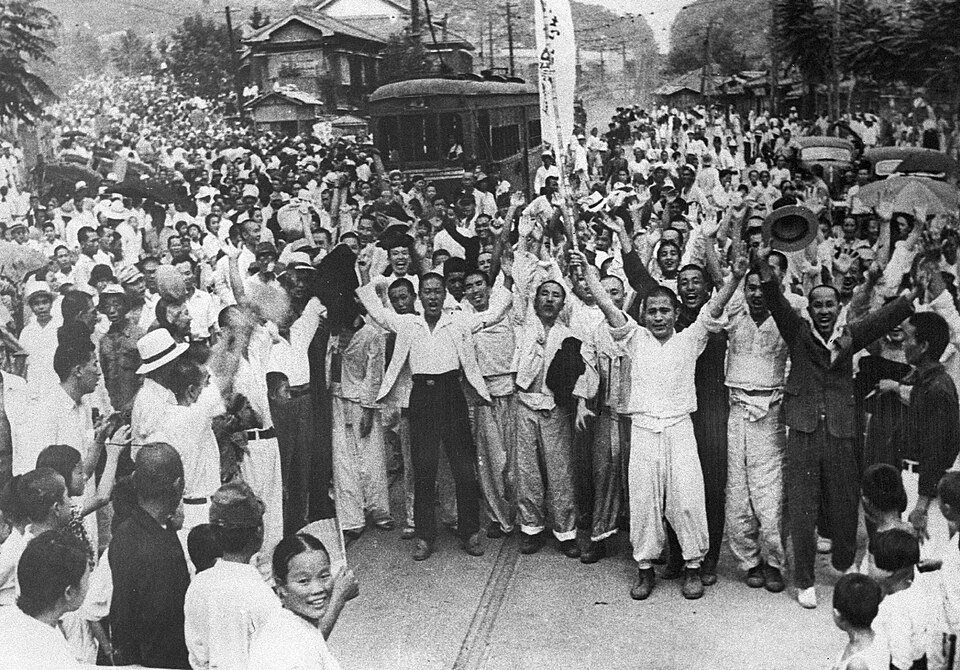
In 1945, a cheer echoed throughout the land. Korea had finally escaped the sorrow of losing its nationhood and welcomed the complete restoration of independence. Gwangbok-jeol, which means “restoration-of-light day” is the national holiday celebrated on August 15, marking the day Korea was liberated from Japanese colonial rule.
But this year is more than just another red-letter day on the calendar. It marks 120 years since the Eulsa Treaty of 1905 with Japan, a painful chapter in our history, as well as the 90th anniversary of Korea’s liberation and the 77th year of the formal establishment of the Republic of Korea. Eighty years ago, we regained our freedom from 36 years of repressive Japanese colonial rule.
Independence has been restored. Yet we know this: Liberation is not complete. The Korean Peninsula remains divided. Unified sovereignty is still unfinished. Reunification, once a national goal, has faded from view. The dream of true independence and a fully restored homeland, as imagined by the Korean Provisional Government (active during the colonial period), has yet to be realized.
Today, the legacy of liberation lives on, not just in monuments or national holidays but in our language, our identity, and our democratic values. The sacrifices of those who fought for freedom laid the foundation for a nation that would rise from the ashes, transform into a democracy, and emerge as a global economic and cultural force. We speak Korean freely (suppressed during colonial rule). We choose our own leaders. We tell our own stories. These are the gifts of Gwangbok – the restoration that previous generations fought for.
“Today, the legacy of liberation lives on … in our language, our identity, and our democratic values.”
To mark the 80th anniversary of Korea’s liberation, the Ministry of Patriots and Veterans Affairs plans to promote a wide range of initiatives under the vision of “80 Years of Liberation: A United Republic of Korea Through Patriotism.” First, the ministry is launching nationwide commemorative programs to honor and carry on the spirit of the independence fighters and to strengthen recognition and support for those who contributed to Korea’s liberation.
Starting with the National Debt Repayment Movement in January, a series of monthly events titled “This Month’s Independence Movement” are being held throughout the year across the country, delivering a message of national resilience and unity to all regions of Korea. In Gwangju as well, various commemorative events have already been held to honor this historic milestone, engaging youth and local communities in remembering the spirit of independence and patriotism.
To also mark the 80th anniversary of liberation, the Battle of Bongo-dong, where the Korean independence army defeated Japanese forces in 1920, will be reenacted as a water gun festival on August 15 in the Goryeo-in Village in Gwangju’s Gwangsan-gu. This citizen-participatory cultural event honors the victory led by General Hong Beom-do. Participants will join a street parade carrying umbrellas decorated with the taegeuk (yin-yang) symbol and Korean flags. Following an actor portraying General Hong, citizens playing the role of independence fighters will march and, upon encountering actors playing Japanese soldiers, will shout slogans like “Long live Korean independence!” and “Long live Korea!” while squirting water with their water guns.
This reenactment of the Battle of Bongo-dong is more than just a summer event. Commemorating the 80th anniversary of Korea’s liberation, it serves as a living history lesson that remembers the past and looks toward the future. It offers a unique opportunity for citizens to actively engage with and experience the spirit of the independence movement. Far from being simple playfulness, this festival is a meaningful reenactment that allows today’s citizens to reflect on the significance of liberation. The cries of “Long live Korean independence!” echo not as mere slogans, but as powerful reminders of the noble spirit of those who sacrificed their lives for Korea’s freedom a century ago.
As Korea marks 80 years of liberation, the reenactment of the Battle of Bongo-dong is not only a tribute to the past but also a call to the future – a reminder that the journey toward true independence, unity, and peace is still ongoing. The bravery of those who once fought with rifles in the mountains now lives on in the hands of children wielding water guns, their voices echoing with the same yearning for freedom and dignity.
“The spirit of Gwangbok – the restoration of light – must now guide us toward a brighter future.”
The Republic of Korea has come a long way – from colonization and war to democracy and global influence. Yet the dream of a fully restored, united homeland remains unfulfilled. In this symbolic year, we are reminded that liberation is not a destination but a continuing mission – one carried forward not only by governments and policies but by the spirit of the people. This year’s commemorations serve as a bridge between generations: from those who sacrificed their all for independence to those who now inherit the task of protecting democracy, honoring identity, and striving for peace on the Korean Peninsula.
The spirit of Gwangbok – the restoration of light – must now guide us toward a brighter future: a future where division gives way to unity, where history teaches resilience, and where the Korean people, wherever they may be, stand proud, free, and forward-looking as one.
The Author
Park Yeonju is an undergraduate at Chonnam National University, majoring in political science and diplomacy as well as Chinese language and literature. Her third major is international development cooperation studies. She was born and raised in Gwangju and wants to promote the colorfulness of the city that she has been a part of for so long.
Cover Photo: Freedom at last! “Long live Korea!” Celebrating liberation at Seodae-mun in Seoul.