

Lessons from a May in Gwangju: A Conversation with Pitikan Sitthidej on Human Rights, Regional Challenges, and International Cooperation
By Luis Andrés ||
During the World Human Rights Cities Forum in Gwangju, the city welcomed voices from around the world committed to advancing human dignity and democratic values. Among them was Pitikan Sitthidej, the Commissioner for Human Rights in Thailand. Throughout the Forum, she did not simply participate as a representative delivering institutional remarks. She actively attended discussions, listened to debates, and engaged with conversations that connected local experiences to global human rights challenges.
Human rights work in Thailand exists within a complex political and social environment. Discussions surrounding freedom of expression, institutional reform, and democratic participation continue to shape public debate. During exchanges held throughout the Forum, Thailand participants themselves reflected on ongoing challenges faced by activists and civil society organizations.
Among the issues raised by international observers and human rights advocates is Thailand’s lèse-majesté legislation, which criminalizes certain forms of criticism directed toward the monarchy and has generated longstanding debate regarding freedom of expression and political rights. At the same time, Thailand also navigates broader social and political pressures, including domestic polarization and regional tensions that increasingly shape conversations on rights and governance across Southeast Asia.
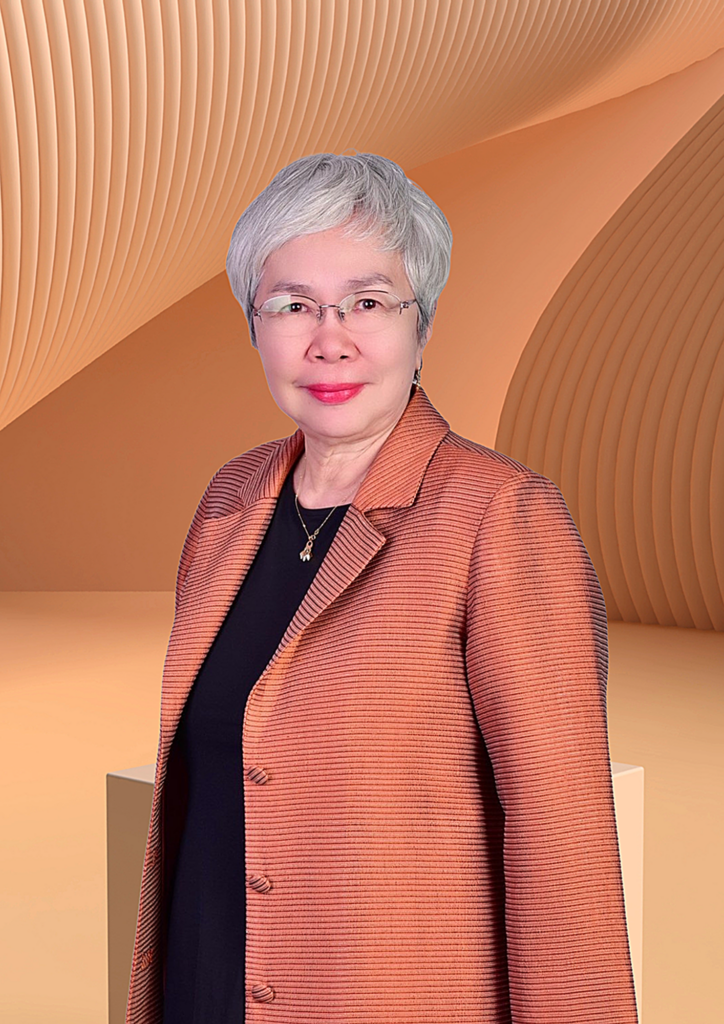
Commissioner Sitthidej. (Courtesy of Pitikan Sitthidej)
Yet Thailand also represents an example of important social transformation. Earlier this year, the country became the first nation in Southeast Asia to legalize same-sex marriage, marking a historic development for LGBTQ+ rights in the region. And this is just one example. But progress and challenges coexist simultaneously, illustrating that advances in human rights are rarely linear.
Gwangju, a city internationally recognized for its democratic legacy and commitment to human rights, offered a unique space to reflect upon these realities. Taking this context into consideration, I wanted to ask Commissioner Sitthidej a few questions. What follows are those questions and the Commissioner’s in-depth responses.
Luis Andrés: Gwangju is internationally recognized as a human rights city and as a symbol of democratic struggle. From your perspective, why are human rights cities important in advancing human dignity and democratic values globally?
Commissioner Sitthidej: I believe human rights cities genuinely improve people’s quality of life. They are a people-centered approach to advancing human dignity and democratic values, because they translate human rights principles from policy into real, tangible outcomes in the spaces closest to people’s lives: at the city and local level.
On the dimension of human dignity, a human rights city is grounded in non-discrimination, equality, the protection of vulnerable groups, and accountability in city governance and public service delivery, making rights something every person can access and experience in daily life. On the dimension of democracy, it rests on meaningful participation, access to information, and transparency, all of which strengthen democracy from the grassroots and help restore public trust in the state. Furthermore, the city is where local government shifts its role from a mere implementer of policy to an active driver of human rights: whether people can truly access their rights – like public services, safe transport, housing, the environment, and education – depends largely on governance at the city level.
Luis Andrés: During the Forum, you actively attended discussions and listened to participants from many different backgrounds. Were there any conversations or experiences in Gwangju that particularly resonated with you?
Commissioner Sitthidej: In the National Human Rights Commission of Thailand (NHRCT), we regard the people of Gwangju’s struggle for democracy as a landmark moment in the world’s history of human rights and democracy. What is most striking is how ordinary citizens, students, and the younger generation of that time stood together for democratic values with profound sacrifice. This is therefore not only South Korea’s history but a vital lesson for all humanity: that human rights and democracy are never won easily; they require courage, perseverance, and the cooperation of every sector to safeguard.
Another point we admire is how South Korean society has been able to learn from the wounds of its past, developing mechanisms for remedy, truth-telling, and remembrance, and holding the event as a shared lesson for society reflecting the importance of truth, justice, and remembrance in building a sustainable democracy. For Thailand, Gwangju is also an inspiration: a reminder that respect for human rights, the rule of law, and opening space for peaceful public participation are the essential foundations of a democratic society. Listening to people’s voices with respect for human dignity helps reduce conflict and leads toward a society that is peaceful, just, and sustainable.
“International cooperation and exchange are vital to strengthening human rights protection.”
Beyond this, from listening to and exchanging experiences with representatives from various countries, we see the situation of women human rights defenders in Indonesia as one that reflects a major challenge facing democratic societies today, particularly the pressure of deeply rooted patriarchal structures, the use of law as a tool to harass those who voice their views and defend human rights, and the sexual violence and social stigma directed at women defenders. This is deeply troubling, because it not only undermines freedom of expression and public participation, but also creates a climate of fear in which many women cannot exercise their rights safely and equally.
We therefore strongly support the proposal that cities and public agencies should establish gender-sensitive complaint mechanisms and create spaces for participation in which people can genuinely help shape policy. Because meaningful participation is not merely about being heard, it must give people real decision-making power to jointly set the direction of social development.
Luis Andrés: Thailand faces a complex human rights environment involving discussions on freedom of expression, democratic participation, and institutional challenges. From your perspective, what are currently the most important human rights priorities for Thailand?
Commissioner Sitthidej: Today, Thailand is working to ensure that human rights are understood not merely as the protection of specific, isolated rights, but as a matter of building trust, fairness, and peaceful coexistence. In setting out human rights priorities for Thailand, at least five areas stand out as ones that must be advanced in parallel.
First, protecting freedom of expression and democratic participation, which form the foundation of a democratic society. Opening space for citizens, academics, the media, youth, and civil society to express their views in good faith and without fear helps reduce conflict and builds the culture of listening that democracy requires.
Second, ensuring a justice process that respects human dignity, particularly in arrest, detention, prosecution, and imprisonment, consistent with international human rights standards, including the prevention of torture, cruel treatment, and discrimination.
Third, reducing inequality and protecting economic, social, and cultural rights. Human rights are not limited to political freedoms; they also include access to education, public health, housing, a healthy environment, and fair economic opportunity, especially for vulnerable groups such as children, older persons, persons with disabilities, migrant workers, ethnic groups, and low-income communities.
Fourth, responding to human rights challenges in the digital age, from personal data and digital surveillance to disinformation, online hate speech, and the use of artificial intelligence. Both the public and private sectors must develop regulatory mechanisms that balance security and safety with people’s rights and freedoms.
Fifth, cultivating a culture of human rights in the everyday life of Thai society. The protection of rights becomes sustainable not through laws or independent institutions alone, but through a shared understanding that human dignity, diversity, and non-discrimination are fundamental values everyone must respect.
From the perspective of the National Human Rights Commission, human rights are not an obstacle to security or development; they are an essential condition for a society that is stable, just, and trusted by the international community. Striking the right balance between rights and freedoms, the rule of law, and the public interest is therefore a vital task that all sectors must continue to advance together.
Luis Andrés: Thailand has also experienced important social transformations in recent years, including progress regarding LGBTQ+ rights. How do you evaluate recent developments, and what areas still require further work?
Commissioner Sitthidej: Thailand has made significant progress on human rights, particularly on the rights of people of diverse sexual orientations and gender identities, reflecting change at the level of law, policy, and broader social attitudes. The advancement of gender-equality legislation, the opening of public space for greater acceptance of diversity, and the role of civil society and the younger generation are all positive signs that Thai society is moving toward a more inclusive respect for human dignity.
Despite this progress, several challenges remain that Thailand must continue to address in earnest. Foremost is making equality real in everyday life: in schools, workplaces, the public health system, and the judicial process. From the perspective of the National Human Rights Commission, the most important progress lies not merely in new laws or measures, but in the fact that society is beginning to recognize that every person deserves equal rights and treatment, free from discrimination based on their gender identity or way of life. This principle sits at the heart of international human rights and is consistent with the principle of equality under the Constitution and in so fostering ongoing public understanding.
Change in human rights becomes sustainable not through legal mechanisms alone but through a culture of respect for difference, freedom from stigma, and acceptance of diversity. Promoting the rights of LGBTQ+ people is not the concern of any single group; it is a key measure of how much a society values human dignity, equality, and democracy. Thailand’s progress here is therefore a process in which all sectors take part to build a society where everyone can live safely, with dignity, and with equal respect for their humanity.
Beyond progress on LGBTQ+ rights, Thailand faces another major transition: becoming a “fully aged society,” with varying intensity across regions. This shift has direct implications for health-service policy, long-term care for people in conditions of dependency, age-friendly urban design, and managing the economic impact of a shrinking working-age population. In response, the NHRCT has continued to advance the rights of older persons, affirming them as full rights-holders, promoting their autonomy and dignity in daily life, and preventing age-based discrimination.
The Commission also sees Thailand’s membership of the UN Human Rights Council for the 2025–2027 term as an important opportunity to advance an international instrument on the rights of older persons. The NHRCT is scheduled to attend the first session of the Intergovernmental Working Group on the Human Rights of Older Persons (IGWG) in July 2026 in Geneva to help shape an appropriate draft convention that would close legal gaps on key issues such as adequate income, the ability to age in place with quality of life, and preparedness across all generations.
Luis Andrés: Participants during the Forum also mentioned challenges related to conflict and security, including tensions in southern Thailand. At the same time, regional dynamics, including relations with neighboring countries such as Cambodia, continue to shape Southeast Asia. From a human rights perspective, how can institutions balance security concerns while protecting rights and democratic principles?
Commissioner Sitthidej: As the National Human Rights Commission, we believe that security and human rights should not be seen as being in conflict; rather, they must move forward together. Building lasting peace and stability must rest on respect for human dignity, the rule of law, and democratic principles.
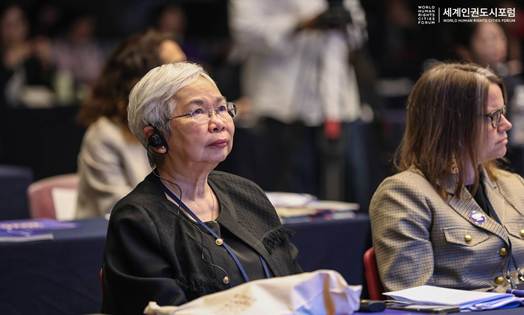
Commissioner Sitthidej participating in the World Human Rights Cities Forum. (Courtesy of WHRCF)
In situations of conflict or heightened security tension, the state has a duty to protect the safety of its people; yet, at the same time, the exercise of state power must remain within the framework of the law and international human rights standards. Any security measure should be grounded in the principles of necessity and proportionality, with effective checks and balances to prevent human rights violations. A sustainable solution requires emphasis on building trust alongside listening to people’s voices, peaceful dialogue, respect for international law, and attention to the human rights impact on the public. Because peace cannot be built on security measures alone, it must rest on social justice and the protection of human rights as its essential foundation.
Ultimately, a strong democratic society is measured not only by its ability to confront threats, but also by its ability to protect the rights and freedoms of its people, even in times of security challenge, for human rights and democratic principles are the essential foundation of lasting peace and security.
Luis Andrés: Human rights institutions often operate in contexts where social expectations, political realities, and institutional constraints coexist. How do international cooperation and dialogue contribute to strengthening human rights protections in these environments?
Commissioner Sitthidej: International cooperation and exchange are vital to strengthening human rights protection, especially where national human rights institutions (NHRI) must work amid public expectations, institutional constraints, and complex political contexts. Such cooperation opens space for mutual learning: Each country faces different challenges, yet all share the goal of protecting people’s rights, and exchanging good practices, lessons learned, and effective mechanisms helps institutions build capacity and adapt approaches to their own context. It also helps establish shared human rights standards and reinforce universal principles, like the rule of law, equality, non-discrimination, and public participation, which remain a compass for an NHRI’s work even under political constraints or security challenges.
For Thailand, engaging in international and regional forums is an important chance to reflect on its progress, challenges, and efforts, and to affirm that protecting human rights is not any one country’s task but a shared responsibility of the global community. Since 2025, the NHRCT has continued its international human rights work, cooperating with networks at the global, regional, and sub-regional levels through meetings and activities that track key developments, exchange good practices, and reinforce its role as an independent institution under the Paris Principles. It has also monitored Thailand’s compliance with international obligations through mechanisms, attending and observing treaty body reviews, and most recently, preparing and submitting an Alternative Report to Thailand’s fourth-cycle Universal Periodic Review (UPR) in April 2026. The NHRCT engages with UN agencies, international organizations, NGOs, and diplomatic missions on issues spanning civil and political rights; economic, social, and cultural rights; the rights of vulnerable groups; and digital and technology rights, drawing on diverse cooperation mechanisms to advance and protect human rights in Thailand in line with international standards.
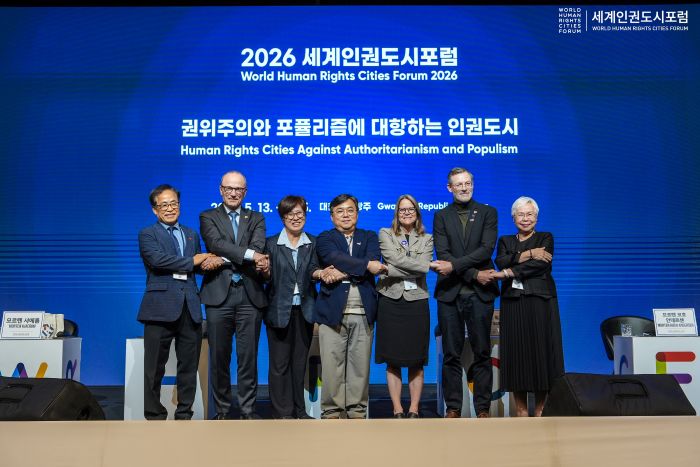
Commissioner Sitthidej with fellow panelists at WHRCF 2026. (Courtesy of WHRCF)
Luis Andrés: As a woman working in international human rights leadership, what experiences or perspectives have shaped the way you approach your work?
Commissioner Sitthidej: Having worked at both the national level and in international forums, I have come to believe in the power of national and international networks to reinforce and support one another. These experiences have shaped how I think and how I work, particularly in work that demands firmness in principle and empathy for people at the same time.
Over the years, I have listened to the stories of many people – women, children, ethnic groups, detainees, victims of crime, and others in vulnerable situations – many of whom have faced inequality, discrimination, or various forms of violence. These experiences have taught me that protecting human rights is not only a matter of laws or policy mechanisms, but of listening with understanding and truly respecting human dignity. My work has therefore aimed not merely at solving isolated problems but at creating safe spaces, giving people the chance to be heard, and promoting the participation of all sectors, especially those too often overlooked.
At the same time, working in a leadership role has taught me that strength does not mean confrontation alone. It also lies in the ability to build cooperation across sectors, to communicate constructively, and to bring together people of differing views so they can talk on a basis of mutual respect. I also believe that a greater role for women in policy arenas and decision-making is essential to advancing democratic society and protecting human rights because it makes policymaking more diverse, inclusive, and attentive to the impact on people across every dimension, whether gender equality, economic and social rights, safety of life, or access to justice.
Luis Andrés: For younger generations across Asia who want to contribute to human rights and democratic values, especially in environments where advocacy can be difficult, what message would you like to share?
Commissioner Sitthidej: My message to the younger generation is this: Your energy matters enormously to the future of human rights, democracy, and a society that respects human dignity. In many contexts, speaking out or working on human rights may meet constraints, pressure, or challenges, yet the voice and participation of young people always carry value and meaning.
I also hope you will believe that promoting human rights is not confined to large-scale movements; it can begin with small things in everyday life: respecting difference, refusing to discriminate, listening to diverse views, protecting those who are bullied, or using facts and reason constructively in how we speak to society. These are the very foundations of a democratic culture. Young people also have a vital role in harnessing technology, creativity, and the power of social networks to deepen understanding and awareness of human rights.
And even when change comes slowly, every voice, every effort, and every action grounded in justice and humanity helps move society forward. Because the future of human rights and democracy will grow through the power of the younger generation.
Luis Andrés: Finally, looking toward the future, what kind of legacy or long-term contribution would you hope your work can leave behind?
Commissioner Sitthidej: As a national human rights commissioner, I hope my work has not been merely about resolving individual cases, but about helping to address systemic and structural problems, and about helping to root a culture of human rights deeply in Thai society and the wider region. That is, a society in which people recognize that human rights are neither remote nor the concern of only a few, but a basic principle bound up with everyone’s daily life, whether the right to human dignity, equality, freedom of expression, access to justice, or the right to social and political participation.
I also hope that working alongside state agencies has helped make public institutions and mechanisms more transparent, accountable, and responsive to people’s voices, especially vulnerable groups and those too often overlooked. Because sustainable human rights protection must rest on participation, trust, and equal access to justice.
In concrete terms, my work has placed particular emphasis on building a sustainable system to prevent torture, driving serious enforcement of the Prevention and Suppression of Torture and Enforced Disappearance Act B.E. 2565 (2022), developing preventive monitoring of places of detention, and pressing for Thailand to accede to the Optional Protocol (OPCAT) to protect the dignity of persons in custody. This has gone hand in hand with promoting the rule of law in the criminal justice process, reducing inequality and discrimination, and safeguarding the right to bail and the presumption of innocence. I have also encouraged the business sector to move beyond the traditional notion of corporate social responsibility toward respecting human rights and conducting comprehensive human rights due diligence across the supply chain, in line with the UN Guiding Principles on Business and Human Rights (UNGP).
I also helped initiate the concept of “Human Rights Cities” together with the Bangkok metropolitan administration, expanding it to the provinces, using human rights principles as the framework for people-centered city governance and development. My hope is that these foundations will be carried forward to bear concrete and lasting results.
The Author
Luis Andrés González is a Mexican GKS scholar and master’s student in cultural anthropology at Chonnam National University. He advocates for LGBTQ+ rights and gender equality, and explores global affairs through pop culture. He is the founder of Erreizando, a digital magazine. Instagram: @luisin97 / @erreizando
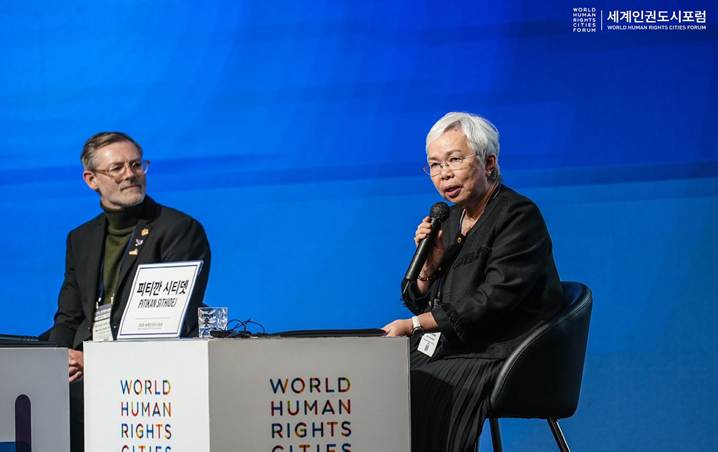
Cover Photo: Commissioner Sitthidej speaking during a WHRCF panel discussion. (Courtesy of WHRCF)