

WHRCF: Bangladesh’s July Uprising Finds a Voice in Gwangju – Celebrating Gwangju’s May Uprising with the Spirit of Our July Uprising
By Farhana Binte Jigar Farina, Speaker at the 2025 World Human Rights Cities Forum
From being targeted as a criminal by the fascist government to becoming one of the frontliners of the July uprising and representing Bangladesh at the World Human Rights Cities Forum (WHRCF) in 2025, there are several interesting twists in my story. As a politically woke student, I, along with my fellow mates, were always keen to learn about various revolutions and uprisings. These events inspired us to speak out against the fascist government, knowing of the possible horrible consequences.
The invitation to WHRCF 2025 being held in Gwangju, approximately 10 months after our historic uprising, made it such a magical experience for me to witness how a country looks so many years after their uprising. Could they actually bring about the changes they fought for? How do they celebrate? How did they gain legitimacy, and everything else?
The political turbulence and constant need for stability after our emancipation on August 5, 2024, was not easy to deal with. To break out of the old shackles that enabled the government to turn fascist, to change an ineffective constitution, to bring about a paradigm shift in our country’s political scenario, we, the student leaders, had to face challenges from a variety of dimensions. Amidst such a situation, when I came to Gwangju, it was wonderful to see that even though it took time to attain ultimate legitimacy for their May uprising, Gwangju was able to do it.
“To break out of the old shackles that enabled the government to turn fascist… we, the student leaders, had to face challenges.”
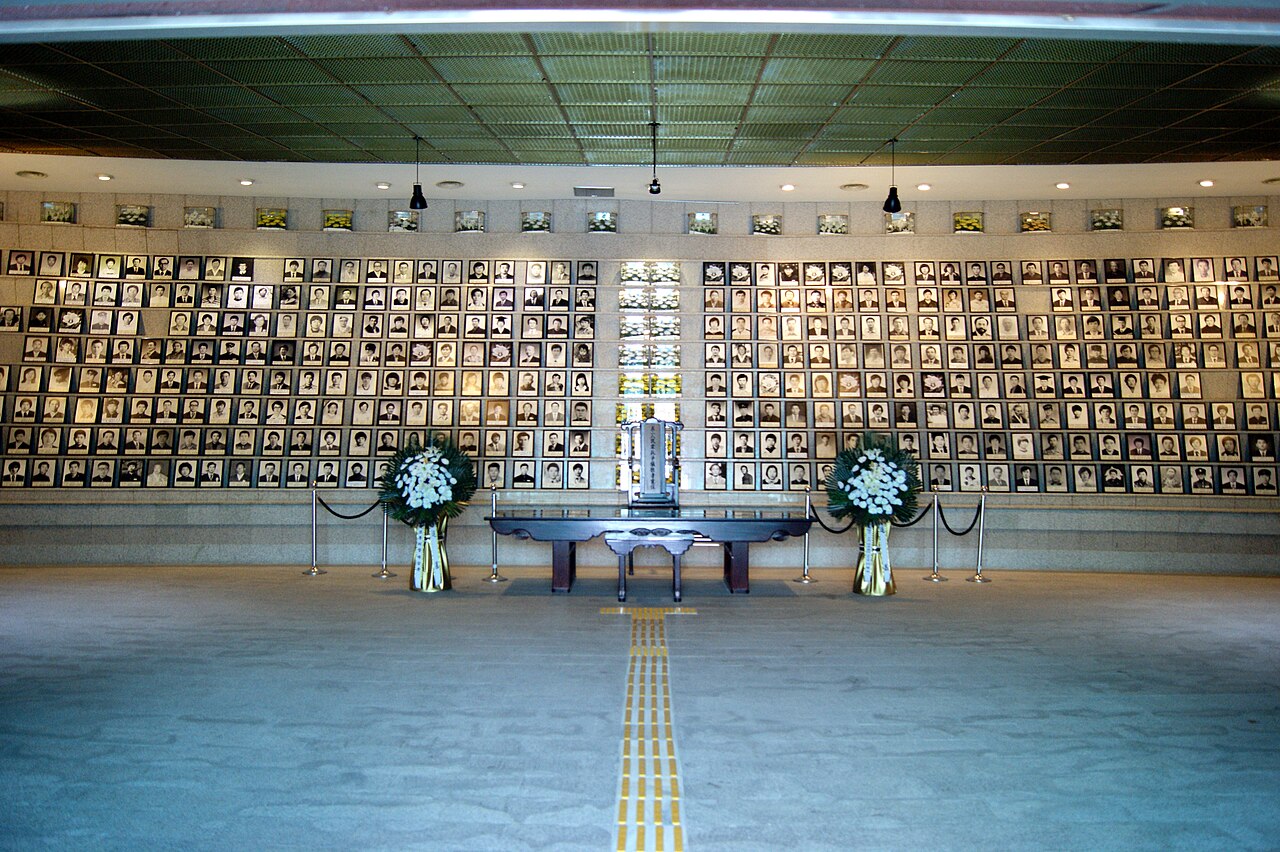
It was inspiring to see the memorial park and the May Uprising Plaza. Every tiny detail of how the uprising took place: how the bullets were shot into the newspaper office building and onto students, bullets shot from helicopters, women helping the protesters by making food for them – everything was portrayed in several ways. Having similar experiences and many more, I strongly aspired to preserve our Bangladeshi uprising in such a way – demonstrating how the government killed innocent students, how its investigative police secretly tortured our coordinators, how female students broke the curfew and built resistance.
I wasn’t a political student, yet I was politically adept and could understand the ethical and moral discrepancies that were coming to light in my country. As an activist from my childhood, I always wanted my country to truly develop and enrich itself with what we already had. I never aspired to have capitalistic technological equipment, rather I dreamed of innovation in our agricultural sector and proper conditions for our rural people. Among all our political leaders, most of whom were constantly craving for power or being in government, there was one person with an enormous amount of knowledge and aura, skill and ideas much needed by our country. He was Dr. Mohammed Yunus, the present interim leader of Bangladesh. It was meticulously designed by all student leaders that we were going to have a new country free of greedy political leaders. We now have the gem of our country, the only Noble Prize winner from Bangladesh, as the interim leader to take care of our country.
The Author
Farhana Binte Jigar Farina is a Bangladeshi student activist. She participated in anti- deforestation campaigns, the 2018 road safety movement, and coordinated the 2024 quota reformation movement. Realizing politics was the root of every societal problem, she entered political life while studying at Jahangirnagar University’s Institute of Business Administration. She enjoys debate and chess tournaments.
Cover Photograph courtesy of the World Human Rights Cities Forum.