AJAR Awarded the Gwangju Prize for Human Rights: An Interview with Patrick Burgess

The May 18 Memorial Foundation initiated the Gwangju Prize for Human Rights in the year 2000 to honor individuals, groups, or institutions that have contributed to the promotion and advancement … Read More

Gwangju: Stepping Up to Fill the Human Rights Vacuum

By John Feffer The United States, under Donald Trump, has stepped back from the role of promoting democracy and human rights that it has selectively pursued for several decades. Over … Read More

Addressing Korea’s Low Birth Rate: 3-Plus Family Benefits for Foreigners

By Saqib Sharif South Korea has long grappled with a declining birth rate, prompting the government to introduce various financial incentives to encourage larger families. These benefits include discounts on mortgage interest rates, subsidies … Read More

Martial Law Crisis in South Korea: Does the Past Help the Present? – May 2025

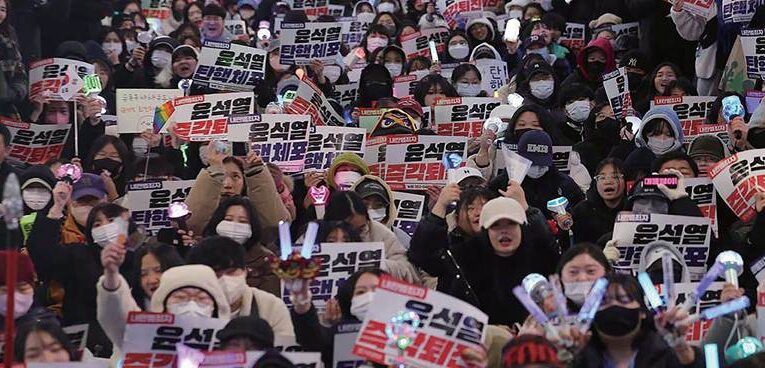
By Shin Gyeonggu In December 2024, as South Korea faced a political crisis with the declaration of martial law by President Yoon Seok Yeol, the nation was confronted with a … Read More

Peace and Solidarity: Human Rights Cities Acting for Conflict Prevention and Peacebuilding

By the WHRCF Secretariat Gwangju Hosts WHRCF 2025 The 2025 World Human Rights Cities Forum (WHRCF 2025) will be held on May 15 to 17 at the Kim Daejung Convention … Read More

Midnight Martial Law and Defense of Democracy – February 2025

By Park Yeonju “10:23 p.m., December 3, 2024. In the Presidential Office in Yongsan, Seoul, South Korea President Yoon Suk Yeol declares martial law without any prior notice.” “My fellow … Read More

As the Clock Strikes Midnight: A 2025 New Year’s Reflection – January 2025

By Yousra Feriel Drioua The dawn of a new year traditionally brings the comforting hope of resolutions – aspirations to live better, to be more productive, or finally master a … Read More

Tapped Out

As you might have heard, “the well running dry” pretty much sums up the situation that Gwangju is facing right now. When the inevitable water restrictions come to pass, it will be an inconvenience that will have us looking back fondly of the good old days of mere trucker strikes and Covid-19 lockdowns. It will also be a chance to examine, on a granular level, how we got into this mess in the first place.