


AJAR Awarded the Gwangju Prize for Human Rights: An Interview with Patrick Burgess
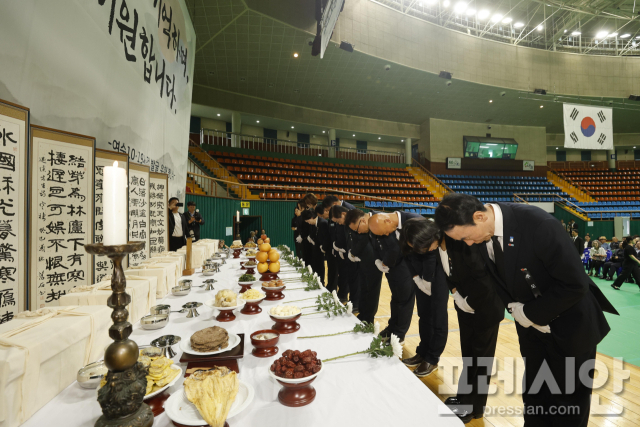
The May 18 Memorial Foundation initiated the Gwangju Prize for Human Rights in the year 2000 to honor individuals, groups, or institutions that have contributed to the promotion and advancement of human rights, democracy, and peace, commemorating the spirit of the May 18 Democratization Movement.
The non-governmental organization Asia Justice and Rights (AJAR) was awarded the 2025 Gwangju Prize for Human Rights in recognition of its unwavering commitment to restoring human rights and building peace across Southeast Asia. Based in Indonesia, AJAR has worked extensively in countries such as East Timor, Myanmar, Thailand, and Bangladesh, supporting victims of state violence and large- scale human rights abuses.
Mr. Patrick Burgess was kind enough to set aside his time to meet with the Gwangju News just prior to the Gwangju Prize awarding ceremony. We present you with that interview:
Gwangju News (GN): Thank you, Patrick, for granting this interview. Would you first introduce yourself briefly for our readers?
Patrick Burgess: Yes, I am an Australian lawyer. I used to be a barrister, and I was the senior member and, for a time, the acting head of the Australian refugee tribunal. I have been living in Asia for 30 years, and I’ve been working on mass atrocities and human rights for more than 35 years. I was also the director of human rights for two United Nations peacekeeping missions in Timor-Leste, and I have been a transitional justice expert in more than 20 countries.
GN: Can you describe the founding vision of AJAR and how it has evolved since its establishment in 2010?
Patrick Burgess: About 15 years ago, Galuh Wandita and I decided to form AJAR (Asia Justice and Rights) because the word ajar means “to teach” or “to learn” in Indonesian. We set up our base in Jakarta, and we wanted to form an organization that worked not in just one country but across the region, looking at human rights violations in the form of mass atrocities. The lessons that can be learned are how to deal with mass atrocity, how to achieve truth and justice, and how to pass those messages on. There are also many lessons we can learn and teach from Gwangju’s experiences.
Dealings with mass atrocities were centered mostly in Europe, North America, Latin America, and South Africa. But we found many cases of mass atrocities in Asia. That’s why we formed Asia Justice and Rights, and we set it up with its headquarters in Jakarta because Jakarta has the secretariat for ASEAN.
GN: What strategies does AJAR employ to support communities affected by large-scale human rights violations, particularly in regions like Myanmar and Timor-Leste?
Patrick Burgess: AJAR’s mission is to work with human rights defenders, to help survivors form groups to link to each other, to find their voice, to strengthen their voices, to teach about international human rights, and to link them to the United Nations, the international criminal court, and other mechanisms. Our job is to bring people together to empower them, educate them, and then continue to support them in their struggle in their own countries.
AJAR has worked very closely in Timor-Leste. I myself went there in 1998 and was hired by the United Nations to help with the ballot for independence. I went there for three months, but when everything fell apart and there was mass violence, I stayed for six years. And that’s where Galuh Wandita and I started to work together.
Since that time, we have continued to work in Timor-Leste. We worked there when the violence was very bad and when everything was destroyed. We continued to work as the democracy was built. Even today, we have an academy for human rights, teaching school children and university students about what took place, about how to recognize its root causes and authoritarianism, and how to fight corruption and nepotism.
In Myanmar, we face a serious situation where severe mass atrocities are being committed on a daily basis. The military junta received about six percent of the vote in the election at the end of 2020. They claimed that it was fraudulent. The European Union and others said it was free and fair. But the military junta took over the entire country.
What’s amazing and inspirational is that the people are saying they will never accept this military junta. We will not accept the junta, which locked up and tortured to death around 2,000 young people and others who were demonstrating.
“We have projects supported by the European Union, the Swiss government, and some other governments and foundations.”
But now, step-by-step, the people have banded together and learned how to fight – ordinary people like in Gwangju, taxi drivers and housewives are bonding together. In Myanmar, the lawyers, the students, the musicians, and the actors are carrying guns though they don’t want to bear arms. The people have won back more than fifty percent of the country so far. So it’s a great honor to stand beside them. We have a team, a Burmese pop group on the Thai-Myanmar border.
We have another team in the Bangladesh refugee camps with the Rohingya people. More than 1.5 million of them are living in refugee camps, having been attacked and killed and raped by the Burmese military and driven out of the country in an act of ethnic cleansing. And we have another team in Jakarta working on advocacy with ASEAN countries and with the ASEAN secretariat.
GN: I wonder how you handle financing your enormous projects and recruiting talented people to work with you.
Patrick Burgess: Yes, it’s always been a struggle to receive sufficient funding for human rights work. And now in the last six months to a year, it’s become much more difficult, especially with the United States changing their policy, and some of the European governments cutting back. AJAR is supported by a broad range of donors. We have projects supported by the European Union, the Swiss government, and some other governments and foundations.
We have an office in Jakarta with a training center, a human rights center in Bali, an office in Timor- Leste, one office on the Thai-Myanmar border, and one in Bangladesh. We also have a small office in Sydney, Australia, that acts as a support office to raise funds and support for our work. So it’s always a struggle to raise enough funds. I think that it is very helpful that we decided to be based in Jakarta and in other offices in the Asian context, where the price of an office and the staff salaries are much lower than in other countries.
We try to run things like a family. So we care for each other. We use music and theater and film; we often go away together, if we can, to work on issues with our counterparts and survivors. And so, people like to work for AJAR. They feel that it nurtures them, and we have a very flat structure.
We don’t operate in a top-down way, and I think that’s the key to us being able to recruit and maintain wonderful staff.
We do spend a lot of time preparing proposals applying for funding and then, of course, reporting to donors. That’s a part of the human rights work. But we find that the more good work we do, the easier that becomes, but in this day and age, for all human rights organizations, it’s a struggle.
GN: How does AJAR utilize media, such as film and social media, to promote your cause at this time of digital media?
Patrick Burgess: In this world of mass media, we have to recognize that information flows in a different way than it has in the past. People are reading less, and they’re watching more. Young people listen to music more than ever.
Almost all day we use music. I’m also a professional musician, a songwriter, and a lot of my songs focus on storytelling about justice and human rights issues. I have a song about a taxi driver in Jakarta. I have one set in Cambodia, and one in Myanmar that will come out soon. I don’t have one yet about South Korea, but maybe I should write a song about Gwangju.
We also use TV films. We have a recent film about the Rohingya that’s just won its fourth prize. We gave Rohingya refugees cameras to film their own life in the camps, and we put that together. And I was the producer of that film. It’s called More Than a Refugee, meaning that we often put the label “refugee” on people, but each one of them is much more than that. This film was shown in New York last week and will be shown in Finland this month, as it’s won awards in both New York and Finland.
GN: What additional projects would you like to share with the Gwangju News readers?
Patrick Burgess: We have a number of projects that I’m very proud of. One of them is the project of the stolen Timor-Leste children during the military occupation by the Indonesian military. With no journalists allowed in there, the Indonesian military began the process of taking children from their families, and they took many thousands of children from their families. Some were used as extra help in households.
The awarding of the Gwangju Prize for Human Rights’ 2025 Special Prize to Dap-ayan ti Kultura iti Kordilyera (DKK; People’s Center for Cordillera Culture) for its work in defending indigenous rights and preserving collective memory through cultural expression.
A few were helped. Many were abused, and they took them to Indonesia. The families never heard from their child again. So AJAR, 30 years later, has been very slowly and with a lot of effort tracing these children in Indonesia.
If these stolen children can remember their village name – many of them can’t – we try to trace the family and bring them back to rejoin their family. We found about 200 so far, and there’s been a great reconciliation between the two countries for the past evil done.
We also have one flagship program called Stones and Flowers for victims of sexual assault. That’s a process because you can find stones and flowers in every village. The program is part of AJAR’s broader effort to address impunity, promote healing, and empower survivors through participatory action research and community- based healing methods.
People use Stones and Flowers to explore their stories. We record those stories, with their storyteller’s agreement, and share them with others. We’ve worked with more than 1,000 survivors of sexual violence across Asia.
GN: What messages do you want to share with the citizens of Gwangju at this time of the 45th anniversary of the May 18 Democratization Movement?
Patrick Burgess: The example of Gwangju is incredibly important for this region, and for the whole world, because we need examples of where it has been successful, where we’ve overcome authoritarianism, and where we’ve achieved a democracy. Now we see this movement to denial: There are Germans saying that the Holocaust never happened. There are Cambodians saying that the Khmer Rouge massacre never happened. There are Indonesians denying that the massacre of one million people by Soeharto never happened and wanting to make him a hero.
There are all these issues that are in danger of being undone because the truth of the past is not being diligently supported. The courage and inspiration of those who fought for democracy is not celebrated. In Gwangju, however, I see that. This is one of the best examples anywhere in the world. And I’ve been working on this for a long time, and I will take that with me. The Gwangju Prize for Human Rights is also a wonderful symbol. I’m in great debt to Gwangju for the lessons that the people of Gwangju have given me.
Interview conducted by Dr. Shin Gyonggu.
Photographs courtesy of The May 18 Foundation.