



Sports Focus: Tigers Rebuild Identity Through Competition and Flexibility
By Zhang Jiuzhou (Julius) ||
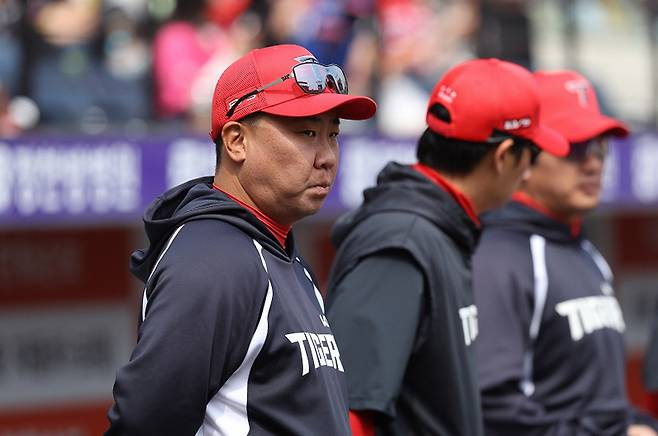
The Kia Tigers have quietly reshaped their trajectory this season, turning an uncertain start into a steady climb built on structural change rather than short-term fixes. Early concerns over bullpen inconsistency and lackluster offense have not disappeared overnight, but the team’s recent performances suggest a deeper transformation is taking hold – one centered on accountability and adaptability under Manager Lee Bum-ho.
Long viewed as a manager who valued continuity and trust, Lee has shifted decisively in 2026. Instead of relying on established hierarchies, he has introduced a system where playing time is tied directly to current form. Past achievements now carry less weight; what matters is how players perform in the present. This recalibration has altered not only selection decisions but also the overall atmosphere within the clubhouse, where competition has replaced comfort as the dominant tone.
The impact has been particularly visible in offensive strategy. Rather than maintaining a fixed batting order, the Tigers have adopted a more fluid approach, adjusting lineups based on matchups and player condition. This flexibility has allowed the offense to function more evenly across the board. The burden is no longer concentrated on a few key hitters; instead, production is distributed, making the lineup less predictable and more difficult to contain. As a result, opposing pitchers are forced to navigate a deeper, more balanced order with fewer clear points.
At the core of this shift is a new internal logic: Opportunity must be continuously earned. The once-clear divide between starters and backups has largely disappeared. Even players with strong reputations are no longer guaranteed extended runs if their performance dips. Conversely, younger players or those previously on the fringe are being given meaningful chances when they show readiness. This merit-based approach has naturally increased internal tension, but it has also sharpened focus and raised the overall competitive standard within the squad.
The bullpen overhaul best illustrates this approach. Veteran relievers such as Jung Hai-young and Jeon Sang-hyeon, who had been fixtures in high-leverage situations, were moved out of the main rotation after early struggles. In their place, the team has relied on pitchers displaying sharper command and improved conditioning. The shift has paid off, with fewer late-game breakdowns and a noticeable increase in composure during critical moments. More importantly, it has sent a clear message: No role is permanent.
Competition has also been introduced into roles that were previously considered fixed, including the closer position. Lee has made it clear that performance alone determines responsibility. “Every role is open,” he noted. “We evaluate who is most effective at the moment, and the best option takes the mound.” This philosophy has created a sense of urgency across the roster, ensuring that no player can afford complacency. It has also encouraged pitchers to refine their repertoires, knowing that even marginal improvements can translate into greater responsibility.
Among position players, the benefits of this environment are equally evident. Park Jae-hyun has stepped into the leadoff role following the departure of Park Chan-ho, bringing speed, energy, and versatility. His ability to contribute in multiple areas – contact hitting, baserunning, and occasional power – has provided balance at the top of the order. More importantly, his emergence reflects a broader theme: Roles are now defined by contribution, not status. His aggressive yet composed style has also injected a sense of momentum into the team’s offensive rhythm.
Defensively, the Tigers have also shown marked improvement. Early-season lapses have been replaced by more consistent execution, a result of prioritizing players with sharper situational awareness. By focusing on those who demonstrate focus and readiness, the team has reduced errors and maintained better control in close games. This emphasis on present condition over past reputation has strengthened overall stability, particularly in tight, late-inning scenarios where defensive discipline often determines outcomes.
Strategically, the Tigers are now operating with greater flexibility. Lineups shift, bullpen usage adapts, and defensive alignments are adjusted in response to specific opponents. This willingness to change reflects a broader organizational mindset – one that blends analytical input with on-field judgment to maximize efficiency. It also suggests a departure from rigid systems toward a more dynamic, situational approach to managing games over a long season.
In the end, the most meaningful development may be cultural rather than tactical. Lee Bum-ho has replaced a system built on trust with one driven by competition, fostering an environment where players must constantly prove their value. Those who struggle are given space to reset, while those in form are encouraged to take on greater responsibility. This internal cycle has created a healthier balance between pressure and opportunity.
For Kia, this is not simply a midseason correction. It represents a redefinition of identity – one aligned with the core principles of the sport. By prioritizing performance, embracing flexibility, and reinforcing competition, the Tigers are not only regaining form but positioning themselves for sustained relevance over the remainder of the season.
The Author
Zhang Jiuzhou (Julius) is from Harbin, China. He began writing in 2022 and has contributed to the Chinese media in Gwangju. Julius currently serves at a sports data company and is pursuing a master’s degree in media and communications. He is also responsible for the Chinese Students Association at Chonnam National University.
Cover Photo: Manager Lee Bum-ho closely observing his players. (Kia Tigers)