




Remembering Basil Fernando: The Friend Who Connected Gwangju with Asia
By Lee Jae-eui ||
On October 15, I said my final farewell to Basil Fernando at Prince of Wales Hospital in Sha Tin, Hong Kong. After learning of his death and the small funeral service planned there, I traveled to Hong Kong for a two-day visit (October 14–15). I had come to bid farewell to a man who had devoted his life to human rights in Asia – an old friend who had brought Gwangju closer to its Asian neighbors.
The skies were clear, and the temperature ranged from 25 to 28 degrees Celsius. A cool breeze made the weather feel much like what I had left behind in Korea. The hospital was near my hotel. It felt less like a journey abroad than a visit to a friend nearby. This time, however, there would be no conversation.
About twenty people gathered around his wife: former staff members of the Asian Human Rights Commission (AHRC) and colleagues who had shared his long journey. It was a small gathering for someone whose friendships spanned Asia, but those present knew him well. The Catholic service lasted around thirty minutes. Jack Clancey, his longtime friend and fellow human rights lawyer, spoke about Basil’s life and what it meant to lose him. I then read the tribute I had brought from Gwangju on behalf of ALRC-Korea, a partner organization established in Gwangju at his request in 2022.
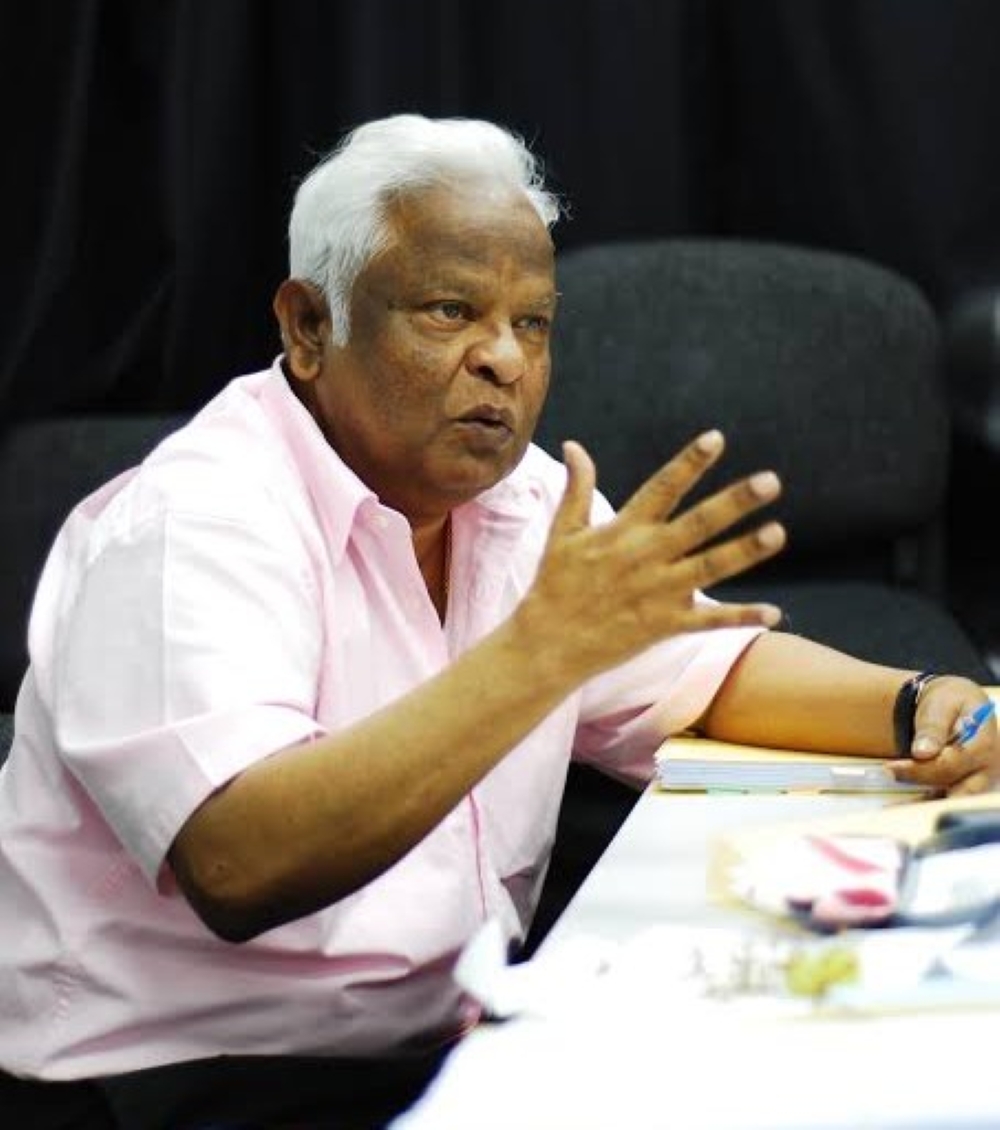
Born in Sri Lanka, Basil was a lawyer, writer, and poet who had been forced to flee his homeland after receiving threats to his life. He assisted Vietnamese refugees in Hong Kong and worked for the United Nations to promote the human rights of Cambodians. He later worked through the AHRC and the Asian Legal Resource Centre (ALRC), supporting people across Asia who suffered torture, enforced disappearance, and arbitrary violence.
The proclamation of the Asian Human Rights Charter in May 1998 brought Basil and Gwangju together. I worked to make the event happen as the coordinator of the Kwangju Citizens Solidarity (KCS), which was actively promoting the Gwangju movement in and outside Korea throughout the 1990s but which became inactive after 2000. Jointly organized by KCS and the AHRC, the 1998 declaration brought Gwangju citizens to meet with representatives of Asian civil society. Years of work by Basil and his colleagues, gathering voices from across Asia, came to fruition in Gwangju. Having followed the May 18 Democratization Movement and the subsequent struggle for truth, Basil seemed convinced that Gwangju could stand for human rights throughout Asia.
What gave him such faith in Gwangju? In the May 18 Uprising, he saw both the brutality of state violence and the strength of citizens defending human dignity. To him, Gwangju was a city whose people, even after being crushed by force, had refused to abandon the truth. Bereaved families and survivors had preserved their memories and demanded accountability for the massacre over many years. Their experience gave activists isolated by dictatorships and civil wars the belief that they, too, might one day achieve what Gwangju had secured.
“He came to be known as an ambassador for the spirit of May 18.”
At the time, KCS led Gwangju’s efforts to tell the world the truth about the May 18 Uprising. Basil showed us how Gwangju’s experience could encourage others across Asia. He connected Gwangju’s legacy with the realities of other Asian countries and helped us learn from the suffering of their people. Through him, Gwangju gained a more prominent place on Asia’s human rights map. His contribution to its emergence as an internationally recognized human rights city was exceptional.
The achievements of this collaboration rested on the efforts of bereaved families, those injured or imprisoned during the uprising, civil society organizations, and countless other activists. Basil fully recognized the strength of Gwangju’s movement and connected it with the wider Asian human rights movement. He created opportunities for activists to learn from one another and act together.
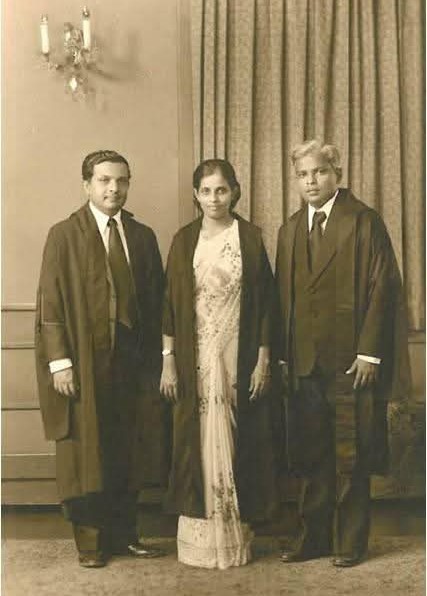
Basil Fernando with his sister and older brother in earlier years. (Courtesy of the Fernando Family)
In 2001, Basil became the second recipient of the Gwangju Prize for Human Rights, awarded by the May 18 Memorial Foundation. The award expressed the people of Gwangju’s recognition of his dedication. His relationship with Gwangju continued: He spoke at the World Human Rights Cities Forum in 2017 and returned in 2018 for the twentieth anniversary of the Asian Human Rights Charter. Each visit brought renewed discussion of what more we could do to make human rights a reality.
The 20th anniversary conference in 2018 to commemorate the Asian Human Rights Charter holds particular meaning for me. Its proceedings include both Basil’s draft declaration on the right to justice and my response. At the heart of our discussion was the need for victims of human rights violations to obtain effective remedies. Supporting his approach, I argued that democratization alone was not enough: People also needed to be able to exercise their rights without facing inequality or state violence. The conference proceedings remind me of our shared conviction that Gwangju’s experience can contribute to the struggles for human rights in other Asian countries.
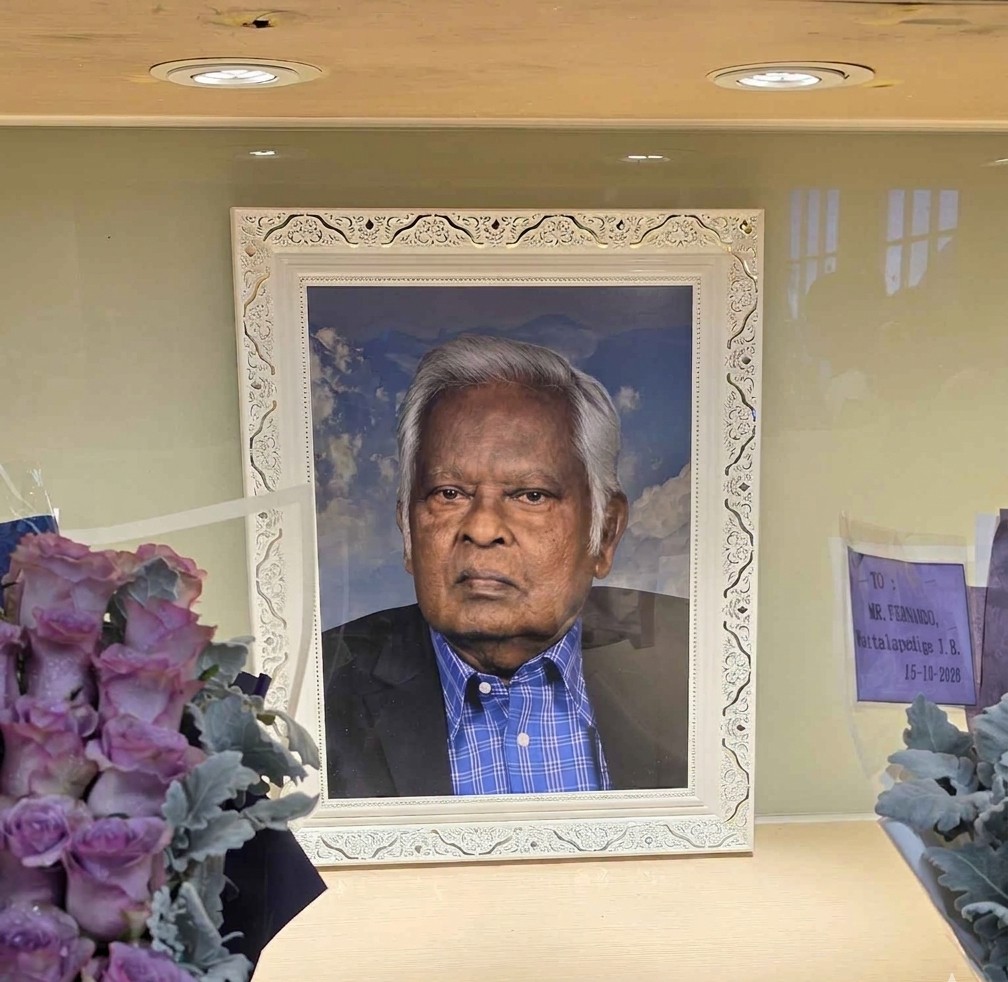
In the visitation room in Hong Kong. (Lee Jae-eui)
For Basil, proclaiming the Charter was not an end but a step in his lifelong endeavor to make human rights a reality. Fine principles mean little in daily life if torture survivors cannot demand an investigation or families of the disappeared cannot discover the truth. Police, prosecutors, and courts must have the capacity and independence to protect citizens. Poverty or low social standing must not block access to justice. Basil listened to victims’ urgent appeals while working to reform the institutions that allowed abuses to recur.
Gwangju’s movement shared Basil’s commitment to justice. After May 18, we fought for years to find the truth and hold those responsible for the massacre accountable. Democratization did not automatically bring redress for state violence. We recorded testimony, gathered evidence, and eventually compelled institutions to confront responsibilities they had long evaded.
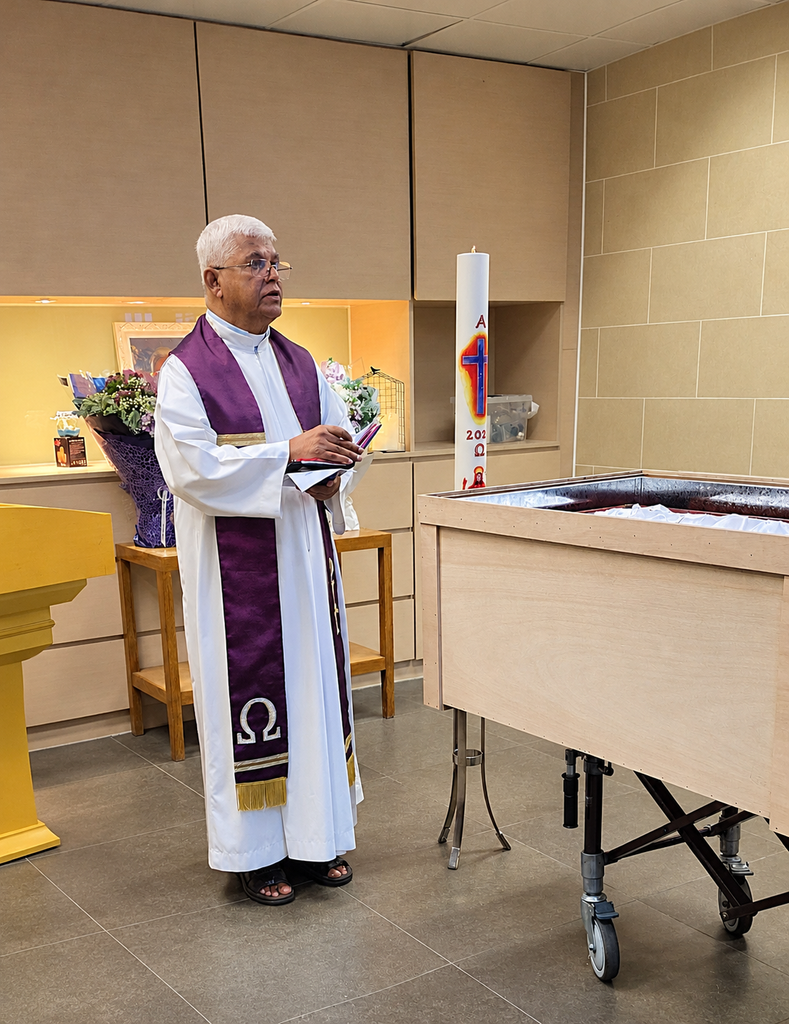
The funeral service for Basil Fernando at Prince of Wales Hospital in Hong Kong. (Lee Jae-eui)
The collaboration between Gwangju and Basil also endured through the people he trained. Gwangju sent young people to work at the AHRC in Hong Kong. Some spent five or ten years alongside Basil before returning to Korea, where they now draw on their international human rights experience in civil society organizations and public institutions such as the National Human Rights Commission of Korea. Through those who trained at the AHRC, Basil’s legacy lives on, not only in Gwangju but across Korea.
They remember Basil as a man who was always reading or writing in his office. Usually quiet, he became intensely animated in discussion. Despite frequent travel, he worked constantly, bringing up May 18 and Gwangju whenever human rights, justice, or democracy were discussed. This is why he came to be known as an ambassador for the spirit of May 18.
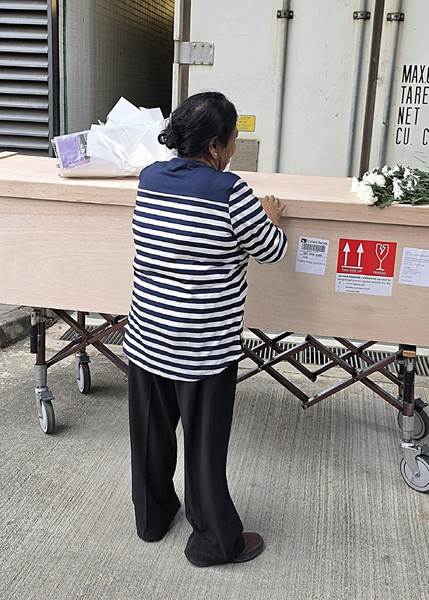
Taking a quiet moment before the coffin leaves on its final journey. (Lee Jae-eui)
I also think of the late Seo Eujin, who rests in Gwangju’s Mangꞌwol-dong Cemetery for Democratic Martyrs. Sharing Basil’s commitment, he traveled across Asia for more than twenty years, telling the story of May 18. Through their journeys, Gwangju’s story reached people far beyond Korea.
I remain grateful that Basil spoke of our history for so long as though it were his own. He wanted people living under oppression to draw strength from Gwangju’s resistance and solidarity. For him, Gwangju was a place he returned to whenever he sought to understand Asia’s realities and the possibilities for change.
Among his oldest colleagues was Sanjeewa, who now works with a human rights organization in Switzerland. They met in 1989, when Basil arrived in Hong Kong after leaving Sri Lanka. Early on, they produced a small publication exposing enforced disappearances and extrajudicial killings in southern Sri Lanka. Later, at the AHRC and ALRC, they worked late into the night drafting statements and urgent appeals and reviewing cases. Asia’s human rights movement was built through such largely unseen daily work. Their solidarity reached Gwangju, too: Through their efforts, bereaved families of May 18 victims formed a sister relationship with a Sri Lankan group representing families of the disappeared, sharing their grief across borders.
The accounts of Basil’s final days that I heard at the funeral revealed the same constancy. Even in hospital, he worried about how much remained to be done for human rights and justice. He reportedly said there was not enough time to finish the work. His final book appeared in Sri Lanka only weeks before his death. An activist, lawyer, poet, and thinker throughout his life, he continued thinking and writing to the end. I saw in him the stature of a giant who had quietly shouldered the burdens of our time.
It also stays with me that this relentless opponent of injustice was remembered as kind and humble. Jack Clancey recalled that Basil harbored neither hatred nor a desire for revenge, even toward those who had deeply hurt him. He could criticize institutions and power unsparingly without losing his warmth toward people. Alongside his achievements, he left a legacy of profound love for humanity.
That love informed his critical examination of his own society. Basil warned against unthinking celebration of culture and identity. He continually questioned discrimination and violence justified in the name of religion, language, culture, or ethnicity. Gwangju needs that reflection, too.
Pride in May 18 should sharpen our awareness of discrimination around us today. If we celebrate our city’s name while ignoring neighbors asking for help, we can hardly claim to carry forward the strength he found here.
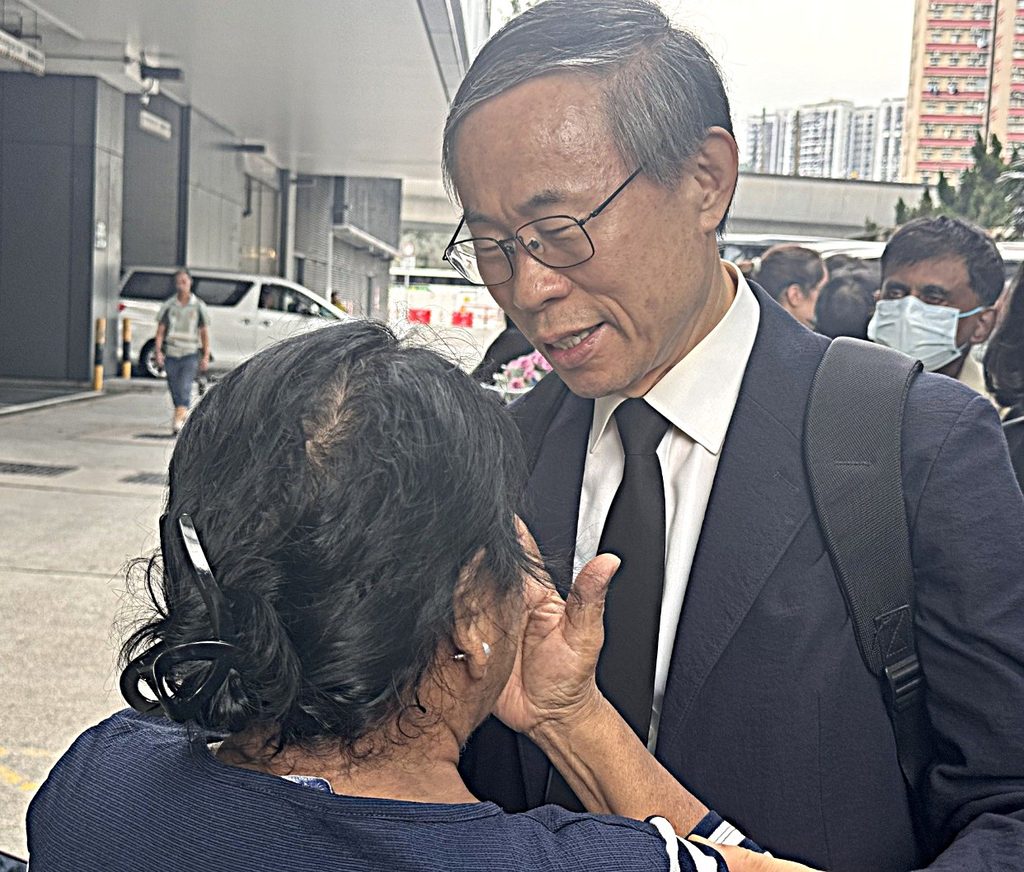
Lee Jae-eui expressing condolences to Mrs. Fernando. (Courtesy of the author)
As we said goodbye, I thought of Gwangju’s debt to Basil. He understood our suffering and believed that our experience of enduring it could help protect other lives. He worked to sustain a relationship in which Asian activists came to Gwangju and Gwangju took an interest in their struggles. Preserving and deepening that relationship now falls to those of us who remain.
We can begin honoring him by reading his works, listening to his talks and to his colleagues’ accounts, and creating opportunities for younger activists to learn from one another. The Asian Human Rights Charter must become more than a document recalled on anniversaries. It should guide us in asking where people whose rights have been violated can turn for help and what we can do to stand beside them.
ALRC-Korea will continue connecting Gwangju’s memory with Asia’s present and helping victims’ voices travel across borders. The international trust Gwangju has earned carries a responsibility to live up to its reputation as a human rights city. That responsibility remains amid our grief. Each of us must continue the work to which Basil devoted his life.
Alongside that work, I hope Gwangju will have a lasting place to remember him. At the funeral, I thought of Jürgen Hinzpeter, the journalist who risked his life to show the world what was happening during May 18. A memorial to him stands in Mangꞌwol-dong Cemetery, with his nail clippings and hair buried beneath it. Hinzpeter brought the horrors of Gwangju in 1980 to the world; Basil later brought its experience of resistance and solidarity to Asia and beyond. Basil, too, deserves an enduring place in our city’s memory.
I gently asked his family for a small lock of his hair and brought it back to Gwangju in a little paper box. I hope that one day we can place a modest memorial stone at Mangꞌwol-dong and bury his hair beneath it. May those who visit remember the name of this friend who loved Gwangju and the path he walked.
The thirty-minute service ended, but Basil’s bond with Gwangju did not. The stories he carried across Asia remain, and the lives of those we came to know through him continue. Basil Fernando, our friend who connected Gwangju with Asia: As you remembered Gwangju, Gwangju shall now remember you.
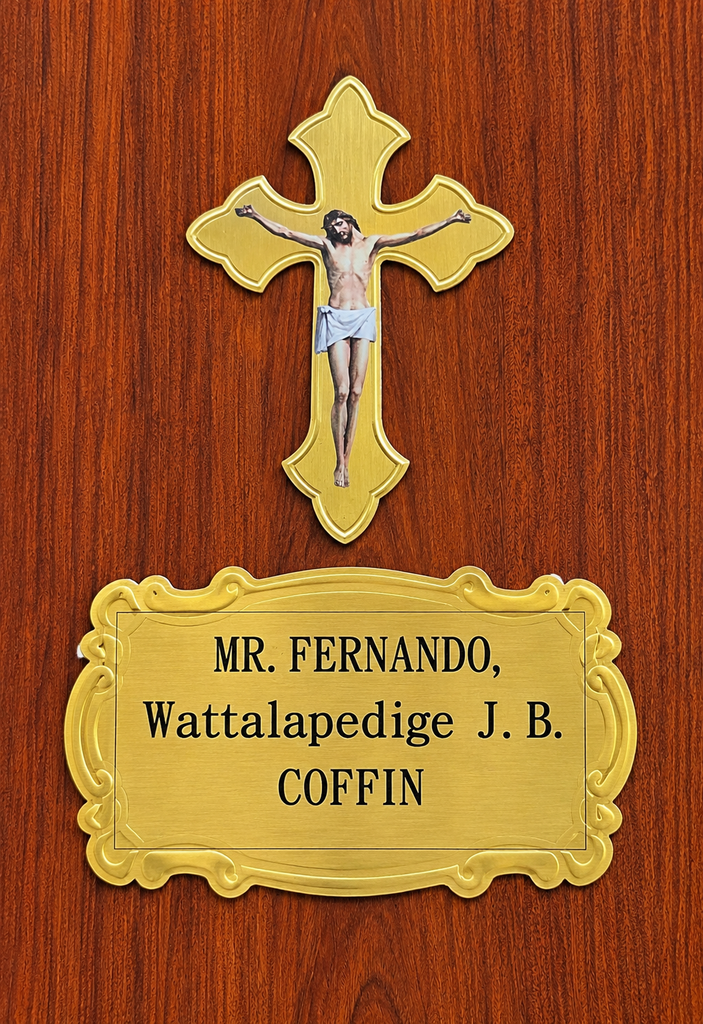
On the coffin. (Lee Jae-eui)
The Author
Lee Jae-eui, executive director of ALRC-Korea, is a Gwangju Uprising survivor and co-author of the UNESCO-listed Gwangju Diary. For 46 years, he has documented the truth as a researcher and activist to advance democratic values.